
High cholesterol is a major risk factor for heart attack and stroke — yet it has no symptoms. A cholesterol number in isolation does not tell the whole story; what matters is your overall cardiovascular risk and a plan tailored to you. If you are looking for a cholesterol doctor in Bolingbrook, IL, Paeon Health provides thorough lipid evaluation, cardiac risk assessment, and clear, evidence-based guidance on lifestyle and medication. Walid Sayyed, MD, board-certified family medicine physician, will explain your results in plain language and help you decide the right next steps.
We do not believe in one-size-fits-all prescribing. For some people, lifestyle is enough. For others — especially those with diabetes, prior heart attack or stroke, or high calculated risk — medication (often a statin) can be life-saving. We will help you understand where you stand and what makes sense for you.
What Is High Cholesterol?
Cholesterol is a waxy substance your body needs to build cells and hormones. It travels through the bloodstream in lipoproteins. LDL (“bad” cholesterol) can build up in artery walls, forming plaque that narrows arteries (atherosclerosis) and raises the risk of heart attack and stroke. HDL (“good” cholesterol) carries cholesterol back to the liver for removal. Triglycerides are another blood fat; high levels are linked to cardiovascular risk and, at very high levels, pancreatitis. Your lipid panel usually includes total cholesterol, LDL, HDL, triglycerides, and often non-HDL cholesterol.
There is no single “normal” that applies to everyone. Two people with the same LDL can have very different treatment recommendations based on age, blood pressure, smoking, diabetes, family history, and prior heart disease. That is why we calculate your 10-year (and lifetime) cardiovascular risk using the ACC/AHA ASCVD risk estimator, and sometimes additional tests like coronary artery calcium scoring or hs-CRP when the decision is borderline.
Signs & Symptoms
High cholesterol itself causes no symptoms. That is why screening is important. You may only learn of a problem after a heart attack or stroke — or through a routine lipid panel. Symptoms of advanced cardiovascular disease can include: – Chest pain or pressure (angina), especially with exertion – Shortness of breath – Pain, cramping, or fatigue in the legs with walking (peripheral artery disease) – Transient vision changes or neurologic symptoms (warning signs of stroke) – Xanthomas — fatty deposits under the skin (rare, seen in very high inherited cholesterol)
Seek emergency care immediately for chest pain, shortness of breath, stroke symptoms (face drooping, arm weakness, speech difficulty), or sudden severe headache. For routine cholesterol evaluation and management, schedule a primary care visit.
How Primary Care Approaches Cholesterol at Paeon Health
Dr. Sayyed’s approach: listen, evaluate, explain, plan.
Listen. We review your full history: diet, activity, smoking, alcohol, family history of early heart disease, thyroid problems, kidney or liver disease, medications (some raise cholesterol), and any prior reactions to cholesterol medication.
Evaluate. We order a lipid panel (often non-fasting these days, but we will tell you if fasting is needed), plus glucose/A1C, liver and kidney function, and blood pressure. We calculate your ASCVD risk. If your risk is intermediate or uncertain, we may discuss additional testing — coronary artery calcium score, hs-CRP, lipoprotein(a), or ApoB — to refine the decision.
Explain. We make sure you understand your numbers and what they mean for you. We explain lifestyle changes in practical terms (not generic advice), and if medication is appropriate, we discuss options — statins first-line for most, with ezetimibe, PCSK9 inhibitors, and others when needed — including benefits, risks, side effects (especially muscle symptoms), cost, and how we will monitor you. We address common concerns honestly: statin muscle symptoms, diabetes risk, liver effects, and the nocebo effect. We never provide specific doses in educational materials; your regimen is prescribed and adjusted by Dr. Sayyed.
Plan. Your plan may include a heart-healthy eating pattern (DASH or Mediterranean), regular physical activity, weight management if needed, not smoking, limiting alcohol, and medication when appropriate. We set follow-up lipid testing (typically 4–12 weeks after starting or changing medication, then periodically) and monitor liver enzymes or other labs as indicated. We refer to cardiology or a lipid specialist for very high or resistant cholesterol.
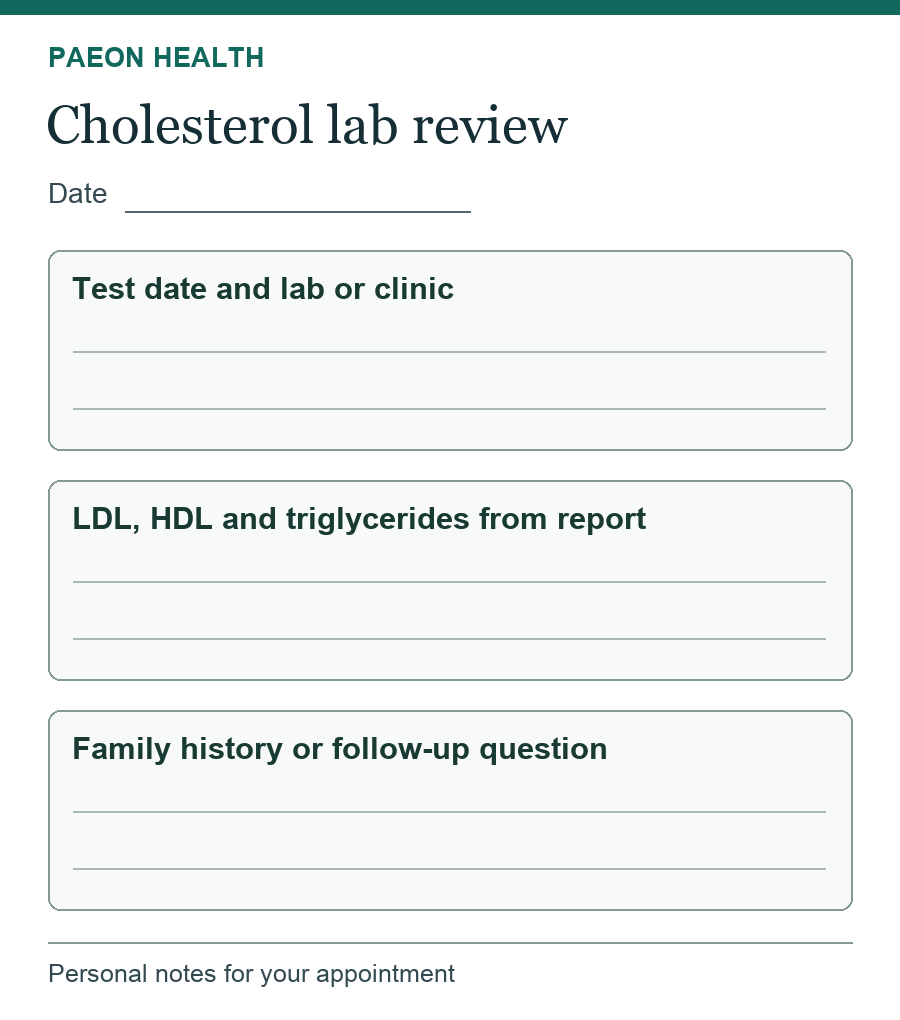
3 questions to ask about your cholesterol results
If you have a copy of your lipid panel, bring the whole report with the test date and units. You do not need to decide for yourself which result matters most.
- What do these numbers mean for me? Ask about LDL, HDL and triglycerides in the context of your health history. Point out if the report came from a different lab.
- What family history is useful? If known, write down which close relatives had a heart attack or stroke and their approximate age when it happened.
- What should we review next? Mention any changes since the last test and ask when another measurement might make sense. Write down your agreed follow-up question or date.
What to Expect at Your Visit
First visit: Bring any prior lipid results, your medication and supplement list, and family history details. We will review your history, take blood pressure, order labs, and calculate your risk. You will leave with a clear understanding of your numbers and a plan.
Follow-up visits: If starting medication, a repeat lipid panel in about 4–12 weeks checks response and tolerability. Once stable, lipids are checked every few years or as recommended. Many follow-ups can be done by telehealth across Illinois, when clinically appropriate, with you physically in Illinois.
Tests that may be ordered: lipid panel, basic metabolic panel, liver enzymes, A1C, TSH (thyroid, since underactive thyroid raises cholesterol), urinalysis, EKG, and referrals for coronary calcium scoring or cardiology when indicated.
Comparing cholesterol reports from different visits
Bring each report with the date, lab name and units still visible. If one report lists only total cholesterol, tell your clinician that is the only result you have. If you do have the whole report, leave the LDL, HDL and triglyceride values together so they can be interpreted in context.
Between tests, you may have changed medicines, stopped a treatment because it was difficult to tolerate or changed your eating routine. Note when those changes happened. Ask what the new result means for your own plan, which changes to keep and when to review it again. The number marked with a flag on a lab printout is a starting point for that discussion.
Related worksheets for your visit
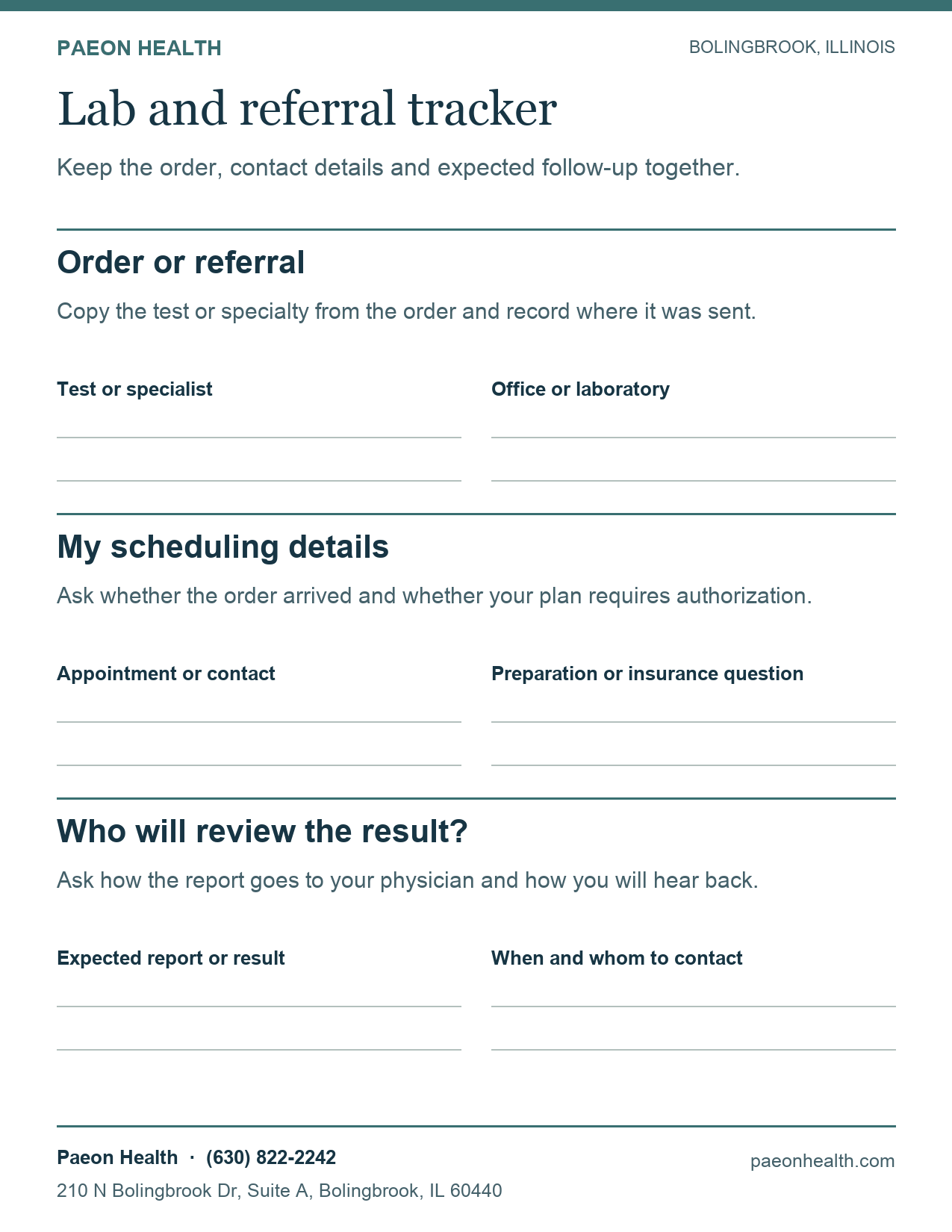 Download lab and referral tracker (PNG)
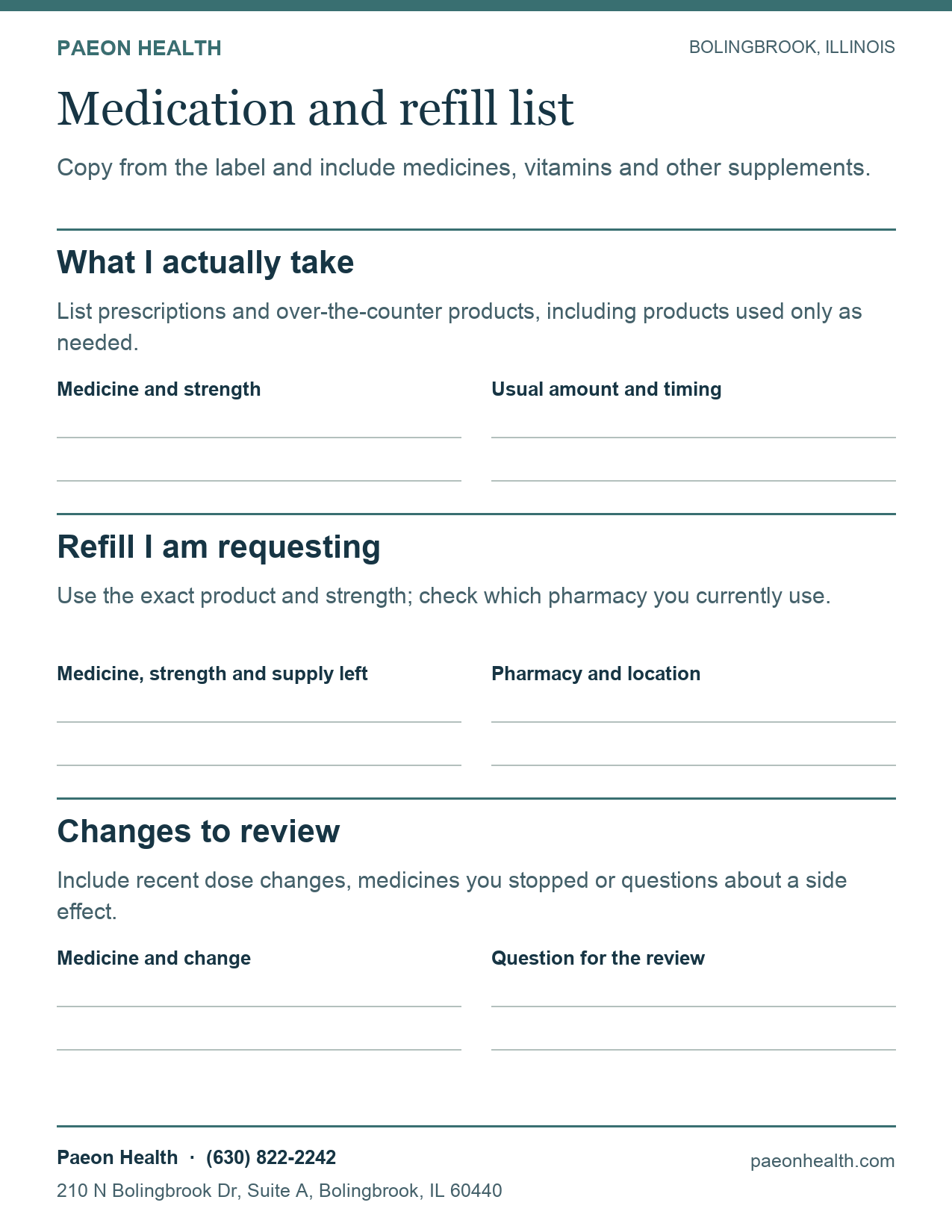 Download medication and refill list (PNG)
Insurance & Self-Pay
Network participation depends on your exact plan and where you receive care. Verify your exact plan and network. Self-pay prices: New Patient Office $225, Established Follow-Up $150, Established Patient Video $125, Annual Physical $225. Labs, medications, imaging (including coronary calcium scans), and outside services are extra. A Good Faith Estimate is available on request. Many generic statins are very affordable; we will help you find cost-effective options.
FAQ
Q: Do I need to fast before a cholesterol test? A: Many labs now do reliable non-fasting lipid panels. We will tell you if fasting is needed for your specific situation.
Q: My LDL is high but my HDL is high too — am I protected? A: Not necessarily. Modern treatment focuses on LDL lowering and overall risk, not HDL boosting. We will assess your full picture.
Q: I’m afraid of statin side effects. What are my options? A: We can try different statins, lower doses, or non-statin medications. Some people who think they cannot tolerate statins do fine with a different approach. We will work with you.
Q: Can diet and exercise alone lower my cholesterol enough? A: Often modestly. For high-risk individuals, medication plus lifestyle is usually more effective. Your risk estimate guides the decision.
Q: How often should I have my cholesterol checked? A: For low-risk adults, often every 4–6 years. More often if abnormal, on treatment, or if your risk changes.
Q: What if I have a strong family history of high cholesterol or early heart attack? A: Tell us. We may screen earlier, check for familial hypercholesterolemia, and treat more aggressively.
Book Your Cholesterol Evaluation
If you need a cholesterol doctor in Bolingbrook, IL — for a first lipid check, a second opinion on statins, or ongoing lipid management — meet Walid Sayyed, MD, at Paeon Health. New adult office visits: Elation. Call about availability for a first video visit. Established patients: Elation Patient Passport portal. Questions? Call 630-822-2242. Office: 210 N Bolingbrook Dr, Suite A, Bolingbrook, IL 60440. Hours: Mon–Fri 9AM–5PM, Sat 9AM–1PM. Spanish translation assistance available.
View appointment options · Explore primary care services
Patient resource: MedlinePlus guide to cholesterol.
This content is for educational purposes only and is not medical advice. For medical emergencies, call 911. To discuss your specific health needs, book an appointment with Walid Sayyed, MD, at Paeon Health or call 630-822-2242.