
Every spring, the trees bloom and so do the sneezes. For millions of Americans, allergies — whether seasonal (hay fever) or year-round (dust mites, pet dander, mold) — mean weeks or months of congestion, itchy eyes, sinus pressure, and fatigue. If over-the-counter allergy medicine is no longer cutting it, or you are not sure what you are allergic to, a medical evaluation can help.
At Paeon Health in Bolingbrook, Illinois, Dr. Walid Sayyed — a board-certified family medicine physician — evaluates and treats allergies for adults and children across the Naperville, Romeoville, and Plainfield area. We can help identify your triggers, find the right treatment, and get you back to enjoying the outdoors (and your home) without constant sneezing.
Allergies are more than a nuisance. Untreated allergic rhinitis can lead to sinus infections, ear infections, sleep disruption, asthma exacerbation, and missed work or school. Effective treatment exists — and it starts with understanding what triggers your symptoms.
What Are Allergies?
Allergies occur when your immune system overreacts to a normally harmless substance — an allergen — producing antibodies (IgE) that trigger the release of histamine and other chemicals, causing allergy symptoms. Common allergens include:
- Seasonal (outdoor): tree pollen (spring), grass pollen (late spring/summer), weed pollen (fall — especially ragweed), mold spores.
- Perennial (indoor/year-round): dust mites, pet dander (cats, dogs), cockroach particles, indoor mold.
- Contact allergens: certain metals (nickel), cosmetics, latex, plants (poison ivy).
- Food and drug allergies — these require specialized evaluation and are managed differently; we can refer to an allergist.
Allergic rhinitis (hay fever) affects the nose and eyes — sneezing, runny or stuffy nose, itchy watery eyes. Allergic asthma affects the airways — wheezing, coughing, shortness of breath. The two often coexist. Sinusitis can develop when allergies cause congestion that blocks the sinuses.
Living in Illinois, you experience all four seasons — and with them, tree pollen in spring, grass in summer, ragweed in fall, and indoor allergens (dust mites, pets) in winter when windows are closed. Many allergy sufferers are miserable year-round.
Signs & Symptoms
- Sneezing, often in bursts
- Runny or stuffy nose (congestion)
- Itchy nose, roof of mouth, or throat
- Itchy, watery, red eyes (allergic conjunctivitis)
- Postnasal drip, sore throat, cough
- Sinus pressure or facial pain
- Reduced sense of smell or taste
- Fatigue and poor sleep (from congestion)
- Dark circles under the eyes (“allergic shiners”)
- Wheezing or shortness of breath (if asthma is present)
- Symptoms that follow a pattern — same time every year, or worse around pets/dust
Seek care sooner if: you have wheezing, shortness of breath, or chest tightness (possible asthma), symptoms that do not respond to OTC medication, recurrent sinus infections, or severe symptoms interfering with sleep and daily life. For severe allergic reaction (anaphylaxis) — hives, swelling of lips/tongue, difficulty breathing — call 911 and use an EpiPen if prescribed.
How Primary Care Approaches Allergies at Paeon Health
Dr. Sayyed’s approach to allergies is practical and evidence-based:
Accurate diagnosis
- Detailed history — when symptoms occur, what triggers them, what has been tried.
- Distinguish allergies from the common cold, sinusitis, non-allergic rhinitis, and other causes.
- Physical exam — nose, throat, ears, eyes, lungs.
- Allergy testing — when triggers are unclear or symptoms are severe, referral to an allergist for skin prick testing or specific IgE blood testing can identify exactly what you are allergic to.
Environmental control measures
- Pollen: keep windows closed during high-pollen seasons, shower after being outdoors, change clothes, check pollen counts.
- Dust mites: allergen-proof mattress and pillow covers, wash bedding in hot water weekly, reduce clutter, consider dehumidifier.
- Pet dander: keep pets out of the bedroom, wash hands after contact, HEPA air filter.
- Mold: fix leaks, use dehumidifier in damp areas (basement, bathroom).
Medication
- Nasal corticosteroid sprays — the most effective treatment for allergic rhinitis; reduce inflammation in the nasal passages. They take days to weeks to reach full effect and must be used consistently.
- Antihistamines — oral (cetirizine, loratadine, fexofenadine) or nasal (azelastine) — relieve sneezing, itching, runny nose.
- Eye drops — antihistamine eye drops for itchy, watery eyes.
- Decongestants — short-term relief for congestion (oral or nasal); not for long-term use due to rebound congestion and side effects.
- Saline nasal rinses — gentle, effective way to flush allergens and mucus.
- For asthma symptoms — inhalers and asthma management.
Allergy shots (immunotherapy)
If medications and environmental controls are not enough, or if you want a longer-term solution, allergy immunotherapy (allergy shots) can desensitize your immune system to specific allergens over 3–5 years. This is administered by an allergist, and we can refer you to a trusted allergist in the Chicago area. Sublingual (under-the-tongue) immunotherapy tablets are also available for some allergens.
Treatment of complications
- Sinus infections, ear infections, and asthma exacerbations related to allergies are treated promptly.
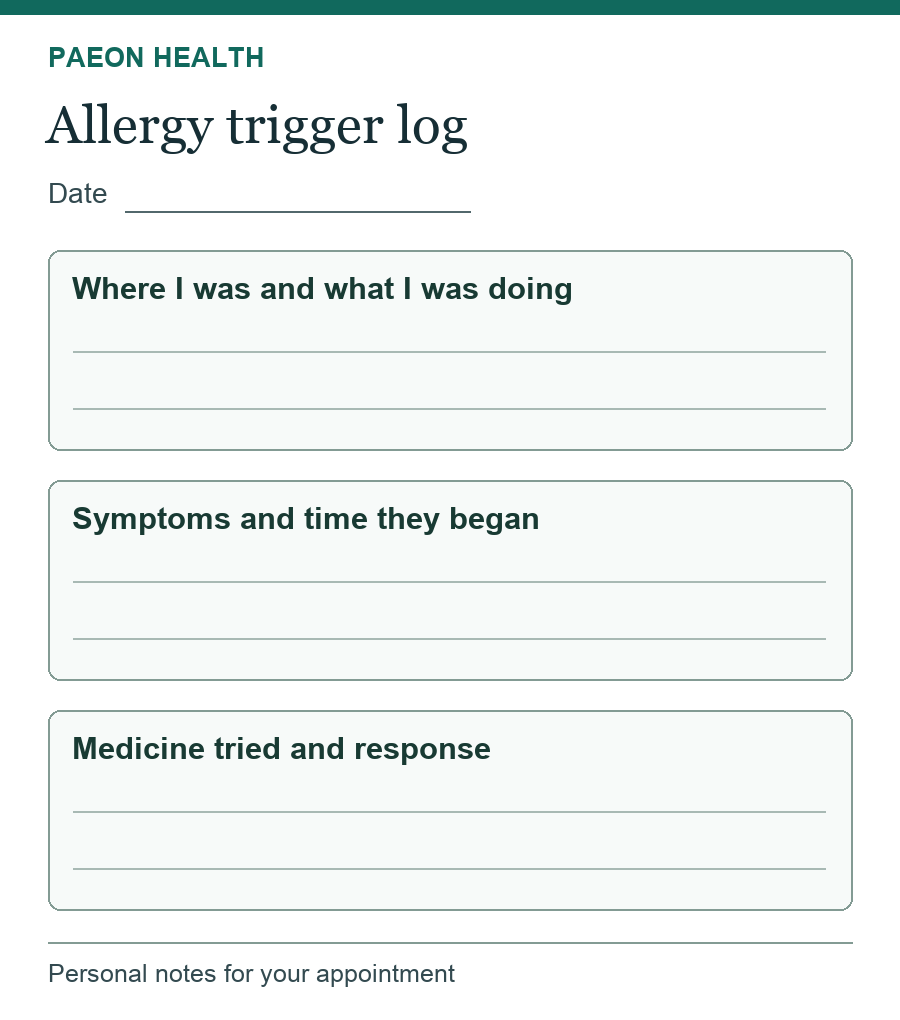
3 clues that can help you talk about allergies
Does your nose run every time you mow the lawn, or mostly when you wake up? For an allergy visit, a few specific observations are more helpful than a long list of suspected triggers.
- Place and time Note whether you were indoors or outdoors and what you were doing when symptoms began.
- Symptoms Write down what you noticed first, such as an itchy nose or watery eyes. Include whether your sleep or usual activity changed.
- What happened next If you used an allergy medicine, record its name and your response. Bring the package or a photo if you are unsure of the ingredients.
What to Expect at Your Visit
First visit
- Discussion of your symptoms, triggers, and previous treatments.
- Physical exam — including nose, throat, ears, and lungs.
- Distinguish allergies from other causes.
- Initial treatment plan — medication, environmental controls, and whether allergy testing is needed.
Follow-up
- Reassess symptoms and adjust treatment.
- Review allergy test results if obtained.
- Refer to allergist for immunotherapy if appropriate.
- Develop a plan for your worst allergy seasons.
Many patients find significant relief with the right combination of nasal steroid spray, antihistamine, and environmental controls. Allergy testing and immunotherapy offer a longer-term solution for severe or persistent cases.
Telehealth follow-up is available across Illinois when clinically appropriate, and the patient must be physically in Illinois. For the initial evaluation and physical exam, an office visit is recommended. Children’s appointments are booked by calling 630-822-2242.
When allergies look different away from home
Compare two places you spend time, such as your home and workplace. Is nasal congestion worse at the start of the day, after cleaning or after outdoor work? Describe the pattern you noticed even if you cannot name a trigger. Include days when you felt well.
If a child has symptoms mainly at school or during outdoor activities, bring the caregiver’s observations and a list of products already tried. Identify whether your main concern is itching, sleep or being able to take part in a usual activity.
Related worksheets for your visit
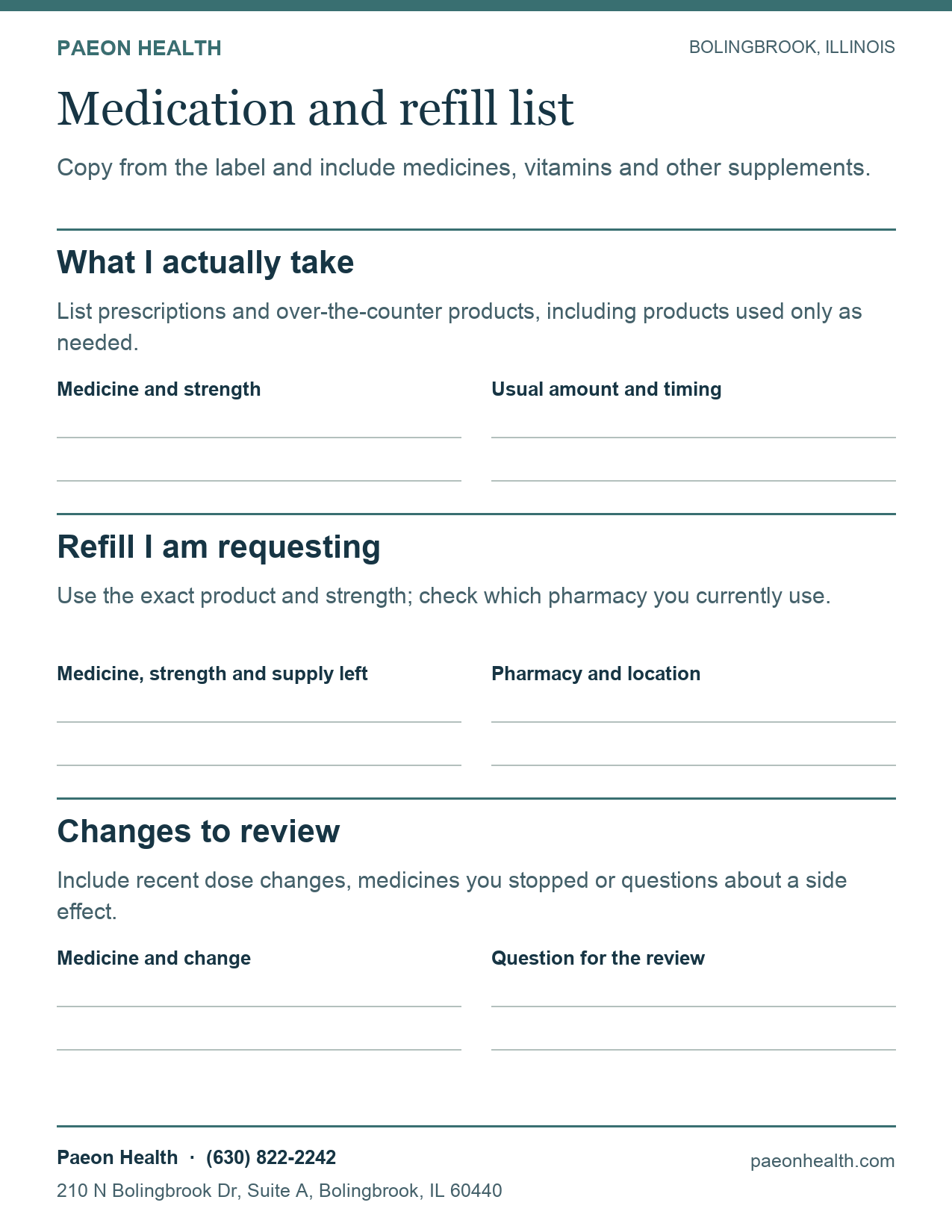 Download medication and refill list (PNG)
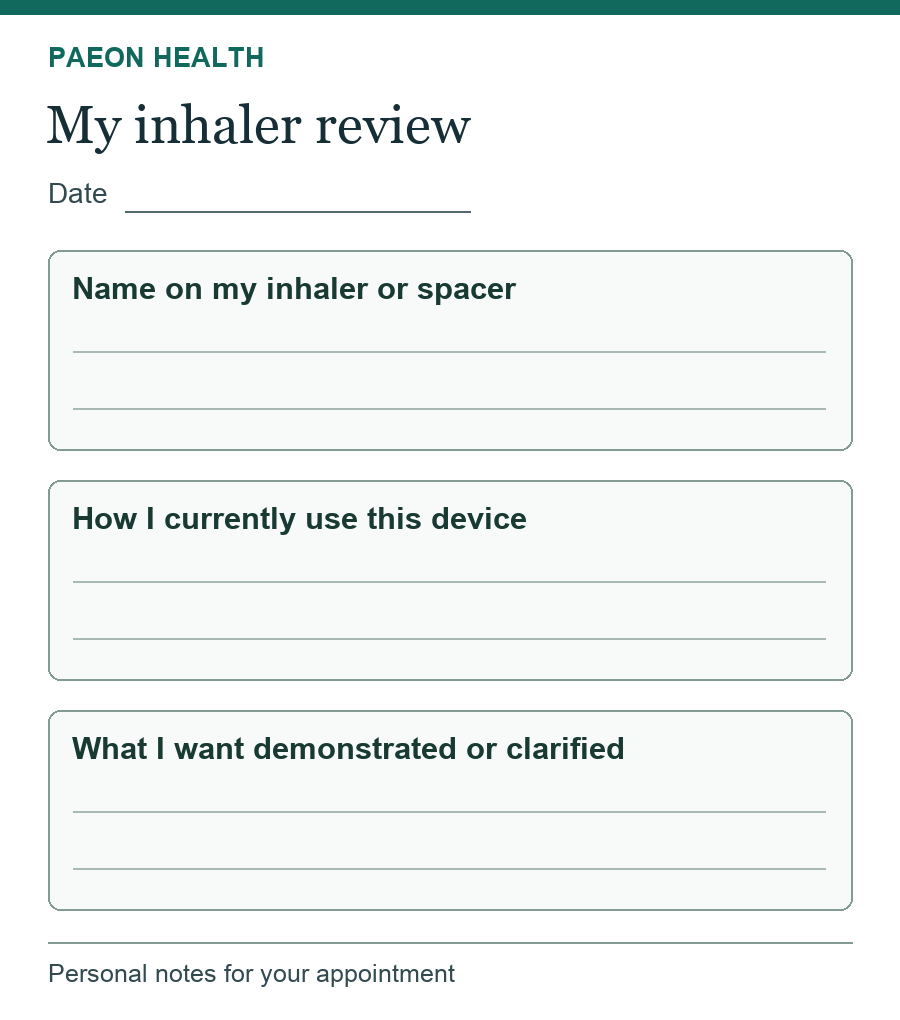 Download asthma inhaler review (PNG)
Insurance & Self-Pay
Network participation depends on your exact plan and where you receive care. Coverage for allergy testing, immunotherapy, and medications varies by plan. Always verify your exact plan and network with your insurer.
Self-pay pricing: New Patient Office visit $225, Established Follow-Up $150, Same-Week Sick $175. Allergy testing, specialist referrals, and medications are extra. A Good Faith Estimate is available on request. HSA/FSA funds can often be used for allergy care.
FAQ
Q: How do I know if it’s allergies or a cold? A: Colds usually last 7–10 days, often with sore throat and fever initially, and mucus may be thick and colored. Allergies last weeks or months, come and go with exposure, and include itchy eyes — which colds rarely cause. Your doctor can help distinguish.
Q: Do I need allergy testing? A: Not always. If your symptoms follow a clear pattern (every spring, or around cats) and respond to medication, testing may not be needed. Testing is helpful when triggers are unclear, symptoms are severe, or you are considering allergy shots.
Q: Are allergy shots worth it? A: For people with severe, persistent allergies who do not get enough relief from medication, allergy shots may reduce symptoms, and some people continue to feel better after treatment ends. They require a 3–5 year commitment. An allergist can advise whether you are a good candidate.
Q: Can allergies cause asthma? A: Allergies can trigger asthma symptoms (wheezing, coughing, shortness of breath) in people who have asthma. If you have both, treating allergies improves asthma control.
Q: Can I develop allergies as an adult? A: Yes — allergies can develop at any age, even if you never had them as a child. Moving to a new area, new pet exposure, or hormonal changes can trigger adult-onset allergies.
Q: Where is Paeon Health located? A: 210 N Bolingbrook Dr, Suite A, Bolingbrook, IL 60440. Phone: 630-822-2242.
Ready to Breathe Easier?
Don’t let allergies control your seasons. Schedule an allergy evaluation with Dr. Walid Sayyed at Paeon Health. New adult office visits can be booked through the Elation Patient Passport portal; established patients can book via the portal; or call 630-822-2242.
View appointment options · Explore primary care services
Patient resource: MedlinePlus guide to allergies.
This content is for educational purposes only and is not medical advice. For medical emergencies, call 911. To discuss your specific health needs, book an appointment with Walid Sayyed, MD, at Paeon Health or call 630-822-2242.