
Ask about a vitamin deficiency evaluation if you have concerns about your symptoms or diet.
Fatigue, hair loss, frequent illness, brain fog, muscle weakness — these common complaints can sometimes be traced to a nutritional deficiency. Vitamin D, B12, iron, magnesium, and other nutrients play essential roles in energy, immunity, mood, bone health, and nerve function. But testing matters: guessing with high-dose supplements can be wasteful and sometimes harmful (excess vitamin A, D, iron, and others can cause toxicity).
At Paeon Health in Bolingbrook, IL, Walid Sayyed, MD — board-certified family medicine physician — evaluates nutrition and vitamin status through careful history, targeted lab testing, and personalized guidance. When specialized nutrition support is needed, Dr. Sayyed refers to registered dietitians in the Naperville, Romeoville, and Plainfield area.
What Are Nutritional & Vitamin Deficiencies?
A nutritional deficiency occurs when the body does not get enough of a nutrient from diet, or cannot absorb it properly. Common deficiencies seen in primary care include:
- Vitamin D — common in northern climates (including Illinois), especially with limited sun exposure. Linked to fatigue, bone pain, muscle weakness, low mood, and reduced immunity.
- Iron deficiency / anemia — causes fatigue, weakness, pale skin, shortness of breath, hair loss, and restless legs. More common in women, vegetarians/vegans, and those with GI bleeding or heavy periods.
- Vitamin B12 — causes fatigue, neuropathy (tingling in hands/feet), memory problems, and anemia. More common in older adults, vegans/vegetarians, and those with pernicious anemia or GI conditions (celiac, Crohn’s, gastric bypass).
- Folate (B9) — important for cell growth; deficiency can cause anemia and, in pregnancy, neural tube defects.
- Magnesium — involved in hundreds of reactions; deficiency can cause muscle cramps, fatigue, irritability, and sleep problems.
- Calcium — important for bone health; long-term deficiency contributes to osteoporosis.
- Vitamin B1 (thiamine), B3 (niacin), vitamin C — less common in developed countries but can occur with alcoholism, restrictive diets, or malabsorption.
Absorption problems — celiac disease, inflammatory bowel disease, gastric bypass surgery, certain medications (metformin, proton pump inhibitors, metformin) — can cause deficiencies even with an adequate diet.
When to ask about a vitamin deficiency
- Persistent fatigue or low energy
- Hair loss, brittle nails, or dry skin
- Frequent infections or slow wound healing
- Tingling or numbness in hands and feet (possible B12 deficiency)
- Muscle cramps or weakness
- Pale skin, shortness of breath with mild exertion (possible anemia)
- Depression, brain fog, or memory problems
- Bone pain or frequent fractures (possible vitamin D/calcium deficiency)
- Mouth ulcers, bleeding gums, or a smooth, sore tongue
Seek care sooner for severe fatigue with chest pain or shortness of breath, fainting, rapid heart rate, or neurologic symptoms — these need prompt evaluation.
Nutrition and Vitamin Deficiency Evaluation
Dr. Sayyed’s approach is evidence-based and personalized:
- Detailed history — diet, restrictions (vegan, vegetarian, gluten-free), alcohol use, medications, surgeries, symptoms, and risk factors.
- Targeted lab testing — based on your history and symptoms, not a blanket “mega-panel.” Common tests: complete blood count (anemia), iron studies, ferritin, vitamin D, B12, folate, thyroid function, metabolic panel, and sometimes magnesium or other tests.
- Identify the cause — a deficiency is a clue, not just a number. Low iron may signal bleeding (colon cancer screening may be due); low B12 may signal pernicious anemia or malabsorption.
- Personalized plan — food-first guidance, targeted supplementation only when deficient, and treatment of the underlying cause.
- Referral to a registered dietitian — for weight management, diabetes, kidney disease, eating disorders, or complex dietary needs.
- Follow-up testing — to confirm levels are improving and adjust supplementation.
Dr. Sayyed does not recommend high-dose supplements or “detox” programs without evidence. The goal is correct what is deficient, through food when possible and supplements when needed.
What to Expect at Your Visit
- First visit — history, symptom review, and targeted lab orders. Bring your supplement list and any recent lab work.
- Follow-up after results — discussion of findings, dietary recommendations, and supplementation if needed (specific dose and duration decided in person).
- Monitoring — repeat labs in 8–12 weeks to check response and adjust.
- Referral — to dietitian, gastroenterology, or hematology if an underlying condition is found.
Telehealth follow-up across Illinois is available when clinically appropriate, with the patient physically in Illinois. Blood draws are done at outside labs; Dr. Sayyed orders and follows up on results.
Food First: Building a Nutrient-Dense Diet
Before supplements, the foundation of good nutrition is a balanced diet. General principles supported by nutrition research include:
- Variety of vegetables and fruits — aim for several servings daily, across colors (leafy greens, orange vegetables, berries, citrus). They provide vitamins, minerals, fiber, and antioxidants.
- Whole grains — oats, brown rice, quinoa, whole wheat — provide B vitamins, magnesium, and fiber.
- Lean protein — poultry, fish, legumes, tofu, eggs. Fish (especially salmon, sardines, mackerel) provides omega-3 fatty acids and vitamin D.
- Dairy or fortified alternatives — calcium and vitamin D sources.
- Nuts, seeds, and healthy oils — provide vitamin E, magnesium, healthy fats.
- Limit ultra-processed foods, added sugars, and excessive sodium — these displace nutrient-dense foods and contribute to chronic disease.
- Hydration — water supports metabolism, energy, and concentration; thirst is often mistaken for fatigue or hunger.
For people with restrictive diets — vegan, vegetarian, gluten-free, food allergies, or cultural restrictions — targeted attention to B12, iron, zinc, calcium, vitamin D, and omega-3 is important. Dr. Sayyed can review your eating pattern and, if needed, refer to a registered dietitian for personalized meal planning. Nutrition counseling is also part of weight management, diabetes care, and chronic disease management at Paeon Health.
Three notes for a vitamin deficiency evaluation
When you are concerned about a vitamin deficiency, the details on your supplement labels and past test reports can be more informative than a product name alone. Bring what you already have.
- Describe a usual day of meals and any recent changes in appetite, food choices or restrictions.
- Photograph supplement labels or bring the bottles, including the strength and how often you take each product.
- Bring earlier lab results and note what prompted the original test. Ask what a new result would change about your care.
Preview the nutrition and vitamin review
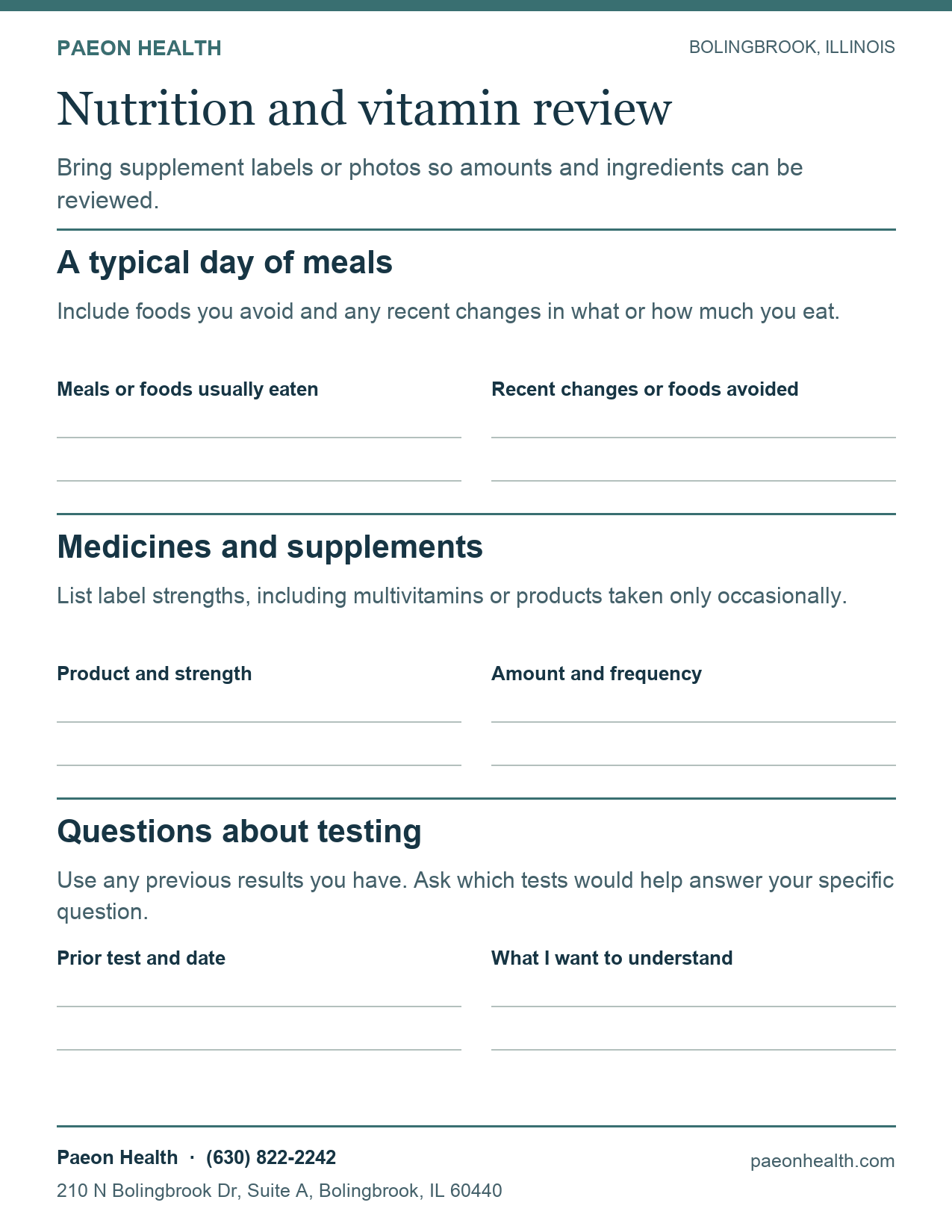
How to record a supplement whose name you do not know
Photograph both sides of the bottle, including the serving size and the ingredient panel. A product advertised for hair, energy or immunity may contain several vitamins or minerals. Write down how many tablets or scoops you actually use and whether you take them every day. Bring those details to your nutrition visit alongside any prescription list.
When supplements or outside results are part of the evaluation
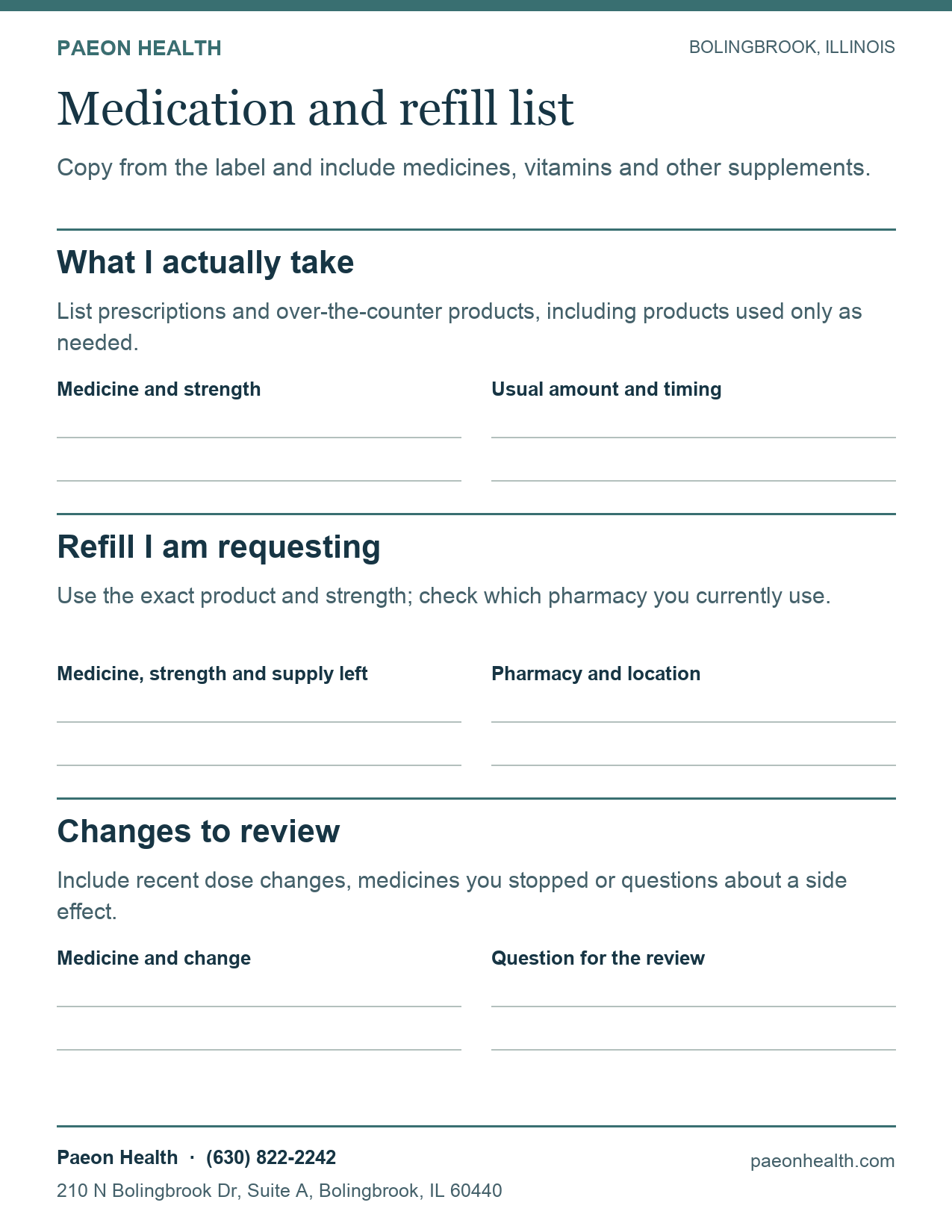
For a full medicine and supplement list
The medication list has space for more than one product, its strength and the amount you take. Include products taken only on certain days as well as daily products.
Download the medication and refill list (PNG)
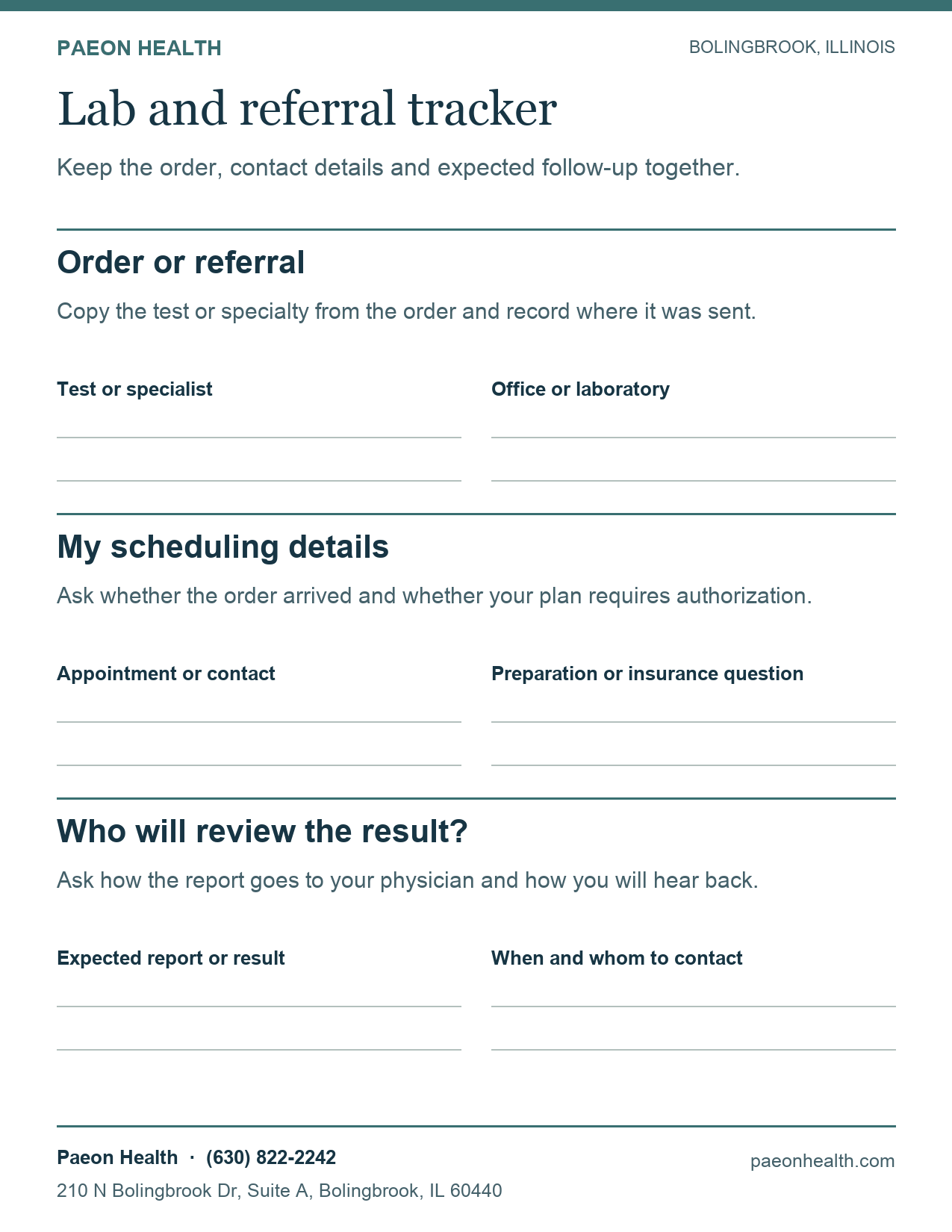
If your clinician orders a test
The lab tracker gives you a place to record what was ordered, where to go, whether the lab gave preparation instructions and who will discuss the result.
Download the lab and referral tracker (PNG)
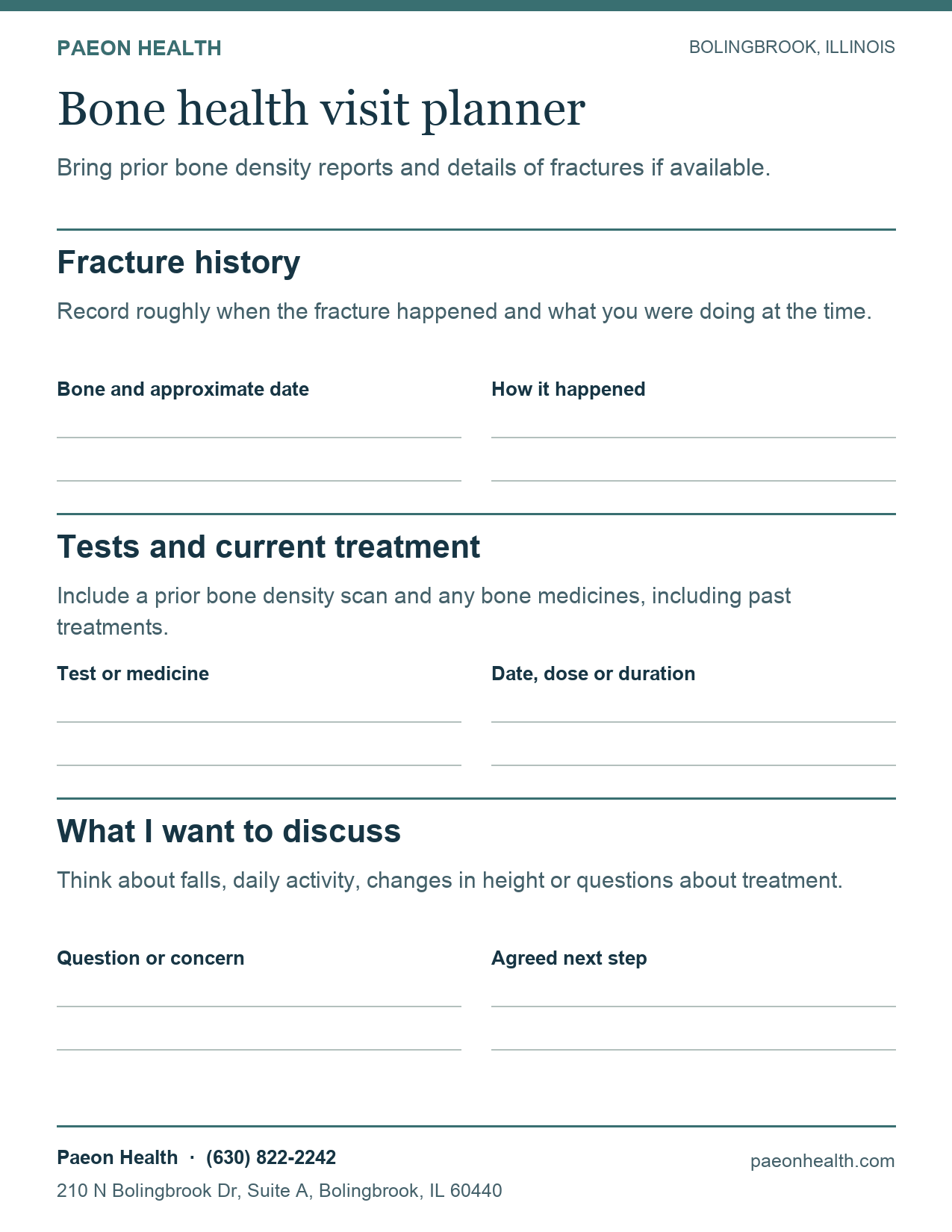
If you are also being treated for osteoporosis
Use the bone health worksheet to bring past fracture history or bone density reports alongside supplement labels. Keep this separate from notes about your diet so you can discuss both topics clearly.
Download the bone health visit planner (PNG)
Insurance & Self-Pay
Network participation depends on your exact plan and where you receive care. Verify your exact plan and network with your insurer. For self-pay patients, a New Patient Office visit is $225 and an Established Follow-Up is $150. Labs, supplements, and outside referrals are extra. A Good Faith Estimate is available.
FAQ
Should I take a multivitamin? For most people with a balanced diet, a multivitamin is not necessary and may not help. Targeted testing and supplementation are more effective. Ask your doctor.
Can I just take high-dose vitamin D? Vitamin D is fat-soluble and can build up to toxic levels with excessive supplementation. Testing first ensures you take the right dose.
Why do I need testing — can’t I just eat better? Diet is foundational, but some deficiencies (B12 malabsorption, iron from bleeding, pernicious anemia) do not respond to diet alone. Testing identifies the cause.
Can a vegan or vegetarian diet cause deficiencies? Well-planned vegetarian and vegan diets can be healthy, but B12 supplementation is essential for vegans, and iron, zinc, calcium, and vitamin D deserve attention. Dr. Sayyed can help.
Do I need IV vitamin therapy? IV vitamin therapy is not routinely recommended for most people and can be costly. It has a role in specific medical conditions (e.g., severe B12 deficiency, certain malabsorption states) — ask your doctor if it is right for you.
Does Paeon Health offer weight management? Yes — nutrition counseling is part of weight management and chronic disease care at Paeon Health.
Schedule a Nutrition Evaluation
View appointment options · Explore primary care services
Patient resource: MedlinePlus guide to vitamins.
If fatigue, hair loss, frequent illness, or other symptoms have you wondering about a nutritional deficiency, a primary care visit with targeted testing can give you answers. Book an appointment with Walid Sayyed, MD, at Paeon Health in Bolingbrook, IL, via the Elation Patient Passport portal, or call 630-822-2242.
This content is for educational purposes only and is not medical advice. For medical emergencies, call 911. To discuss your specific health needs, book an appointment with Walid Sayyed, MD, at Paeon Health or call 630-822-2242.