
Back pain is one of the most common reasons people miss work and visit a doctor. An estimated 80% of adults will experience significant back pain at some point — whether it is a dull ache after a long day at a desk, a sharp pain after lifting something heavy, or sciatica radiating down the leg. Most back pain improves with conservative care, but knowing when to seek help — and what treatment is right — makes all the difference.
At Paeon Health in Bolingbrook, Illinois, Dr. Walid Sayyed — a board-certified family medicine physician — evaluates and treats back pain for adults across the Naperville, Romeoville, and Plainfield area. Most back pain does not require surgery or expensive imaging. It requires an accurate diagnosis and a structured, evidence-based treatment plan.
Whether your pain is acute (recent injury) or chronic (lasting months), we will help you find relief and prevent recurrence.
What Causes Back Pain?
Back pain can originate from muscles, ligaments, joints, discs, nerves, or referred pain from other organs. Common causes include:
- Muscle or ligament strain — from heavy lifting, sudden movement, or poor posture over time. The most common cause.
- Degenerative disc disease — wear and tear on the spinal discs, common with age.
- Herniated or bulging disc — when disc material presses on a nerve, often causing sciatica (pain radiating down the leg).
- Spinal stenosis — narrowing of the spinal canal, often causing pain with walking that improves with rest.
- Osteoarthritis of the spine — wear and tear on the facet joints.
- Scoliosis or other structural issues.
- Osteoporosis-related compression fracture — more common in older adults, especially women.
- Sciatica — pain along the sciatic nerve, usually from a herniated disc or bone spur pressing on the nerve.
- Referred pain — kidney stones, endometriosis, or other abdominal/pelvic conditions can cause back pain.
Risk factors include sedentary lifestyle, obesity, poor posture, repetitive lifting, smoking, aging, and certain occupations.
Signs & Symptoms
- Dull, aching pain in the lower back (lumbar), upper back (thoracic), or neck (cervical)
- Sharp or stabbing pain, often after lifting or twisting
- Pain that radiates down one or both legs (sciatica)
- Numbness, tingling, or weakness in the legs or feet
- Stiffness and reduced range of motion — difficulty bending, standing straight, or twisting
- Muscle spasms
- Pain that worsens with sitting, standing, or certain movements
- Pain that improves with walking or changing position
Red flags — seek immediate medical care if you have: – Loss of bowel or bladder control (cauda equina syndrome — a medical emergency) – Progressive weakness or numbness in one or both legs – Back pain after a major trauma (fall, car accident) – Back pain with fever, chills, or unexplained weight loss – History of cancer with new back pain – Severe, constant pain that does not improve with rest
For emergencies, call 911.
How Primary Care Approaches Back Pain at Paeon Health
Most back pain — even severe pain — improves within a few weeks with conservative treatment. Dr. Sayyed’s approach:
Accurate diagnosis
- Detailed history — when pain started, what triggered it, location, radiation, what makes it better or worse.
- Physical exam — checking range of motion, nerve function (reflexes, strength, sensation), and specific provocative tests.
- Imaging is not always needed — X-rays or MRI are usually reserved for cases with red flags, persistent pain beyond 4–6 weeks, or suspected serious underlying causes. Many cases of muscle strain show nothing on imaging, and early MRI can lead to unnecessary procedures.
- Labs if infection, inflammation, or other systemic disease is suspected.
Conservative treatment first
- Activity modification — staying active is usually better than bed rest. Short periods of rest for severe pain, then gradual return to activity.
- Physical therapy referral — targeted exercises to strengthen core muscles, improve flexibility, and correct posture. This is one of the most effective long-term treatments.
- Medication — over-the-counter anti-inflammatories or acetaminophen, muscle relaxants for short-term use, or other medications when appropriate. Opioids are generally avoided for back pain due to risks and limited long-term benefit.
- Heat/cold therapy — heat for stiffness, cold for acute inflammation.
- Weight management — excess weight, especially abdominal weight, increases strain on the lower back.
- Ergonomic guidance — desk setup, lifting technique, mattress and pillow recommendations.
When further intervention is needed
- Joint or trigger point injections — for certain types of back pain, injections may provide relief (Paeon Health offers shoulder and knee injections; spinal injections are referred to specialists).
- Referral to orthopedics, neurosurgery, or pain management — if conservative treatment fails or if there is a surgical indication.
- Chiropractic or massage therapy — can be helpful for some patients; we can discuss evidence and refer appropriately.
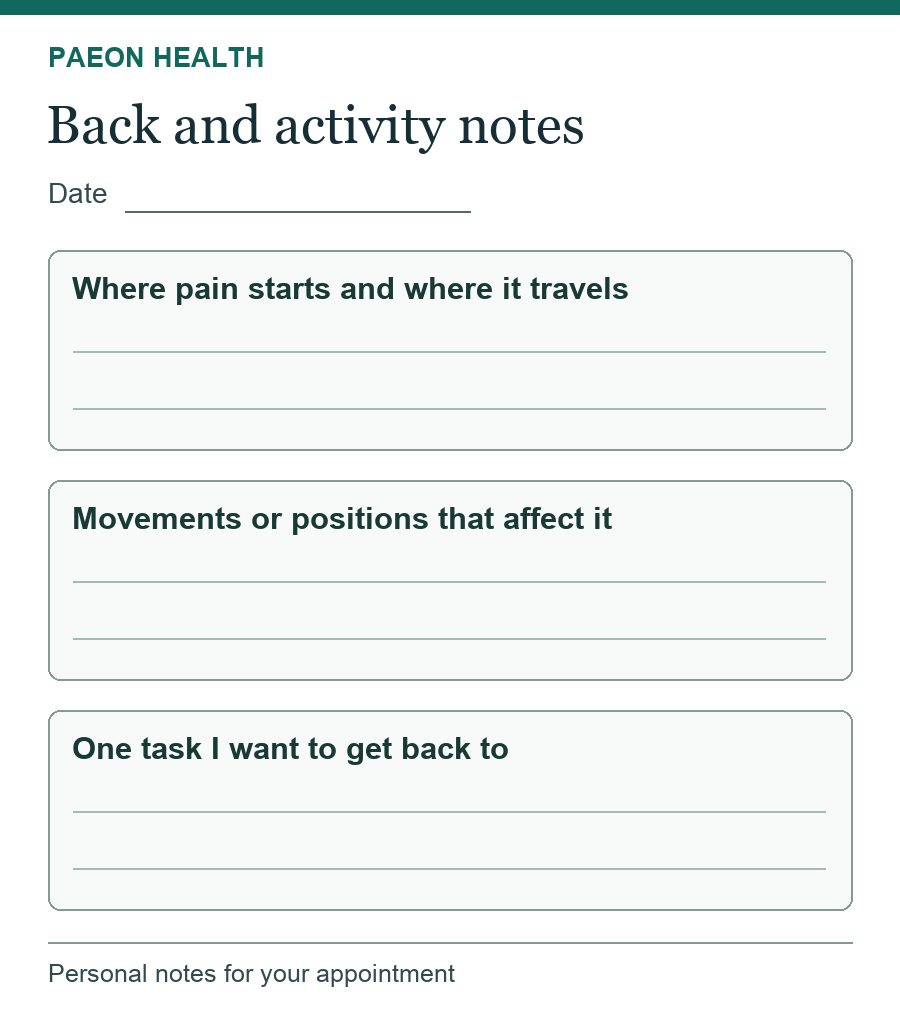
3 details to bring to a back pain visit
Try describing one activity that has changed since your back began hurting. For example, tell your doctor how standing at the sink or putting on a shoe feels now compared with a typical day before the pain began.
- Where does it go? Describe where it starts and whether it stays in your back or travels toward a buttock or leg. Include which side.
- What changes it? Note whether sitting, standing or walking affects your symptoms. If an injury preceded the pain, write down when it happened.
- What are you trying to get back to? Choose one daily task that matters to you. If you have already tried a treatment, note whether that particular task became easier.
What to Expect at Your Visit
First visit
- Discussion of your pain and history.
- Physical exam including neurological checks.
- Determination of whether imaging is needed.
- Initial treatment plan — medication, activity guidance, physical therapy referral.
Follow-up (2–4 weeks later)
- Reassess pain and function.
- Review imaging or lab results if obtained.
- Adjust treatment — progress with physical therapy, consider further testing or referral if not improving.
Most patients see significant improvement within 4–6 weeks with conservative care. Chronic back pain (lasting >12 weeks) may require a more comprehensive, multidisciplinary approach.
Telehealth follow-up is available across Illinois when clinically appropriate, and the patient must be physically in Illinois. For the initial evaluation and physical exam, an office visit is required.
Returning to a particular activity after back pain
If your main question is whether you can return to work, explain what a shift involves. Working at a computer, loading packages and driving for hours place different demands on your day. Note the movements you can manage and which ones interrupt the task.
At follow-up, compare the same activity you described at your first appointment. If walking is easier but standing still remains hard, say so. You can also bring prior physical therapy instructions or an imaging report and ask which parts of the earlier plan still fit your situation.
Related worksheets for your visit
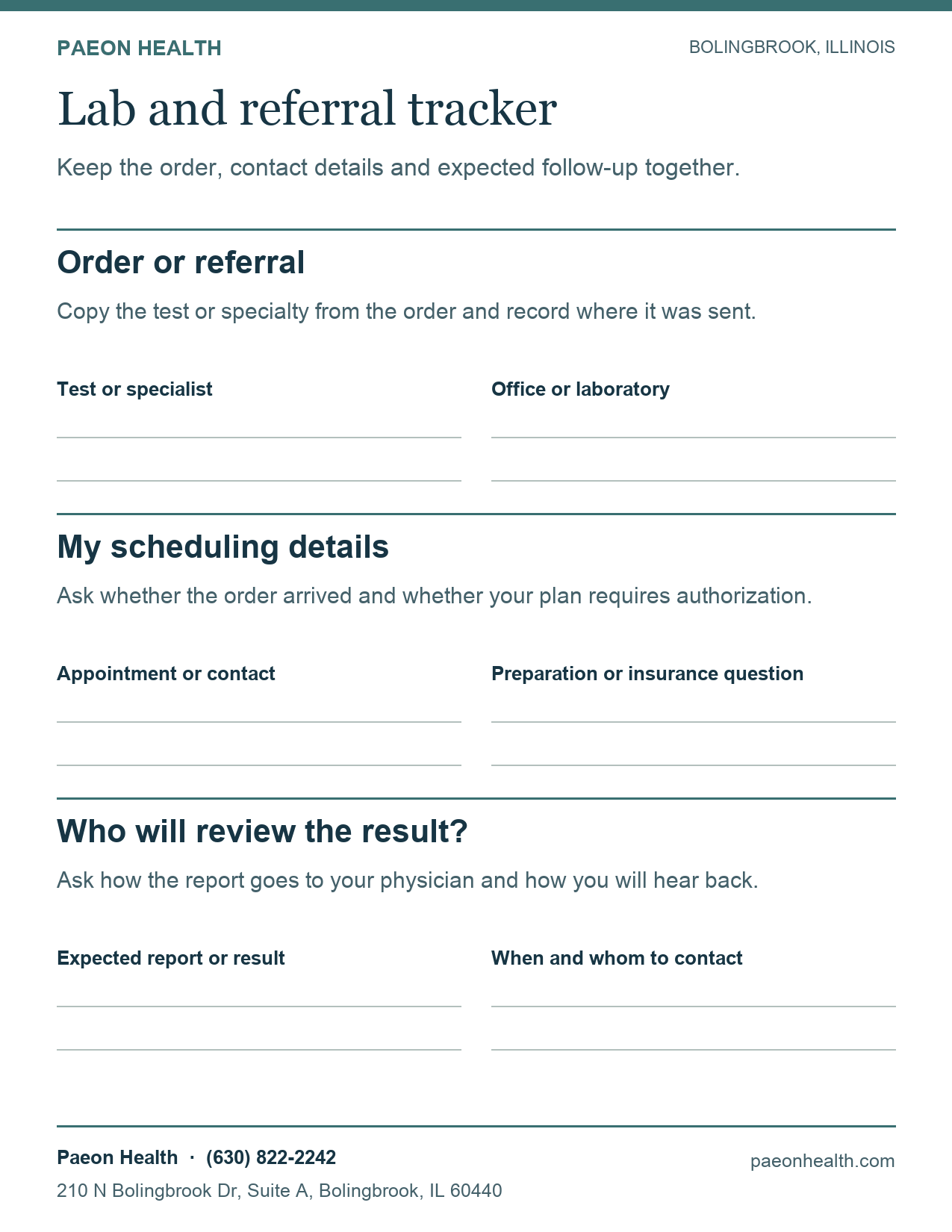 Download lab and referral tracker (PNG)
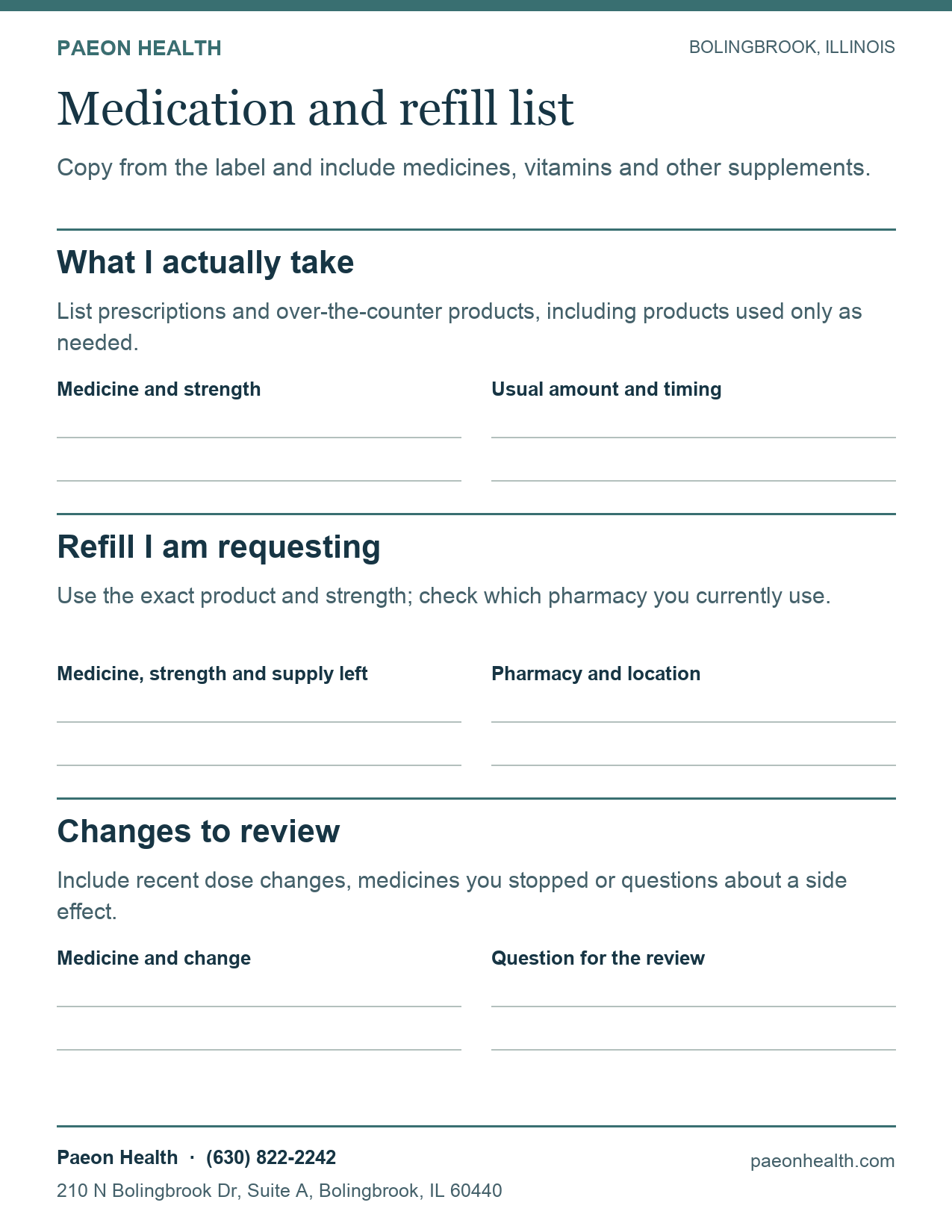 Download medication and refill list (PNG)
Insurance & Self-Pay
Network participation depends on your exact plan and where you receive care. Coverage for office visits, physical therapy, imaging, and medications varies by plan. Always verify your exact plan and network with your insurer.
Self-pay pricing: New Patient Office visit $225, Established Follow-Up $150, Same-Week Sick $175. Imaging, physical therapy, medications, and injections are extra. A Good Faith Estimate is available on request.
FAQ
Q: Do I need an MRI for my back pain? A: Not usually. Most acute back pain improves without imaging. MRI is typically recommended if pain persists beyond 4–6 weeks, or if there are red flags (neurological symptoms, fever, trauma, cancer history). Early MRI often shows incidental findings that lead to unnecessary treatment.
Q: Is bed rest good for back pain? A: No — prolonged bed rest can weaken muscles and prolong recovery. Short rest (1–2 days) for severe pain, then gradual return to normal activity and gentle exercise is recommended.
Q: When should I consider surgery? A: Surgery is usually considered only after conservative treatment (physical therapy, medication, injections) has failed over several months, or if there is progressive neurological deficit (weakness, loss of bowel/bladder control). Most back pain does not require surgery.
Q: Can back pain be prevented? A: Yes — regular exercise (especially core strengthening), maintaining a healthy weight, proper lifting technique, good posture, and ergonomic work setup can prevent many episodes.
Q: Is sciatica the same as back pain? A: Sciatica is a specific type of back pain caused by irritation of the sciatic nerve, causing pain radiating down the leg. It is often caused by a herniated disc. Treatment is similar but may require more specific evaluation.
Q: Where is Paeon Health located? A: 210 N Bolingbrook Dr, Suite A, Bolingbrook, IL 60440. Phone: 630-822-2242.
Ready to Find Relief?
Back pain should not control your life. Schedule an evaluation with Dr. Walid Sayyed at Paeon Health. New adult office visits can be booked through the Elation Patient Passport portal; established patients can book via the portal; or call 630-822-2242.
View appointment options · Explore primary care services
Patient resource: MedlinePlus guide to back pain.
This content is for educational purposes only and is not medical advice. For medical emergencies, call 911. To discuss your specific health needs, book an appointment with Walid Sayyed, MD, at Paeon Health or call 630-822-2242.