
A home blood pressure reading and a cholesterol result raise different questions. Start with the information in front of you, then choose what you want to discuss at your next visit.
I’m checking my blood pressure
A log is easier to review when the date and time appear beside each reading. If you are unsure about your cuff or how to use it, make a note to bring it with you.
- Taking a home blood pressure reading. Review cuff fit, positioning, and how to keep a log.
- Understanding high blood pressure. Read about the two numbers and questions to raise when readings vary.
I’m looking at cholesterol or heart risk
Bring the full lipid report if you have it. Write down whether your main question is about the numbers, your family history, or a medicine you’ve been offered.
- LDL, HDL, and triglycerides. Match the names on your report to what each measures.
- What happens in a cardiac risk assessment. See how your clinician puts individual risk factors together.
- Common questions about statins. Prepare for a discussion about a prescription.
- Food choices for heart health. Explore changes that can fit into the meals you already make.
What to bring to your visit
Bring your home readings, blood pressure monitor, medication list, and any outside lab results. Consider asking, “Which reading or trend should I pay attention to, and when should I call the office?”
3 questions to bring with your blood pressure log
1. Am I measuring consistently?
If you have a home monitor, bring the device and its cuff to your appointment. Ask the clinician to watch how you position the cuff and your arm. A cuff that fits, the way you sit and the timing of a reading can affect your measurements. You can practice the routine you will actually use at home.
The American Heart Association’s home blood pressure instructions explain how to sit, rest and take a reading. If someone helps you with the cuff, read the instructions together and write down anything that is difficult to do with your equipment.
2. Which readings and details should I bring?
Use a log you can read and maintain. Leave space for the date, time, top and bottom numbers, and any notes you were asked to keep. When a reading surprises you, keep the original entry and note the circumstances beside it. Bring the log rather than relying on a single number you remember.
Ask how often to measure and which changes should prompt a call in your situation. If you already keep readings in an app, check whether you can show a dated list during the visit. A family member who helps with measurements can bring the paper log or help you find the list on your phone.
3. How do my other heart health numbers fit in?
Blood pressure and cholesterol appear in different places. If you want to discuss both, bring the monitor log and the complete cholesterol report. The lab report lists separate values such as LDL, HDL and triglycerides. Note the date and laboratory beside each report so you and your clinician can follow the discussion.
Give your clinician a current medication list, including doses, and explain your main question in one sentence. For example, “Which result are we following, and when do you want to review it again?” Before leaving, write down the measurement you will keep at home and the date or instructions for your next follow-up.
Print a sheet for your blood pressure, cholesterol or medicines
Pick the sheet that matches the information you already have. Bring your completed sheet to your next visit with the monitor, report or medicine labels you used.
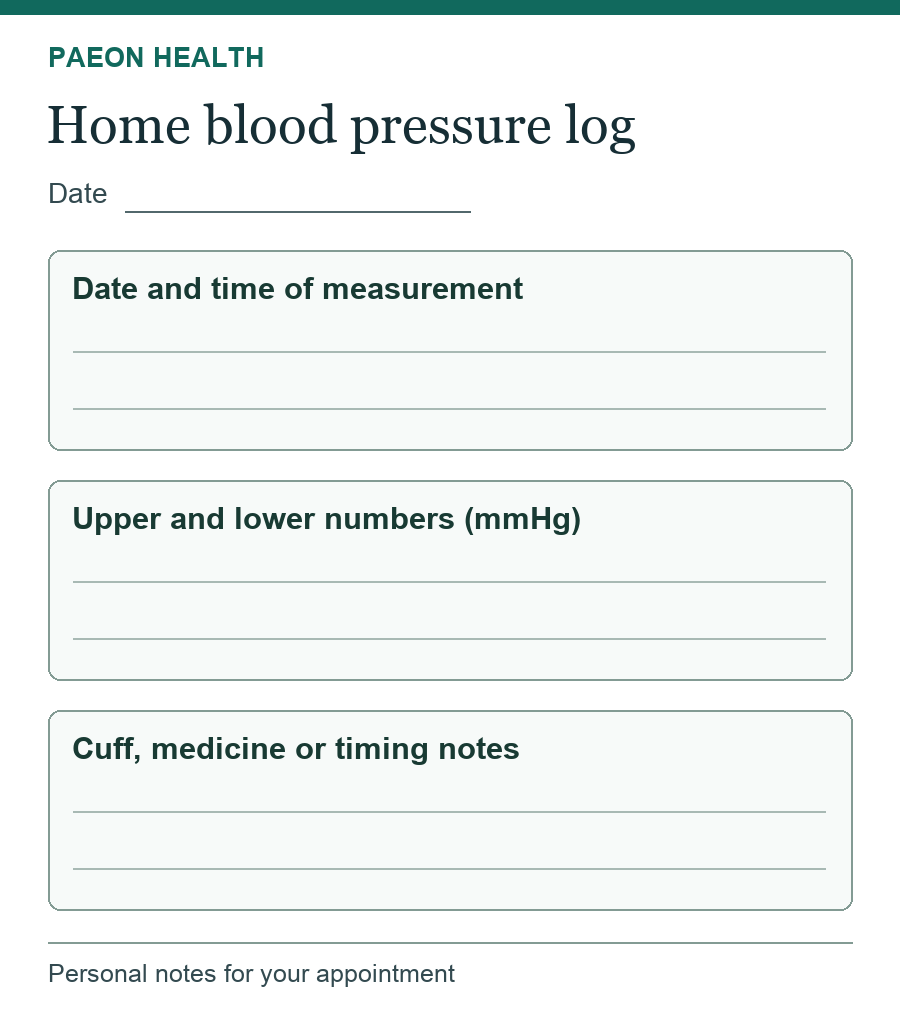
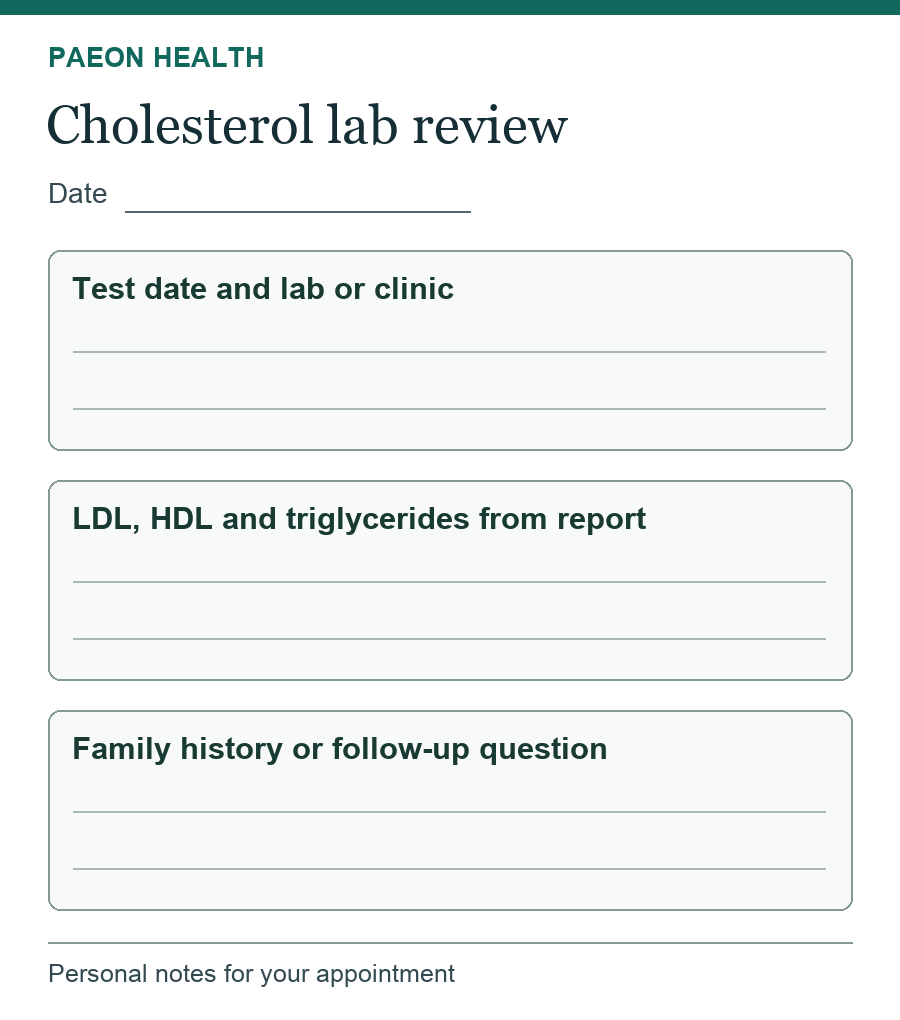
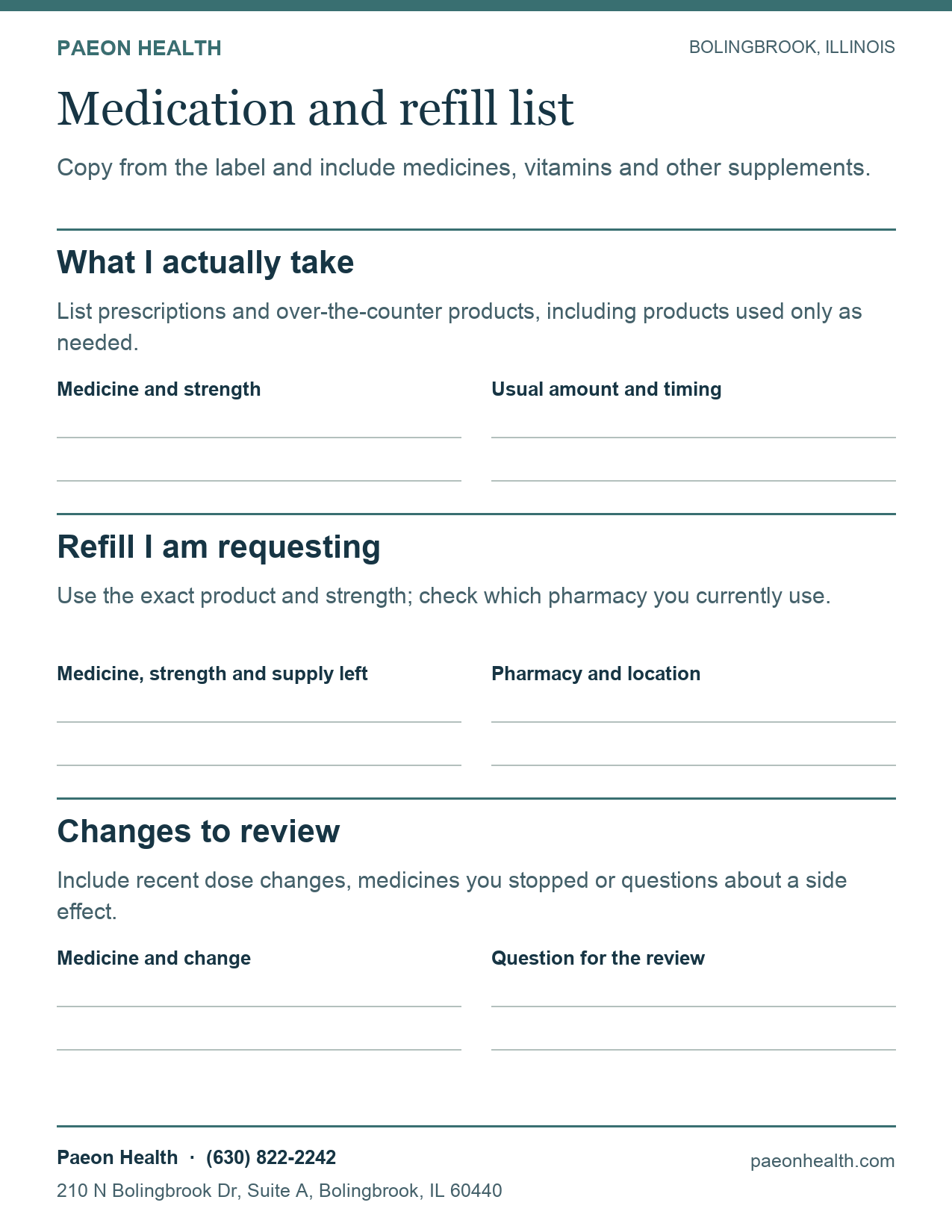
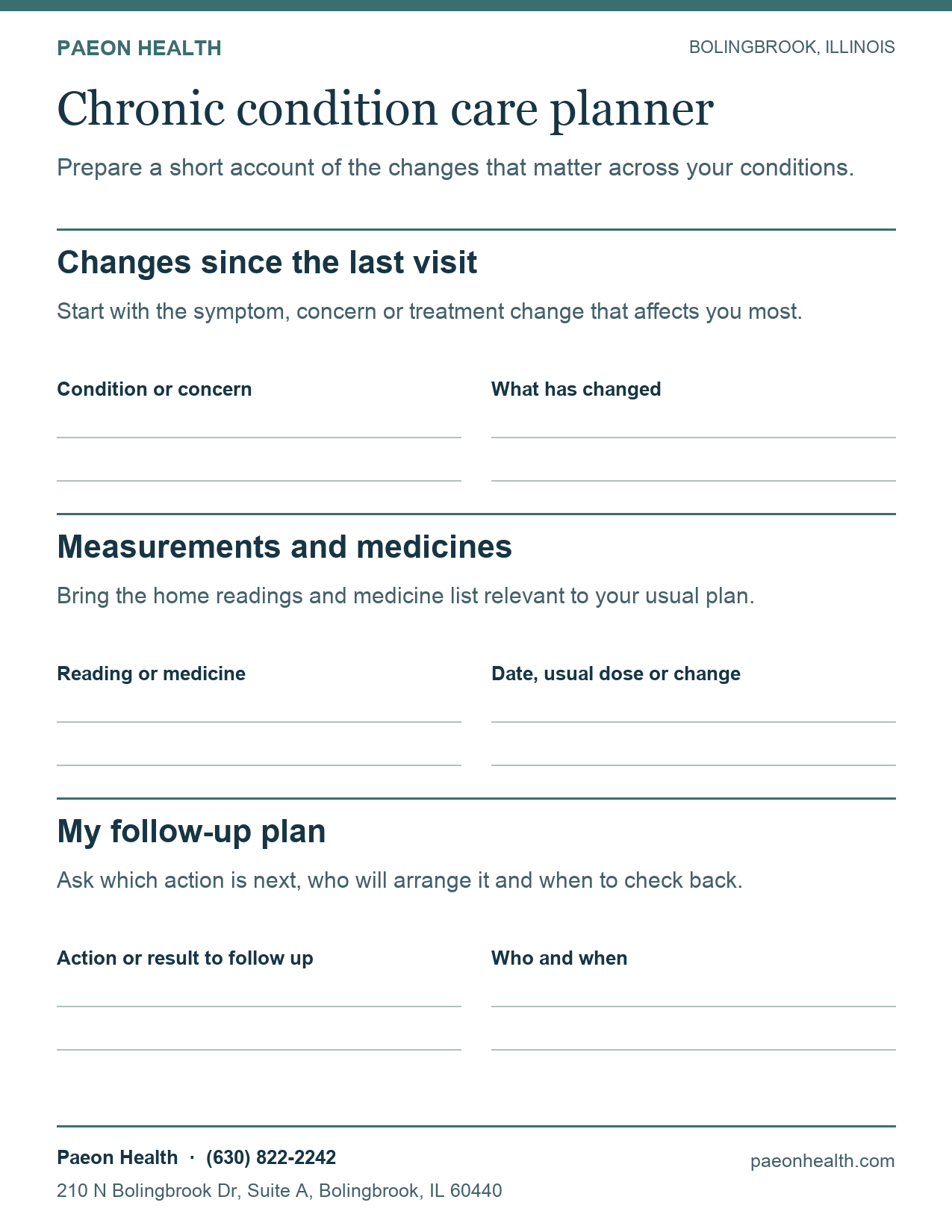
How to take and record a home blood pressure reading
Set up the space and cuff
Choose a chair that supports your back, with a table beside it to support your arm. Sit with both feet flat on the floor. Push up a sleeve or remove the garment so the cuff goes on bare skin without a tight sleeve pressing above it. Position the cuff as the manufacturer shows, with your arm supported around heart level.
Look at the size printed on the cuff. If you do not know whether it fits your upper arm, take it to your appointment and ask the clinician to check. If someone usually measures your blood pressure for you, have that person learn the same setup so your log is easier to interpret.
Allow time before the reading
The American Heart Association recommends avoiding exercise, caffeine and smoking for the half hour beforehand. Empty your bladder, then spend at least five minutes resting quietly. Reading immediately after climbing stairs or sitting down in a hurry makes it harder to compare that entry with a reading taken after rest.
Leave your phone on the table and avoid talking during the measurement. If you have been given personal instructions about when to check, follow that schedule. If your work or home routine makes those instructions hard to follow, tell your clinician when you actually have time to measure.
Make each entry easy to interpret
At a scheduled check, take two readings roughly a minute apart and record both. Write the date, the time and which reading came first. If the device also displays a pulse, label it separately so you can distinguish it from the two blood pressure numbers when you review the log.
When a measurement seems unexpected, write down any issue you noticed with the cuff or your position. Ask your clinician in advance how to respond to readings outside your personal range. If the office has given you specific instructions for urgent readings or symptoms, keep those instructions with your monitor.
Bring the equipment to follow-up
Bring your readings, the monitor and its cuff to the office. Ask your clinician to observe you taking a measurement the way you do it at home. A short demonstration can show whether a difference comes from positioning or from the way the device stores and displays the measurements.
Bring a cholesterol report and a blood pressure log to the same visit
Which numbers come from the lab report?
Look for the collection date and the heading “lipid panel” or “lipid profile.” A typical report includes total cholesterol, LDL cholesterol, HDL cholesterol and triglycerides. Copy the label beside each result when making your notes. If your report has a line called non-HDL cholesterol, keep it as a separate entry so it does not get confused with the HDL result.
Total cholesterol summarizes cholesterol carried by several types of particles. LDL and HDL are different types of particles that carry cholesterol. Triglycerides are a type of fat in the blood. The individual entries help the clinician interpret the panel. If you only remember the total, try to bring the complete report rather than guessing what the other values were. MedlinePlus explains the components of a cholesterol test.
What if I have reports from several years?
Start with the most recent report and one earlier report you want to compare. Label each with the date, the laboratory and whether you were given instructions about fasting. If one report was done while you were taking a different medicine, note the approximate time the medicine changed. If you do not know a date, mark it as uncertain rather than trying to reconstruct an exact day.
A useful opening question is, “Which part of this panel matters most for the decision we are making today?” Your clinician may want to discuss the trend, review a medicine or consider other information about your overall risk. If further testing is recommended, ask when the next sample should be collected and which preparations apply to that specific order.
Which details help me discuss heart risk?
Write down any personal history your clinician may not have, such as care you received at another office, a previous heart-related hospital visit, or a family history that you want to discuss. If a relative had a heart attack or stroke, note the relationship and their approximate age at the time if you know it. It is fine to say that you do not know.
A blood pressure log and a cholesterol report answer different questions, and a clinician may use both in discussing overall cardiovascular risk. Ask what information went into that discussion and what change would affect the recommendation. If you would like to read about the tests beforehand, the National Heart, Lung, and Blood Institute explains cholesterol testing.
What if my question concerns a prescription?
Bring the medicine bottle or a list showing the name and strength. Describe how you actually take it and what prompted your question. If it is hard to remember a dose, pay for a refill or fit the medicine into your routine, say which issue is getting in the way. That gives the clinician something specific to address with you.
For a possible side effect, note what you noticed, when it started and whether you have spoken to a clinician or pharmacist about it. Ask whom to contact if the concern returns. A question to close with is, “Which blood pressure readings, lab results or symptoms will we review before making another change?” Write the answer beside the follow-up date so you know what to collect.
Browse all heart and blood pressure articles · Browse the full Paeon Health blog