
Joint pain is one of the most common reasons adults visit a primary care doctor. Whether it is a stiff knee in the morning, an aching shoulder, or swollen finger joints, pain that limits your movement can take a real toll on your quality of life — making it hard to work, sleep, exercise, or enjoy time with family.
At Paeon Health in Bolingbrook, Illinois, Dr. Walid Sayyed — a board-certified family medicine physician — diagnoses and treats arthritis and joint pain for adults across the Naperville, Romeoville, and Plainfield area. As an independent primary care practice, we take time to understand your pain, identify the cause, and build a treatment plan that gets you moving again.
Arthritis is not a single disease — it is a term covering more than 100 conditions affecting the joints. The most common types are osteoarthritis (wear-and-tear), rheumatoid arthritis (autoimmune), and gout. Treatment differs depending on the type, so an accurate diagnosis is the first step.
What Is Arthritis?
Osteoarthritis (OA) is the most common form, affecting millions. It occurs when the protective cartilage cushioning the ends of bones wears down over time, causing pain, stiffness, and reduced range of motion. It most often affects the knees, hips, hands, and spine. Risk factors include age, obesity, joint injury, overuse, and genetics.
Rheumatoid arthritis (RA) is an autoimmune disorder in which the body’s immune system attacks the lining of the joints, causing painful swelling, warmth, and eventually joint damage. It often affects the hands, wrists, and feet symmetrically, and can also affect other organs. Early diagnosis and treatment are important to prevent joint damage.
Gout is a form of inflammatory arthritis caused by uric acid crystals building up in a joint — often the big toe — causing sudden, severe pain, redness, and swelling. It can be managed with medication and diet.
Other causes of joint pain include bursitis, tendinitis, injury, fibromyalgia, lupus, and referred pain from the spine. Not all joint pain is arthritis — which is why a proper evaluation matters.
Symptoms that can accompany joint pain
Symptoms vary by type, but common signs include:
- Joint pain, aching, or tenderness
- Stiffness, especially in the morning or after inactivity
- Swelling, redness, or warmth around a joint
- Reduced range of motion or difficulty moving the joint
- Grinding or clicking sensation (crepitus)
- Weakness or instability in the joint
- Fatigue and general malaise (more common with inflammatory types like RA)
- Joint deformity in advanced cases
- Pain that worsens with activity and improves with rest (typical of OA)
Seek care sooner if: you have sudden severe joint pain with redness and fever (possible infection or gout flare), joint pain after an injury, or symptoms that come on rapidly and affect multiple joints. For emergencies, call 911.
How Primary Care Approaches Arthritis & Joint Pain at Paeon Health
Dr. Sayyed’s approach to joint pain is systematic and personalized:
Accurate diagnosis
- Detailed history — which joints, when pain started, what makes it better or worse, morning stiffness, family history.
- Physical exam — checking each affected joint for swelling, warmth, range of motion, and tenderness.
- Labs — when inflammatory arthritis is suspected: rheumatoid factor, anti-CCP, uric acid, ESR/CRP inflammation markers.
- Imaging — X-rays of affected joints, or referral for MRI or ultrasound when needed.
- Joint aspiration — in some cases, fluid from a swollen joint is analyzed (often done by a specialist).
Treatment tailored to the type
- Osteoarthritis: exercise and physical therapy, weight management if applicable, pain management with over-the-counter or prescription medications, joint injections (corticosteroid or hyaluronic acid, when appropriate), assistive devices (braces, canes), and referral to orthopedics if surgery is being considered.
- Rheumatoid arthritis: prompt referral to a rheumatologist for disease-modifying medications (DMARDs), with primary care coordinating overall care.
- Gout: medication to treat acute flares and prevent future attacks, plus dietary and lifestyle guidance.
- Bursitis/tendinitis: rest, activity modification, physical therapy, anti-inflammatory medication, and sometimes injection.
Shoulder and knee injections
Paeon Health offers shoulder and knee injections as an in-office service. For appropriate candidates, corticosteroid injections can reduce inflammation and provide months of pain relief, allowing you to participate in physical therapy and exercise. Dr. Sayyed will evaluate whether an injection is appropriate for you.
Lifestyle and prevention
- Weight management — every pound of body weight translates to several pounds of force on the knees.
- Low-impact exercise — swimming, cycling, walking, and strength training support joint health.
- Physical therapy referral — targeted exercises can strengthen muscles around the joint and reduce pain.
- Heat/cold therapy, activity modification, and ergonomic adjustments.
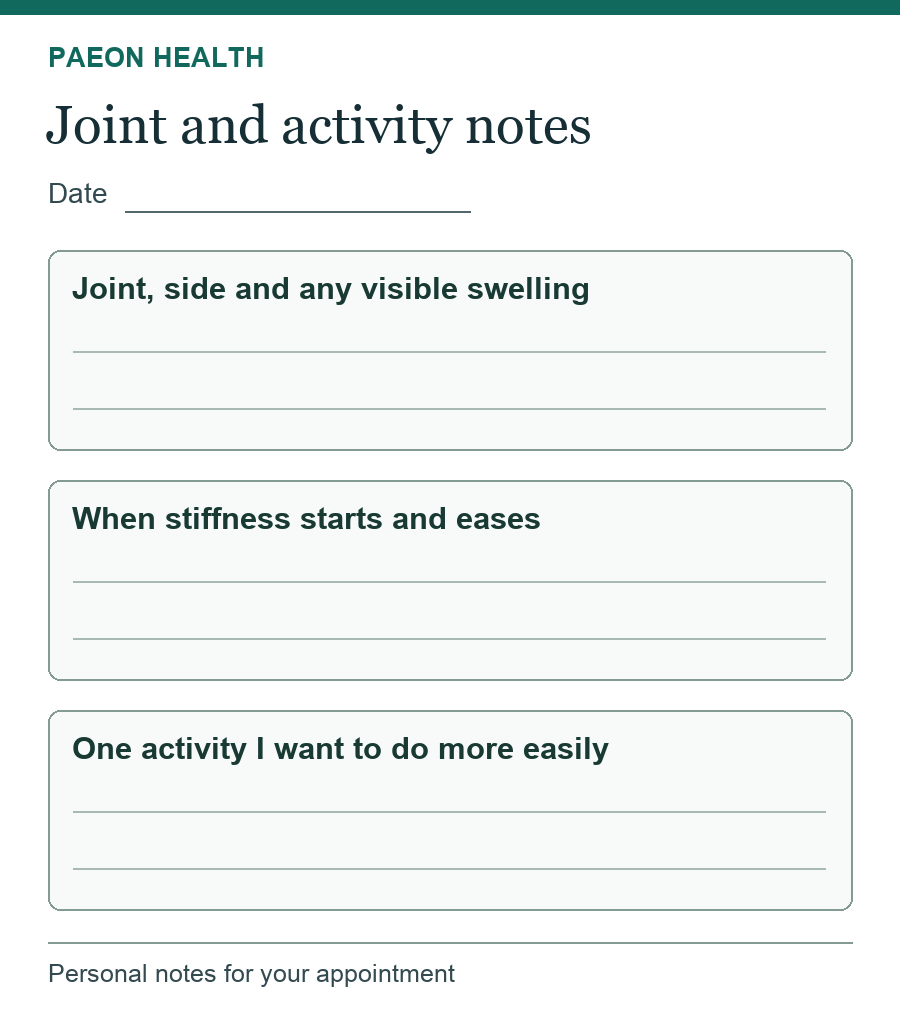
3 clues to bring to a joint pain visit
A knee that hurts going downstairs and fingers that feel stiff when you wake up are different experiences. Pick a typical day and describe what happened in terms of the things you actually do.
- Which joint and side? Mark the location as precisely as you can, including whether one or both sides bother you. Mention swelling you noticed.
- When is it most noticeable? Record when stiffness starts, how long it lasts and whether moving or resting changes it.
- Which activity matters most? Choose one task you want to do more comfortably, such as fastening buttons or getting out of a chair. This gives you something concrete to revisit at follow-up.
What to Expect at Your Visit
First visit
- Discussion of your pain — location, duration, triggers, what helps.
- Physical exam of affected joints.
- Labs or imaging ordered as needed.
- Initial treatment plan — medication, activity modification, physical therapy referral, or injection if appropriate.
Follow-up
- Reassess pain and function.
- Adjust medication or treatment.
- Review lab or imaging results.
- Refer to rheumatologist, orthopedist, or physical therapy as needed.
Many patients find significant relief with a combination of medication, exercise, and weight management. Surgery is a last resort, not a first step.
Telehealth follow-up is available across Illinois when clinically appropriate, and the patient must be physically in Illinois. For joint exams and injections, an office visit is required.
What changed since your last joint pain visit?
When joint pain fluctuates, it is easy to remember only the best or worst day. Choose a familiar task such as carrying groceries or getting out of the car. Explain which part of the movement caused trouble, whether you needed help and what happened afterward.
If you have tried physical therapy or received an injection elsewhere, bring the note if you have it. Otherwise, record the joint and side, approximate date and how long the change lasted. Tell your clinician what you could actually do more easily. An improvement in sleep may matter more to you than a change in a pain score.
Related worksheets for your visit
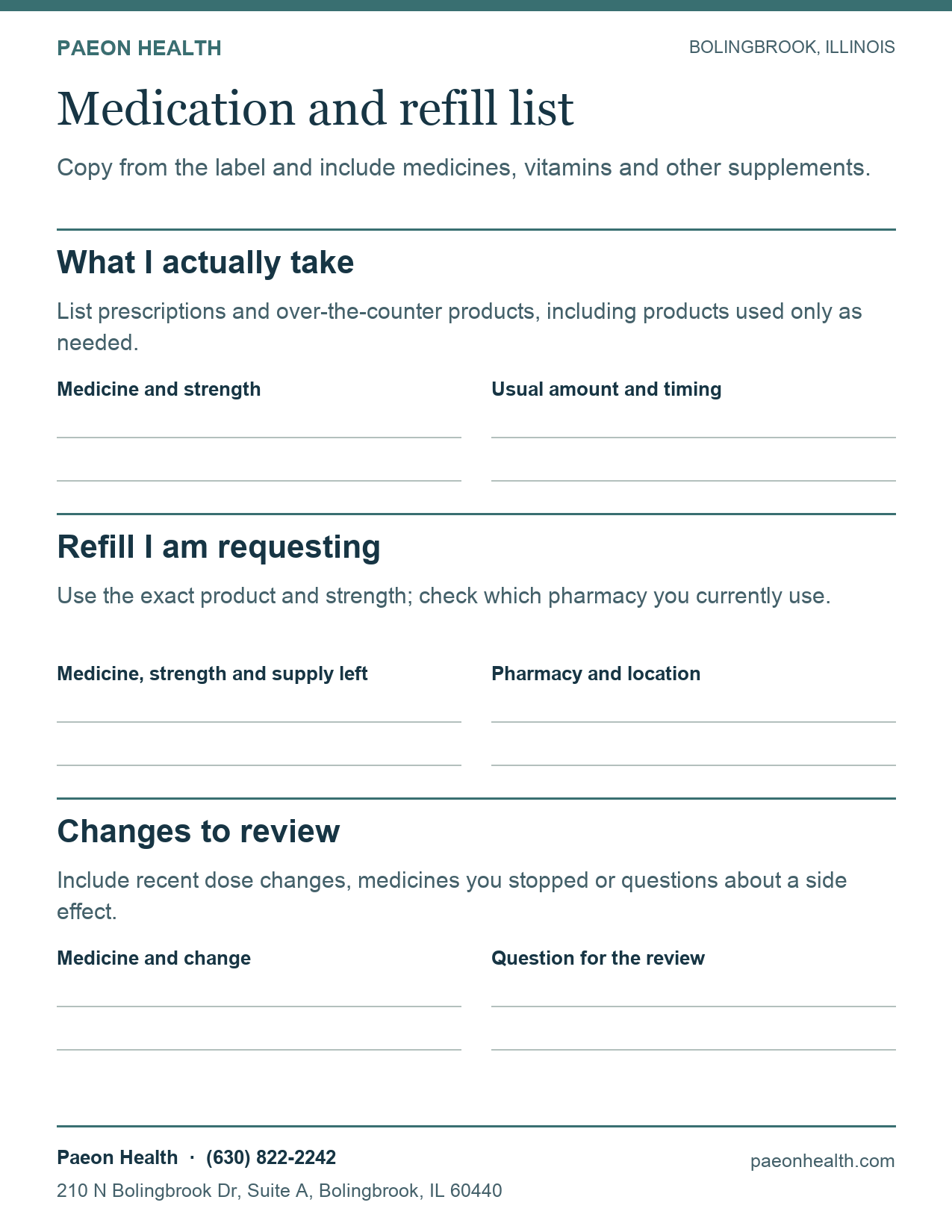 Download medication and refill list (PNG)
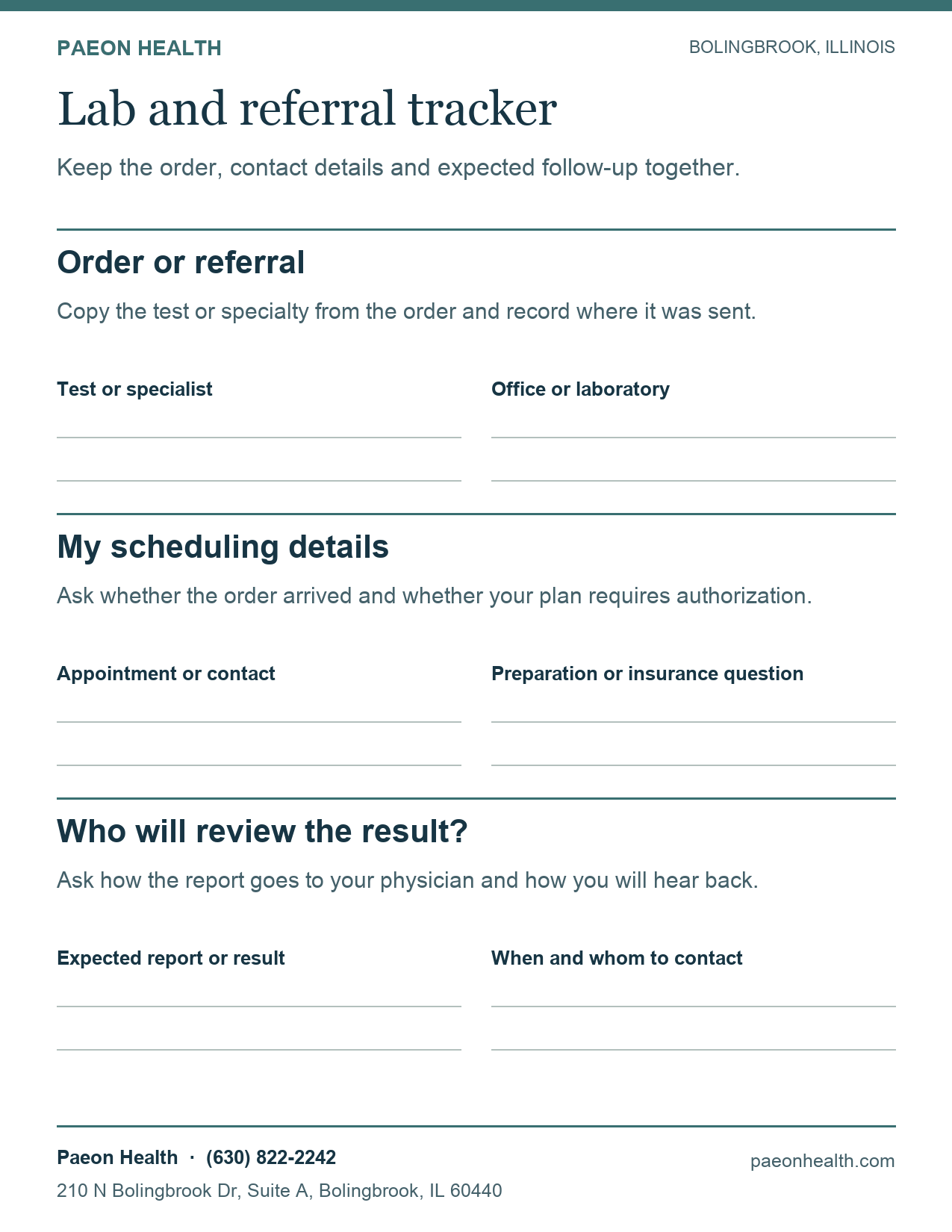 Download lab and referral tracker (PNG)
Insurance & Self-Pay
Network participation depends on your exact plan and where you receive care. Coverage for office visits, labs, imaging, physical therapy, and injections varies by plan. Always verify your exact plan and network with your insurer.
Self-pay pricing: New Patient Office visit $225, Established Follow-Up $150, Same-Week Sick $175. Injections, labs, imaging, and medications are extra. A Good Faith Estimate is available on request. HSA/FSA funds can often be used for these expenses.
FAQ
Q: Is there a cure for osteoarthritis? A: There is no cure, but osteoarthritis can be effectively managed. Treatment reduces pain, improves function, and slows progression. Joint replacement surgery is an option for severe cases when conservative treatment fails.
Q: Do I need to see a rheumatologist? A: If your doctor suspects rheumatoid arthritis, lupus, or another inflammatory autoimmune arthritis, referral to a rheumatologist is usually recommended for specialized treatment. Primary care coordinates your overall care.
Q: Are knee injections safe? A: Corticosteroid injections are generally safe and effective for appropriate candidates, with a low risk of side effects. They are not right for everyone — your doctor will evaluate and discuss risks and benefits.
Q: Can exercise make arthritis worse? A: No — appropriate exercise is one of the best treatments for arthritis. It strengthens the muscles around the joint, improves flexibility, and reduces pain. A physical therapist can design a safe program.
Q: Does weather affect arthritis pain? A: Many patients report increased pain with cold, damp weather, though studies show mixed results. Regardless, staying active year-round is beneficial.
Q: Where is Paeon Health located? A: 210 N Bolingbrook Dr, Suite A, Bolingbrook, IL 60440. Phone: 630-822-2242.
Book a visit for joint pain or stiffness
Don’t let joint pain keep you from the activities you love. Schedule an evaluation with Dr. Walid Sayyed at Paeon Health. New adult office visits can be booked through the Elation Patient Passport portal; established patients can book via the portal; or call 630-822-2242.
View appointment options · Explore primary care services
Patient resource: MedlinePlus guide to joint conditions.
This content is for educational purposes only and is not medical advice. For medical emergencies, call 911. To discuss your specific health needs, book an appointment with Walid Sayyed, MD, at Paeon Health or call 630-822-2242.