
Wheezing, shortness of breath, chest tightness, a cough that will not quit — asthma can range from a mild nuisance to a life-threatening attack. The key to living well with asthma is an accurate diagnosis, a written asthma action plan, proper inhaler technique, and regular follow-up. If you are looking for an asthma doctor in Bolingbrook, IL, Paeon Health provides comprehensive adult asthma care. Walid Sayyed, MD, board-certified family medicine physician, will take the time to confirm your diagnosis, teach you how to use your inhalers correctly, and build a plan that keeps you active and out of the emergency room.
Asthma is a chronic condition of the airways: they become inflamed and hyper-responsive, narrowing and producing extra mucus in response to triggers. It is different from COPD (chronic obstructive pulmonary disease), though they can overlap, especially in adults who smoke. Getting the right diagnosis matters because treatment differs.
What Is Asthma?
In asthma, the lining of the airways is inflamed and the muscles around them can tighten (bronchospasm), causing episodes of wheezing, breathlessness, chest tightness, and coughing — often at night or early morning, and often triggered by exercise, cold air, allergens (pollen, dust mites, pet dander, mold), respiratory infections, smoke, or strong odors. Asthma is variable: symptoms come and go, and lung function changes between episodes. That variability is one clue that helps distinguish it from COPD.
Diagnosis is based on your symptom pattern, physical exam, and often lung function testing (spirometry, sometimes with a bronchodilator response test). We may also check for allergies, reflux, and sinus problems, which can worsen asthma.
Signs & Symptoms
Common asthma symptoms include: – Wheezing (a whistling sound when breathing, especially exhaling) – Shortness of breath, especially with activity or at night – Chest tightness or pressure – Coughing — often dry, worse at night or early morning, or with exercise/cold air – Symptoms that flare with specific triggers (allergens, cold air, exercise, smoke, strong smells) – Symptoms that improve with a rescue inhaler
Seek emergency care immediately if you have severe shortness of breath, are struggling to speak full sentences, your lips or fingernails look blue, your rescue inhaler is not helping, or your peak flow drops into the red zone. Asthma attacks can be life-threatening — do not wait. For routine symptoms and diagnosis, schedule a primary care visit.
How Primary Care Approaches Asthma at Paeon Health
Dr. Sayyed’s approach: listen, evaluate, explain, plan.
Listen. We review your symptom pattern — when symptoms occur, what triggers them, how often you wake at night, how often you use your rescue inhaler, whether exercise is limited, prior treatments and what worked, smoking history, allergies, and occupational exposures.
Evaluate. We do a physical exam, order spirometry (lung function testing) when appropriate, and sometimes chest X-ray or additional testing to rule out other causes. We assess asthma control (well-controlled, partly controlled, uncontrolled) based on symptoms and rescue inhaler use.
Explain. We explain the difference between controller (long-term, daily anti-inflammatory) and rescue (quick-relief) inhalers — one of the most common sources of confusion. We teach proper inhaler technique (many people use inhalers incorrectly, reducing effectiveness) and spacer use. We help you identify and reduce triggers. We create a written asthma action plan with green/yellow/red zones so you know exactly what to do when symptoms flare. We never provide specific doses in educational materials; your regimen is prescribed and adjusted by Dr. Sayyed.
Plan. Treatment is stepped up or down based on control — the goal is the lowest medication that keeps you well. We review inhaler technique at every visit, assess control, and adjust. We treat related conditions (allergies, sinusitis, reflux) that worsen asthma. We refer to pulmonology or allergy/immunology for severe or difficult-to-control asthma, and to the emergency department for severe attacks. We also provide flu and pneumonia vaccines, which are especially important with asthma.
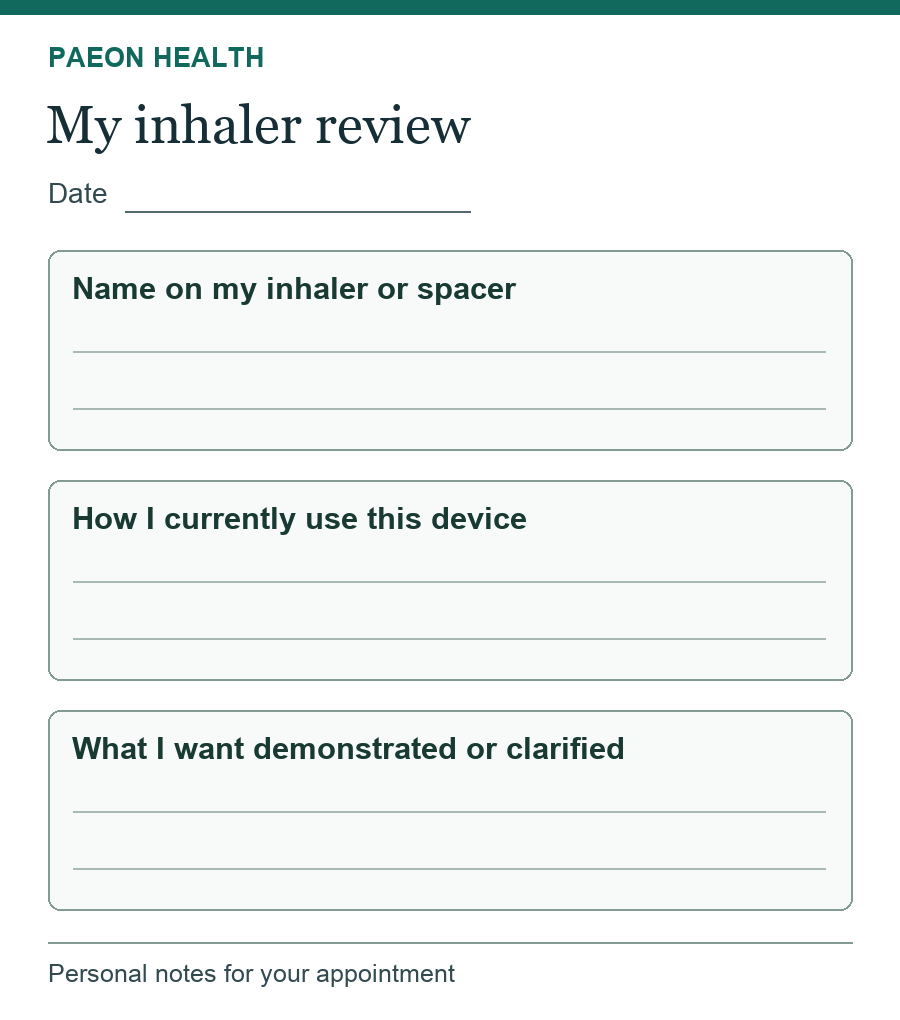
3 asthma questions to ask with your inhaler in hand
It can be hard to explain how you use an inhaler without the actual device. Bring the inhalers and spacer you currently use, if available. The label helps your doctor tell similar-looking inhalers apart.
- What is this inhaler for? List the name on each label and tell your doctor when you normally reach for it.
- Can you watch my technique? Show how you prepare the device and use it. Point out anything that is awkward, such as the cap, counter or spacer.
- Where does this fit in my action plan? Ask which instructions apply on an ordinary day and whom to contact if your symptoms change.
What to Expect at Your Visit
First visit: Bring your inhalers (so we can check technique and doses), any prior lung function tests, and a list of triggers and symptoms. We will review history, examine you, order spirometry if indicated, and set an initial plan and action plan.
Follow-up visits: Often every 2–6 weeks until controlled, then every 3–6 months. At each visit we assess control, review inhaler technique, check peak flow if you use a meter, and step treatment up or down. Many stable follow-ups can be done by telehealth across Illinois, when clinically appropriate, with you physically in Illinois.
Tests that may be ordered: spirometry (before and after bronchodilator), peak flow monitoring, allergy testing, chest X-ray if needed, and sometimes additional lung testing or referral.
When your asthma device or routine changes
If the pharmacy gives you a different-looking inhaler, bring the new device and the previous package or a photo if available. Ask the prescriber or pharmacist to show you how it is prepared, how you can tell doses remain and where the dose counter is. Mention any difficulty gripping the device or reading its label.
For a child who uses inhalers in more than one place, write down which device is kept at home, school or another caregiver’s house. Ask how to share the current written action plan with the people who help. For an adult who travels or works shifts, describe where the inhaler normally stays and when it has been hard to reach.
If two caregivers give an inhaler at different times, note how they share the instructions. At the appointment, ask how to recognize the current version of the action plan and when to replace the copy kept at school or work.
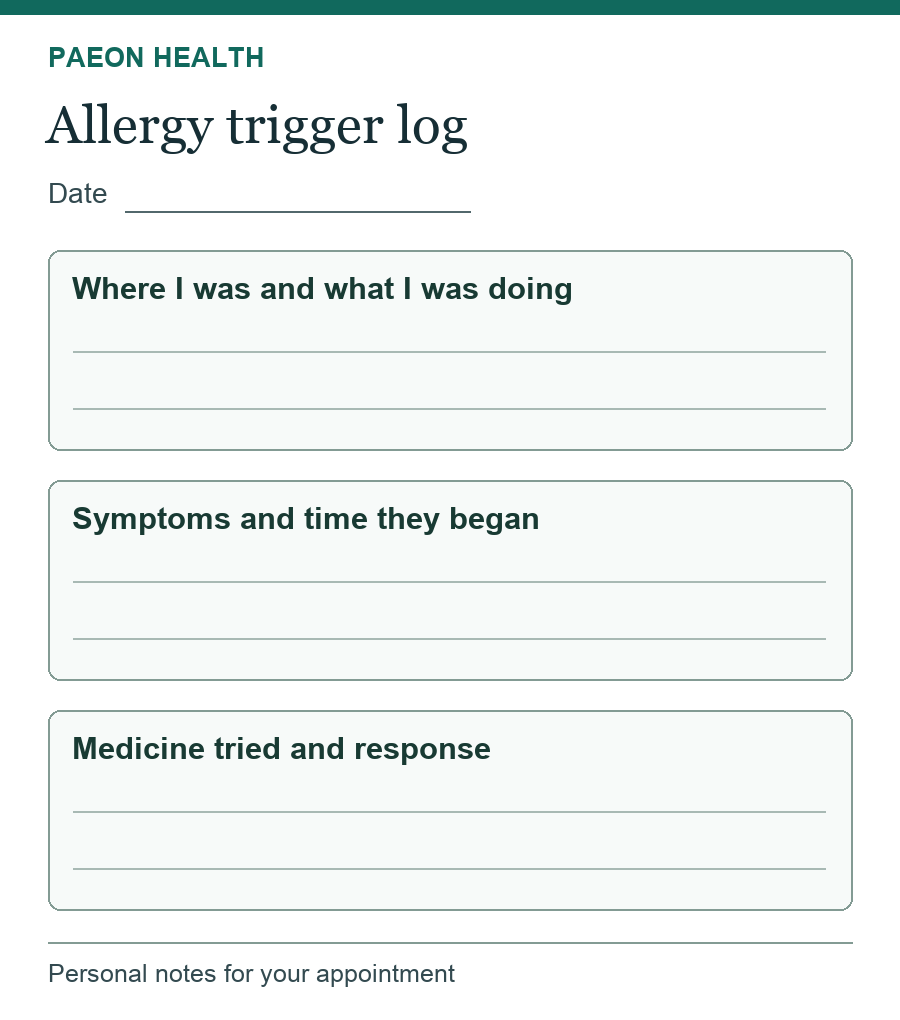
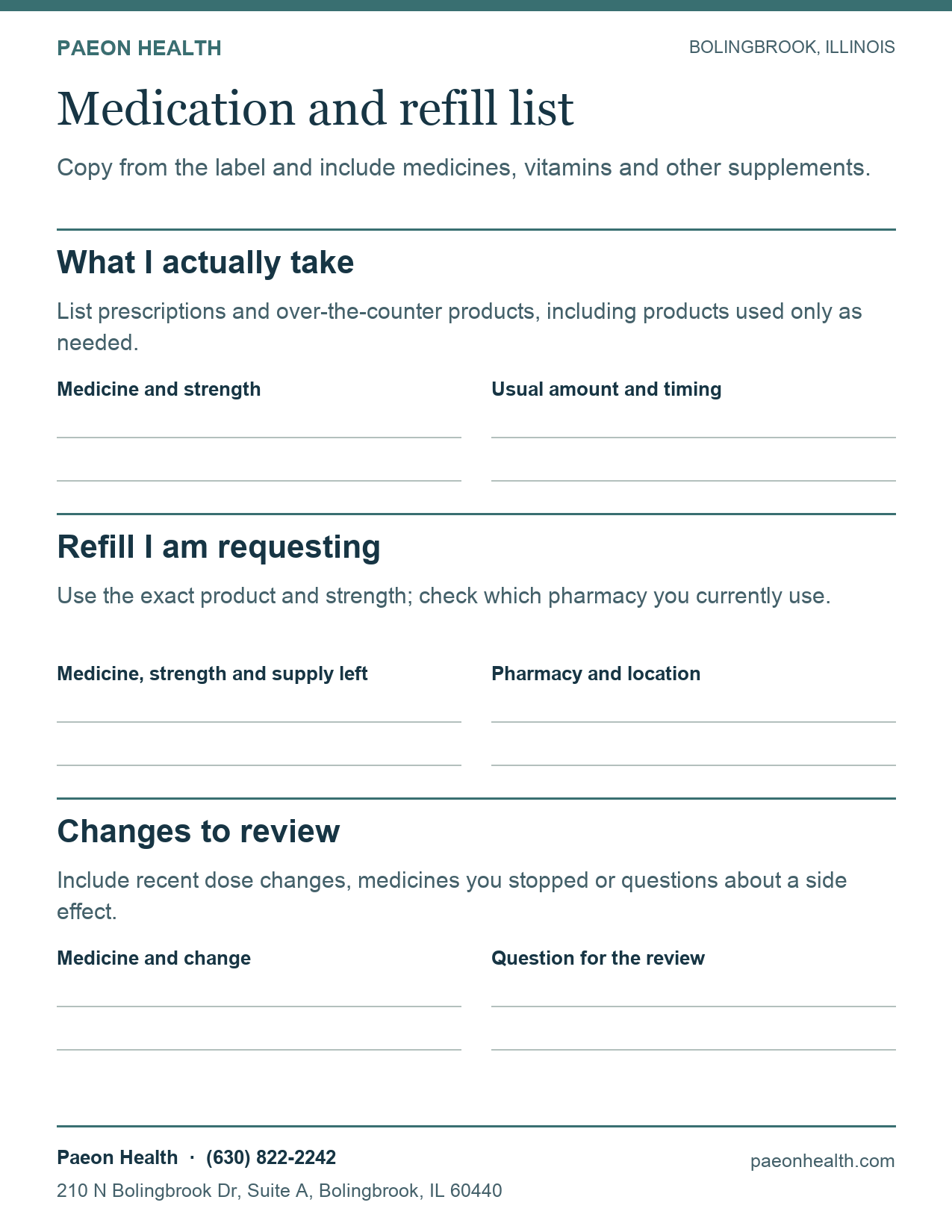
Related worksheets for your visit
 Download allergy trigger log (PNG)
 Download medication and refill list (PNG)
Insurance & Self-Pay
Network participation depends on your exact plan and where you receive care. Verify your exact plan and network. Self-pay prices: New Patient Office $225, Established Follow-Up $150, Established Patient Video $125, Annual Physical $225. Spirometry, inhalers, allergy testing, and outside services are extra. A Good Faith Estimate is available on request. Many generic inhalers are available; we will help you find affordable options and navigate insurance coverage for brand-name inhalers.
FAQ
Q: Can you develop asthma as an adult? A: Yes. Adult-onset asthma is common, especially in women, after respiratory infections, with allergies, or with occupational exposures.
Q: Is a rescue inhaler enough, or do I need a daily controller? A: If you use your rescue inhaler more than twice a week (except for exercise pre-treatment), wake at night with symptoms, or have activity limitation, you likely need a daily controller inhaler. We will assess and prescribe appropriately.
Q: Do inhaler steroids have side effects? A: Inhaled corticosteroids act mostly in the lungs, with much lower systemic exposure than oral steroids. Rinsing your mouth after use and using a spacer minimize local side effects (thrush, hoarseness). We will review.
Q: Can I exercise with asthma? A: Yes — many athletes have asthma. With proper treatment and, if needed, pre-exercise inhaler use, most people can stay active.
Q: What’s the difference between asthma and COPD? A: Asthma is variable and often reversible; COPD is progressive and usually related to smoking. They can overlap (ACOS). Spirometry helps tell them apart, and treatment differs.
Q: Should I get a flu shot if I have asthma? A: Yes — annual flu vaccine is strongly recommended, along with other age-appropriate vaccines, because respiratory infections can trigger severe asthma flares.
Book Your Asthma Care Appointment
If you need an asthma doctor in Bolingbrook, IL — for diagnosis, inhaler technique review, or an updated action plan — meet Walid Sayyed, MD, at Paeon Health. New adult office visits: Elation. Call about availability for a first video visit. Established patients: Elation Patient Passport portal. Questions? Call 630-822-2242. Office: 210 N Bolingbrook Dr, Suite A, Bolingbrook, IL 60440. Hours: Mon–Fri 9AM–5PM, Sat 9AM–1PM. Spanish translation assistance available.
View appointment options · Explore primary care services
Patient resource: MedlinePlus guide to asthma.
This content is for educational purposes only and is not medical advice. For medical emergencies, call 911. To discuss your specific health needs, book an appointment with Walid Sayyed, MD, at Paeon Health or call 630-822-2242.