
Chronic obstructive pulmonary disease (COPD) — which includes emphysema and chronic bronchitis — makes breathing progressively harder, but the right treatment can preserve lung function, reduce flare-ups, and keep you active. If you are looking for COPD treatment in Bolingbrook, IL, Paeon Health offers diagnosis with spirometry, personalized inhaler regimens, smoking cessation support, and written action plans. Walid Sayyed, MD, a board-certified family physician licensed in Illinois since 2022, manages COPD as part of comprehensive primary care, coordinating with pulmonology and pulmonary rehabilitation when needed.
COPD is most often caused by smoking, but long-term exposure to secondhand smoke, air pollution, occupational dusts and chemicals, and (rarely) a genetic condition called alpha-1 antitrypsin deficiency can also cause it. If you are over 40 with a smoking history and persistent cough or shortness of breath, ask about screening.
What Is COPD?
COPD is a progressive lung disease in which airflow is limited and not fully reversible. In emphysema, the air sacs (alveoli) are damaged, reducing oxygen exchange. In chronic bronchitis, the airways are inflamed and narrowed, producing a persistent cough with mucus. Many people have features of both. Unlike asthma (which is variable and often reversible), COPD is persistent and usually worsens over time — but treatment slows progression, reduces flare-ups (exacerbations), and improves quality of life.
Diagnosis requires spirometry (a breathing test) — symptoms alone are not enough. Early diagnosis matters, because treatment started earlier preserves more lung function.
Signs & Symptoms
COPD develops gradually, so symptoms are often dismissed as “smoker’s cough” or aging. Common symptoms: – A persistent cough, often with mucus (worse in the morning) – Shortness of breath, especially with activity — gradually worsening over time – Wheezing or chest tightness – Frequent respiratory infections – Fatigue – Bluish lips or fingernails (in advanced disease) – Unintended weight loss (in advanced disease) – Swelling in legs/ankles (in advanced disease with heart strain)
A COPD flare-up (exacerbation) is a worsening of symptoms — increased shortness of breath, change in mucus color/amount, increased cough — often triggered by a cold or pollution. Seek emergency care immediately if you have severe shortness of breath, cannot speak in full sentences, blue lips/fingernails, confusion, or chest pain. For routine evaluation and management, schedule a primary care visit.
How Primary Care Approaches COPD at Paeon Health
Dr. Sayyed’s approach: listen, evaluate, explain, plan.
Listen. We review your smoking history (pack-years), occupational and environmental exposures, symptom progression, cough and mucus pattern, flare-up history, prior treatments, and how symptoms limit your daily activities.
Evaluate. We do a physical exam and order spirometry (pre- and post-bronchodilator) to confirm diagnosis and stage severity. We may order a chest X-ray, oxygen level (pulse oximetry), alpha-1 testing if appropriate (especially early-onset or non-smokers), and assess for related conditions (heart disease, osteoporosis, depression, muscle wasting) that often accompany COPD.
Explain. We explain your lung function results in plain language, what stage you are in, and what to expect. We explain the difference between maintenance inhalers (long-acting bronchodilators, often with inhaled steroids for frequent flare-ups) and rescue inhalers, and teach proper technique and spacer use — critical because many people use inhalers incorrectly. We create a written COPD action plan so you know what to do at the first sign of a flare-up (when to start rescue medication, antibiotics, or steroids, and when to seek care). We never provide specific doses in educational materials; your regimen is prescribed and adjusted by Dr. Sayyed.
Plan. The cornerstones of COPD management: 1. Smoking cessation — the single most important intervention to slow progression. We offer counseling and medication support. 2. Inhalers — chosen based on severity, symptoms, and flare-up history. 3. Pulmonary rehabilitation — referral to a supervised exercise and education program, very effective for moderate-to-severe COPD. 4. Vaccines — annual flu, pneumonia, COVID, and others to prevent infections that trigger flare-ups. 5. Oxygen therapy if oxygen levels are low (tested and prescribed appropriately). 6. Flare-up action plan and early treatment to prevent ER visits and hospitalizations. We refer to pulmonology for severe disease, frequent flare-ups, or when advanced therapies (nebulizers, biPAP, lung volume reduction, transplant evaluation) are considered.
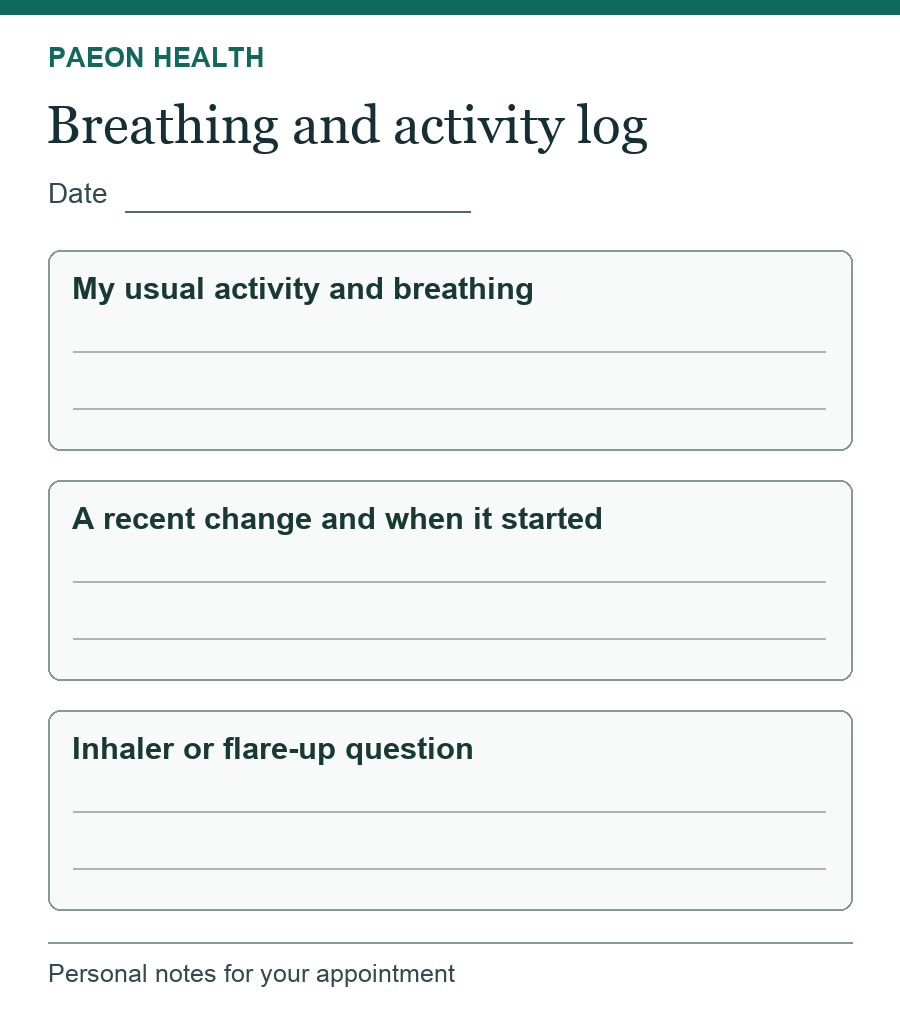
3 questions about COPD and your usual activities
Think about an activity you do often, such as walking to the mailbox. A specific example gives you and your doctor a common point of reference when discussing breathlessness.
- What is usual for me? Name one activity and how you generally feel doing it on an ordinary day.
- What is different now? If you have noticed a change, record when it started and where you needed to pause. Note any change in cough or mucus you want to discuss.
- What would I like clarified? Bring the names or photos of your inhalers and any written flare-up instructions. Ask whom to contact when your breathing is different from usual.
What to Expect at Your Visit
First visit: Bring your inhalers, prior spirometry or imaging, and medication list. We review history, examine you, order spirometry (or review prior), and set an initial plan. If you smoke, we will discuss cessation — without judgment.
Follow-up visits: Every 3–6 months for stable COPD, sooner after a flare-up. We assess symptoms, inhaler technique, flare-up frequency, oxygen needs, and adjust treatment. We monitor for complications and side effects. Many stable follow-ups can be done by telehealth across Illinois, when clinically appropriate, with you physically in Illinois.
Tests that may be ordered: spirometry with bronchodilator response, chest X-ray or CT, pulse oximetry (and sometimes overnight oxygen testing), CBC, alpha-1 antitrypsin level, EKG, and referral for pulmonary function testing or sleep study if indicated.
Preparing for a COPD visit after urgent or hospital care
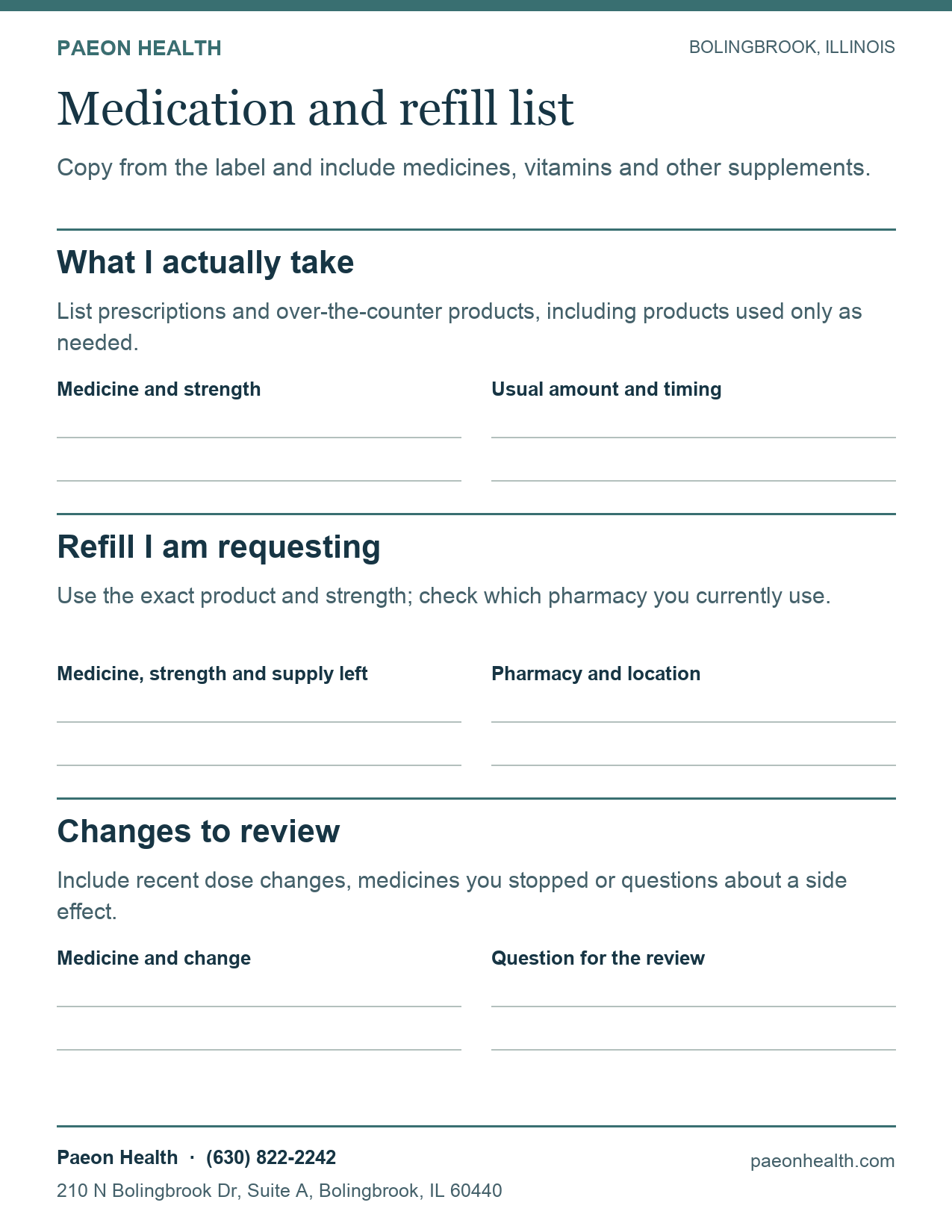
If you have recently been seen elsewhere for breathing symptoms, bring the discharge instructions if you have them. Look for medicines that were started, stopped or prescribed for a short period. If the written list differs from the inhalers and other medicines you are using, highlight the difference and ask the clinician to go through it with you.
Describe what you could do before the illness and what you can comfortably do now. Were you able to walk from the car to the office without stopping? Do you need more pauses getting dressed? A specific comparison helps you and your doctor discuss recovery and questions for your next follow-up.
If you were given an updated action plan when you left the hospital, bring that version so you can ask which instructions to follow now.
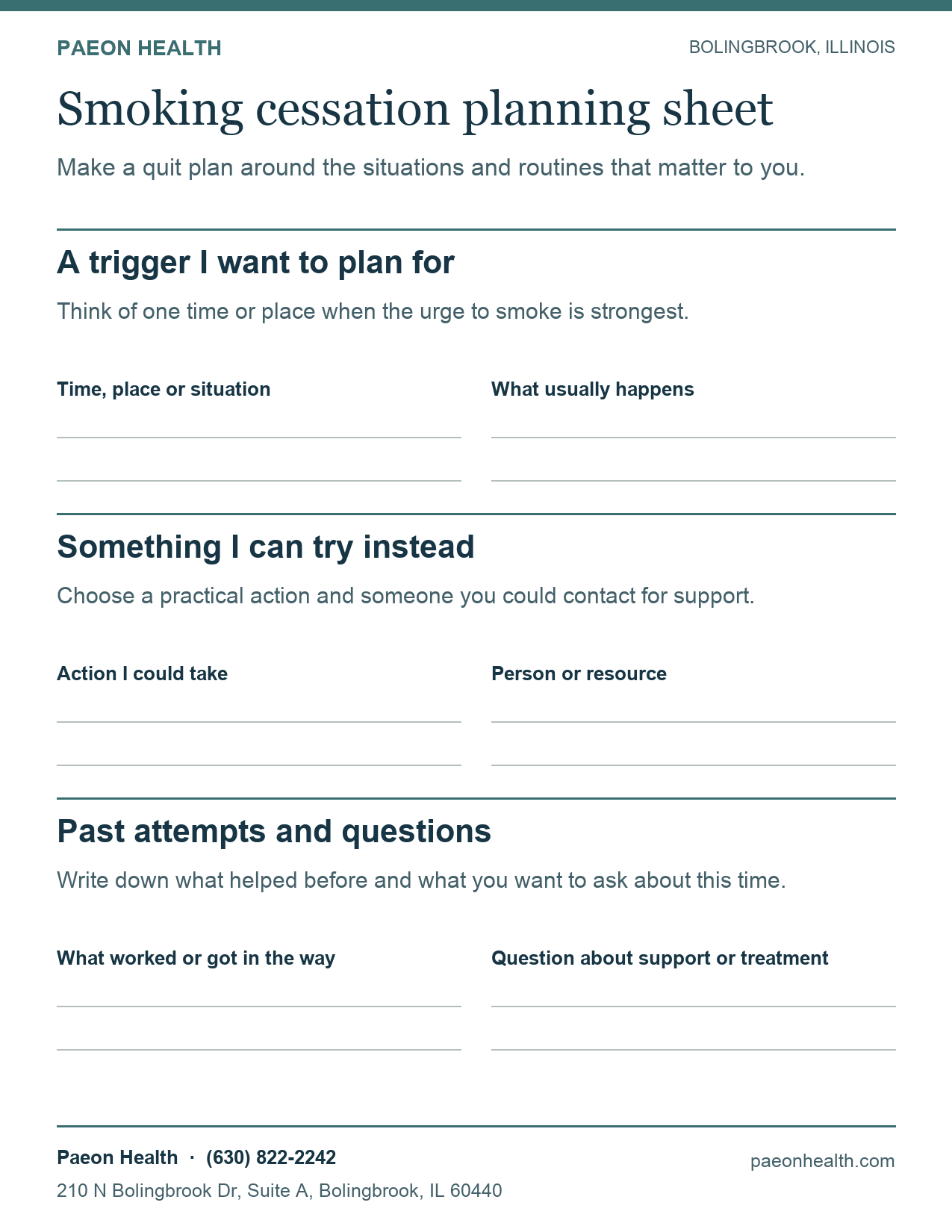
Related worksheets for your visit
 Download medication and refill list (PNG)
 Download smoking cessation planning sheet (PNG)
Insurance & Self-Pay
Before booking, ask your insurer whether Dr. Walid Sayyed and the Bolingbrook office are in your plan’s network. See our insurance verification guide. Self-pay prices: New Patient Office $225, Established Follow-Up $150, Established Patient Video $125, Annual Physical $225. Spirometry, inhalers, oxygen equipment, imaging, and pulmonary rehabilitation are extra. A Good Faith Estimate is available on request. We help navigate insurance coverage for inhalers and oxygen, and connect you with smoking cessation resources.
FAQ
Q: Can COPD be reversed? A: Lung damage from COPD is not fully reversible, but treatment slows progression, reduces flare-ups, and improves symptoms and quality of life. Quitting smoking is the most important step.
Q: I still smoke. Can you still help me? A: Absolutely. We treat all patients without judgment. Quitting at any stage slows progression. We offer counseling and medication support.
Q: Do I need oxygen? A: Not everyone. Oxygen is prescribed based on measured oxygen levels, not just breathlessness. We test and refer if needed.
Q: What’s the difference between COPD and asthma? A: Asthma is variable and often reversible; COPD is persistent and progressive. They can overlap. Spirometry helps distinguish, and treatment differs.
Q: Can I exercise with COPD? A: Yes — and you should. Pulmonary rehabilitation and regular, appropriate exercise improve stamina and quality of life. We will help you start safely.
Q: What triggers flare-ups, and how do I prevent them? A: Respiratory infections (colds, flu), air pollution, smoke, and allergens are common triggers. Vaccines, hand hygiene, avoiding smoke/pollution, taking maintenance inhalers daily, and a written action plan all help.
Book Your COPD Treatment Appointment
If you need COPD treatment in Bolingbrook, IL — for diagnosis, inhaler management, smoking cessation, or a flare-up action plan — meet Walid Sayyed, MD, at Paeon Health. New adult office visits: Elation. Call about availability for a first video visit. Established patients: Elation Patient Passport portal. Questions? Call 630-822-2242. Office: 210 N Bolingbrook Dr, Suite A, Bolingbrook, IL 60440. Hours: Mon–Fri 9AM–5PM, Sat 9AM–1PM. Spanish translation assistance available.
View appointment options · Explore primary care services
Patient resource: MedlinePlus guide to COPD.
This content is for educational purposes only and is not medical advice. For medical emergencies, call 911. To discuss your specific health needs, book an appointment with Walid Sayyed, MD, at Paeon Health or call 630-822-2242.