
Ask about eczema treatment if flares are affecting your sleep or daily activities.
Eczema — also called atopic dermatitis — is a chronic skin condition that causes dry, itchy, red, and inflamed skin. It often begins in childhood but can persist into adulthood or appear for the first time in adults. Flare-ups can be triggered by soaps, detergents, stress, weather, allergens, and irritants. While there is no cure, eczema is very manageable with the right skin care routine and, when needed, medication.
At Paeon Health in Bolingbrook, IL, Walid Sayyed, MD — board-certified family medicine physician — evaluates and treats eczema and other common skin conditions as part of primary care. When specialized care is needed, Dr. Sayyed refers to and coordinates with dermatologists in the Naperville, Romeoville, and greater Chicago area.
What Is Eczema?
Eczema is a condition where the skin’s barrier is weakened, allowing moisture to escape and irritants, allergens, and bacteria to enter. This triggers inflammation, itching, and the characteristic rash. It is not contagious.
Eczema often runs in families and is associated with asthma and allergies (the “atopic triad”). Common triggers include:
- Harsh soaps, detergents, and fragrances
- Dry air and cold weather
- Sweat and heat
- Stress
- Certain fabrics (wool, synthetics)
- Allergens (dust mites, pet dander, pollen, certain foods)
- Hard water
Signs & Symptoms
Eczema looks different from person to person. Common signs include:
- Dry, sensitive skin
- Intense itching — often worse at night
- Red, inflamed patches
- Rough, leathery, or scaly skin from chronic scratching
- Small, raised bumps that may weep or crust
- Darkened patches of skin
- Areas around the elbows, knees, hands, wrists, ankles, neck, and face (especially in children)
Seek care sooner if the skin becomes infected — increasing redness, warmth, swelling, pus, honey-colored crusts, fever, or red streaks. Severe, widespread flare-ups that do not respond to home care also warrant prompt evaluation.
Eczema Treatment at Paeon Health
Dr. Sayyed’s approach is to listen, evaluate, explain, and plan together. A typical eczema evaluation includes:
- Detailed history — when symptoms started, triggers you have noticed, what has helped or worsened it, family history of eczema/asthma/allergies.
- Skin exam — examining the affected areas and assessing severity.
- Rule out other conditions — fungal infections, psoriasis, contact dermatitis, scabies, and other rashes can mimic eczema. Sometimes a skin scraping or other test is done.
- Allergy assessment — if allergies are suspected, testing or referral to an allergist may be discussed.
- Personalized treatment plan — combining skin care, trigger avoidance, and medication when needed.
Treatment is stepped: mild eczema may be managed with moisturizers and trigger avoidance alone. Moderate or severe flare-ups may require topical medication, and persistent cases may warrant referral to dermatology for advanced treatments (phototherapy, prescription systemic or biologic medications). Specific medication choices and strengths are decided in person with Dr. Sayyed, considering the location, severity, and your medical history.
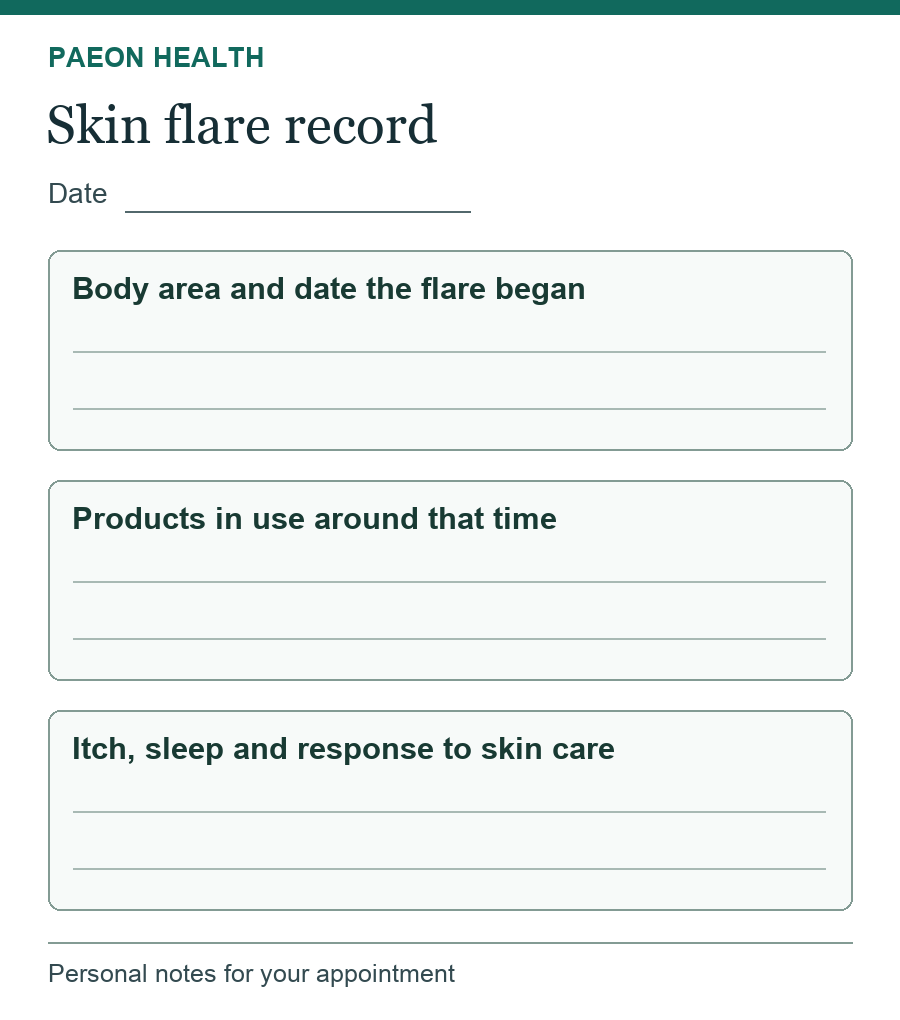
3 details to record during an eczema flare
Skin can look different on the day of your appointment. If you notice a flare, a short description in your own words can help you remember its course. Tell your doctor about symptoms as well as what you could see.
- Where and when? Note when it began, which areas were affected and whether itching disturbed sleep.
- What touched the skin? List products you used around that time, such as soap, moisturizer or laundry detergent. You do not need to know which product was responsible.
- What have you already tried? Bring the product names, how often you applied them and what happened afterward. A dated photo from your own phone may help you show how the skin changed.
What to Expect at Your Visit
- First visit — history, exam, discussion of triggers, and a written skin care plan. You will learn how to moisturize effectively, which products to use and avoid, and how to recognize infection.
- Medication discussion — if topical medication is prescribed, you will learn where, when, and how much to apply, and how long to use it.
- Follow-up — usually in a few weeks to assess response and adjust the plan. For chronic eczema, periodic check-ins help keep it controlled.
- Referral — to dermatology or allergy if the eczema is severe, recurrent, or not responding to primary care treatment.
Telehealth follow-up across Illinois is available when clinically appropriate, with the patient physically in Illinois. A first evaluation with a skin exam is usually done in person at our Bolingbrook office.
Daily Skin Care: The Foundation of Eczema Management
For most people with eczema, consistent daily skin care is the most important part of management — more important than medication alone. Key principles include:
- Bathe wisely — lukewarm (not hot) water, gentle fragrance-free cleanser, 5–10 minutes. Pat skin dry, leaving it slightly damp.
- Moisturize within three minutes — apply a thick, fragrance-free ointment or cream while skin is still damp to lock in moisture. Repeat at least twice a day. Lotions are mostly water and less effective; ointments and creams work best.
- Avoid triggers — identify and avoid what flares your skin: harsh soaps, fragranced laundry detergent, fabric softeners, wool and synthetic fabrics, extreme temperatures, and known allergens.
- Manage itch without scratching — scratching damages the skin barrier and can lead to infection. Cool compresses, colloidal oatmeal baths, and keeping nails short help. Antihistamines may be used at night if itching disrupts sleep, under medical guidance.
- Wear soft, breathable fabrics — cotton is usually best. Wash new clothes before wearing to remove sizing and dyes.
- Manage stress — stress and anxiety can trigger flares; relaxation techniques, regular exercise, and adequate sleep help.
- Recognize infection early — eczema skin is vulnerable to bacterial, viral, and fungal infections. Honey-colored crusts, pus, increasing redness/warmth, painful blisters, or fever with a flare warrant prompt medical care.
If your skin looks better on the day of the visit
An eczema flare may settle before you see the doctor. Bring a dated photo if you have one, and note whether the picture shows the beginning of the flare or the skin after you applied a product. It may be easier to describe color changes by comparing the affected area with nearby skin. Itching and disturbed sleep also matter even when the skin looks calmer.
If you have more than one tube or jar at home, bring the packages or clear label photos. Ask which product is intended for which area and how to tell when it is time to call for a review. For a child, mention who is helping with skin care at home or elsewhere.
If a child is old enough to describe the itching, ask what part of the day is hardest. A teacher might notice scratching during class while a parent mainly notices waking at night. Both observations can help the clinician understand the impact.
Related worksheets for your visit
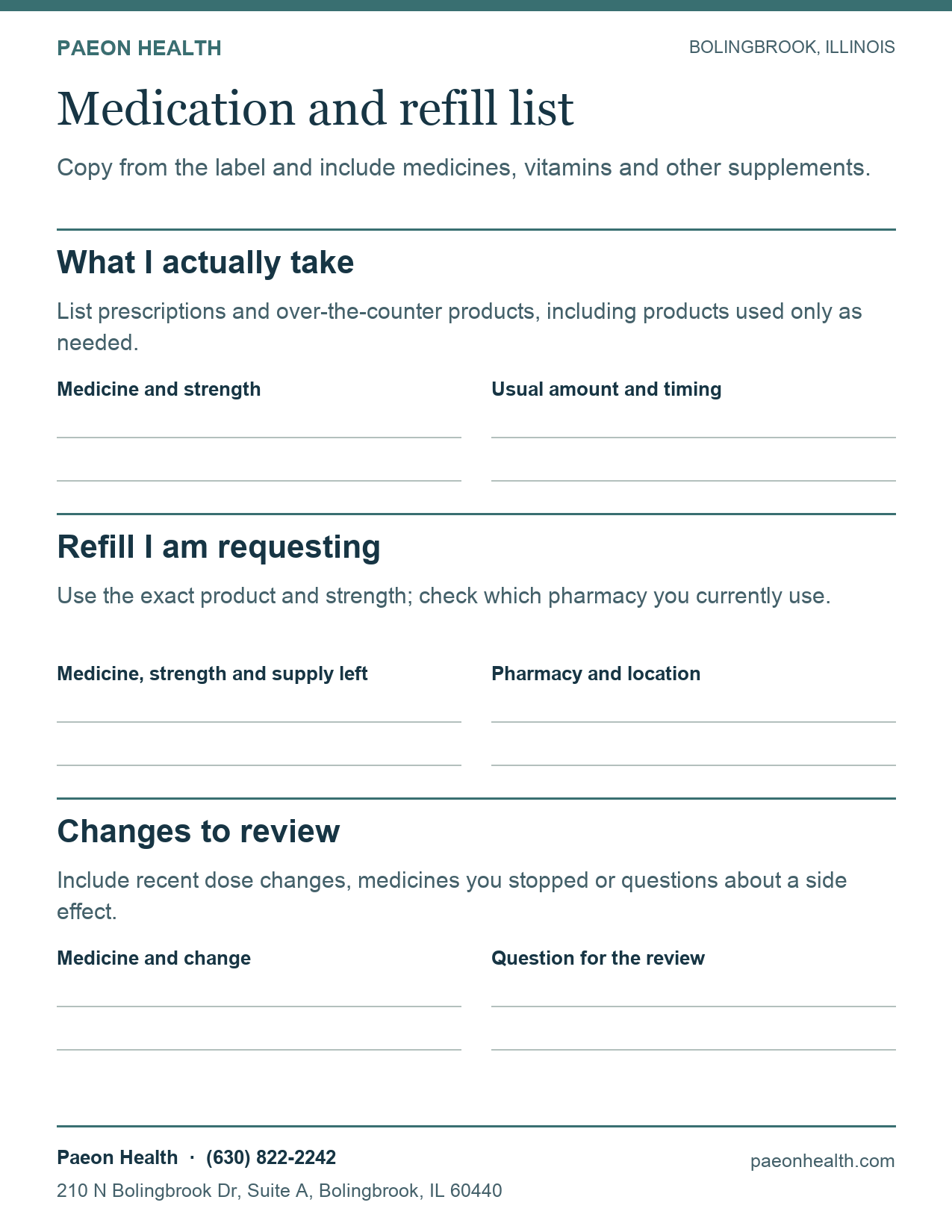 Download medication and refill list (PNG)
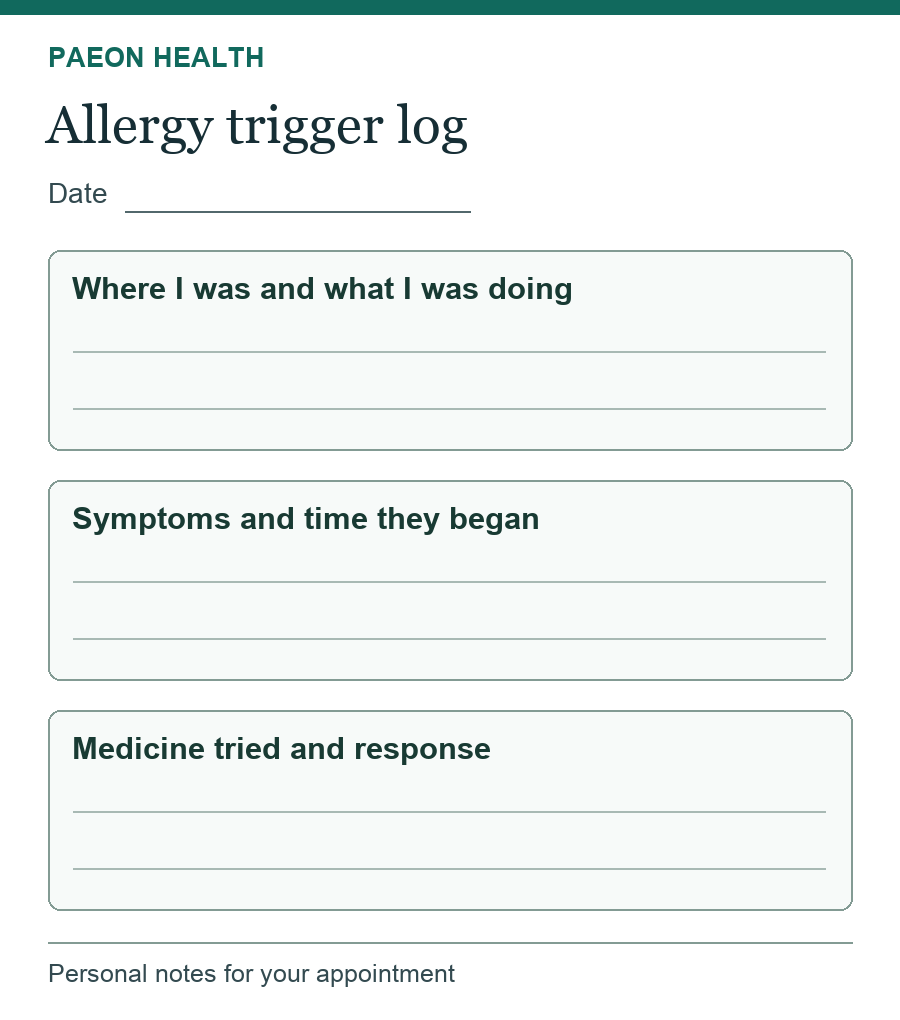 Download allergy trigger log (PNG)
Insurance & Self-Pay
Network participation depends on your exact plan and where you receive care. Verify your exact plan and network with your insurer. For self-pay patients, an Established Follow-Up is $150 and a New Patient Office visit is $225. Tests, procedures, medications, and outside referrals are extra. A Good Faith Estimate is available.
FAQ
Is eczema curable? There is no cure, but most people control it well with consistent skin care and treatment. Many children outgrow eczema, though it can persist or recur.
Can eczema be treated by a primary care doctor? Yes — most mild-to-moderate eczema is managed in primary care. Severe or refractory cases are referred to dermatology.
What moisturizer is best? Fragrance-free, thick ointments or creams (not lotions, which are mostly water) applied within minutes of bathing are most effective. Dr. Sayyed can recommend specific products.
Does diet affect eczema? In some people, certain foods trigger flares. Food allergy testing is considered for severe or refractory eczema, especially in children — not routinely for everyone.
Can I use over-the-counter hydrocortisone? For mild, short-term flares on the body, low-potency hydrocortisone may help. It should not be used on the face, groin, or open skin without guidance, and not long-term. Ask your doctor.
Does Paeon Health treat children’s eczema? Yes. Children’s appointments are booked by calling the office (630-822-2242).
Schedule an Eczema Visit
View appointment options · Explore primary care services
Patient resource: MedlinePlus guide to eczema.
If itchy, dry, inflamed skin is disrupting your sleep or daily life — or if you suspect a skin infection — book an appointment with Walid Sayyed, MD, at Paeon Health in Bolingbrook, IL. New adult office visits can be booked in Elation. For a first video visit, call the office; established patients via the portal. Or call 630-822-2242.
This content is for educational purposes only and is not medical advice. For medical emergencies, call 911. To discuss your specific health needs, book an appointment with Walid Sayyed, MD, at Paeon Health or call 630-822-2242.