
Ask about GERD treatment if heartburn or reflux keeps coming back.
Occasional heartburn after a spicy meal is common. When acid reflux happens frequently — typically twice a week or more — or when it interferes with sleep, eating, or daily life, it may be GERD (gastroesophageal reflux disease). Over time, untreated GERD can inflame and damage the esophagus, so persistent symptoms deserve evaluation.
At Paeon Health in Bolingbrook, IL, Walid Sayyed, MD — board-certified family medicine physician — evaluates and treats acid reflux and GERD as part of primary care, referring to gastroenterology when endoscopy or specialized care is needed.
What Is Acid Reflux / GERD?
When you swallow, food travels down the esophagus through a muscular valve (the lower esophageal sphincter) into the stomach. If that valve weakens or relaxes inappropriately, stomach acid flows back up into the esophagus, causing irritation.
- Occasional acid reflux — mild, infrequent heartburn, often managed with lifestyle changes and over-the-counter antacids.
- GERD — chronic, frequent reflux with symptoms or complications. Diagnosis is based on symptoms and sometimes testing.
Risk factors include obesity, pregnancy, hiatal hernia, smoking, certain medications, and eating large meals or lying down soon after eating.
GERD symptoms and when to seek help
Common symptoms include:
- Burning in the chest (heartburn), often after meals or at night
- Regurgitation of sour-tasting food or liquid
- Difficulty or pain with swallowing
- Sensation of a lump in the throat
- Chronic cough, hoarseness, or sore throat (especially in the morning)
- Worsening asthma
- Chest pain — always worth evaluating to rule out heart causes
Seek care sooner if you have difficulty swallowing, unintentional weight loss, persistent vomiting, black or bloody stools, anemia/fatigue, or chest pain with shortness of breath, sweating, or jaw/arm pain (possible heart attack — call 911).
GERD Treatment at Paeon Health
Dr. Sayyed’s approach is to listen, evaluate, explain, and plan. A GERD evaluation typically includes:
- Detailed history — symptoms, triggers, timing, severity, and any alarm features.
- Physical exam.
- Medication review — some medications (certain blood pressure drugs, osteoporosis drugs, NSAIDs, sedatives, and others) can worsen reflux.
- Trial of medication — often a proton pump inhibitor (PPI) or H2 blocker. If symptoms improve, that supports the diagnosis. Specific medication and dose are chosen in person with Dr. Sayyed.
- Lifestyle counseling — weight management if relevant, meal timing, trigger avoidance, sleep position.
- Testing referral — if symptoms are persistent, severe, or have alarm features, Dr. Sayyed may refer to gastroenterology for endoscopy, or order other tests (H. pylori testing if ulcer disease is suspected).
- Long-term review — periodic review of acid-suppressing medication, since long-term use can have side effects and interactions; the goal is the lowest effective dose.
3 questions about your GERD symptoms
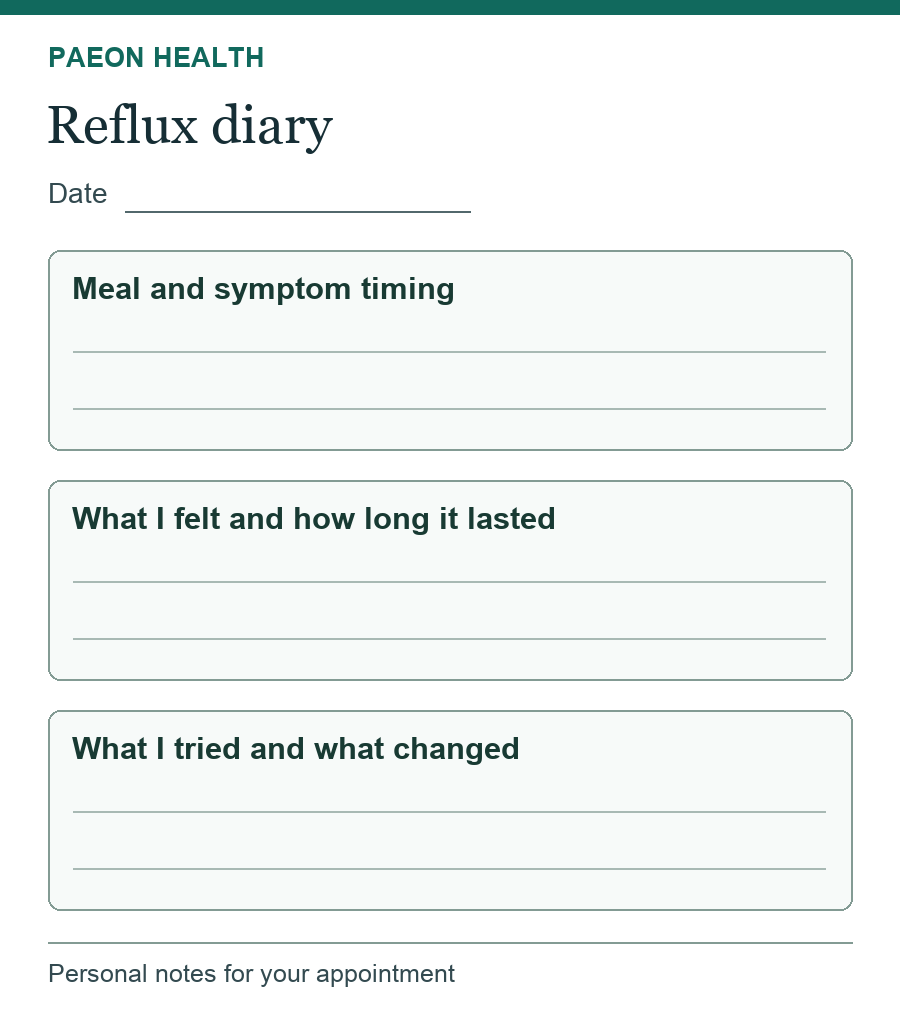
If heartburn comes and goes, a few notes from an ordinary day can be more useful than trying to remember a whole month. Consider one recent episode and bring these details to your visit.
- When did it start? Write the date and time. Note when you last ate and whether you were upright or lying down.
- What did it feel like? Describe the burning or sour taste in your own words and how long it lasted. Mention symptoms that woke you.
- What have you tried? Write down the names of any products you used, when you took them and what changed afterward.
What to Expect at Your Visit
- First visit — history, exam, discussion of likely triggers, and a treatment plan (lifestyle changes plus medication if indicated).
- Follow-up — usually in a few weeks to assess response and adjust medication.
- Testing — if symptoms do not improve or alarm features are present, referral to gastroenterology for endoscopy or other testing.
- Ongoing management — for chronic GERD, periodic check-ins to monitor symptoms and medication.
Telehealth follow-up across Illinois is available when clinically appropriate, with the patient physically in Illinois. A first evaluation with a physical exam is usually done in person at our Bolingbrook office.
For patients with long-standing GERD, Dr. Sayyed periodically reviews whether ongoing medication is still needed at the same dose. Some patients are able to step down to on-demand or lower-dose treatment after symptoms are controlled, while others need ongoing maintenance. The goal is always the lowest effective treatment that keeps you comfortable and protects your esophagus.
Lifestyle Measures That Reduce Reflux
For many people, lifestyle changes significantly reduce symptoms — sometimes enough to avoid or reduce medication. Key measures include:
- Eat smaller, more frequent meals — large meals distend the stomach and increase reflux pressure.
- Avoid lying down for 2–3 hours after eating — gravity helps keep stomach contents down.
- Elevate the head of the bed by 6–8 inches using blocks under the bed frame or a wedge pillow (extra pillows alone bend the abdomen and can worsen reflux). This is especially helpful for nighttime symptoms.
- Identify and avoid trigger foods — common triggers include spicy and fatty foods, citrus, tomato products, chocolate, mint, caffeine, alcohol, and carbonated drinks. Triggers vary; a food-symptom diary helps identify yours.
- Lose weight if overweight — excess abdominal fat pushes stomach acid upward; even modest weight loss can reduce symptoms.
- Avoid tight clothing around the abdomen — belts, shapewear, and tight waistbands increase pressure.
- Quit smoking — nicotine relaxes the lower esophageal sphincter and reduces saliva (which neutralizes acid). If you smoke, Dr. Sayyed can help with cessation support.
- Review medications — some drugs worsen reflux; Dr. Sayyed reviews all medications and supplements at your visit.
Keeping a symptom diary — what you ate, when symptoms occurred, and what helped — is a useful tool to bring to your visit.
How to describe symptoms between GERD visits
If the plan was meant to help with nighttime heartburn, start your follow-up there. Did you wake with burning as often? Could you eat your usual evening meal? Tell your doctor about both what improved and what still interrupts your day. A medicine that helped one symptom may have made little difference to another.
If swallowing feels different, explain whether it is difficult to start swallowing or whether food seems to stick after you swallow. Say when this began and whether it happens with solids, liquids or both. New difficulty swallowing warrants prompt medical advice. If you are unsure how soon to be seen, call the office and describe that change directly.
If you have received advice from a dentist, ear, nose and throat clinician or gastroenterologist, mention what prompted the visit and what you were told. Reflux can overlap with other concerns. Reports can help your primary care clinician understand which question has already been addressed and which still needs attention. If you were asked to return after trying a change, record the date the change began.
Related worksheets for your visit
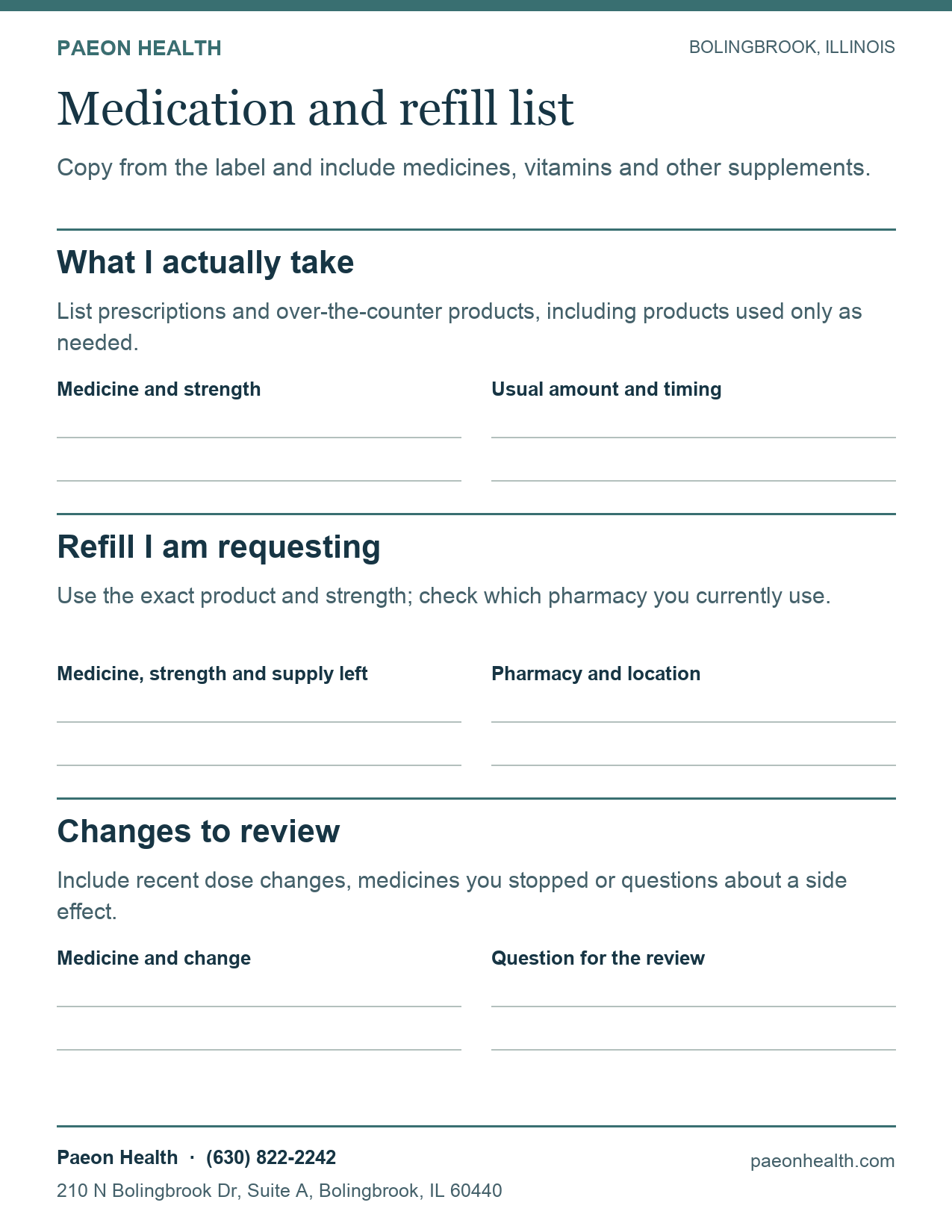 Download medication and refill list (PNG)
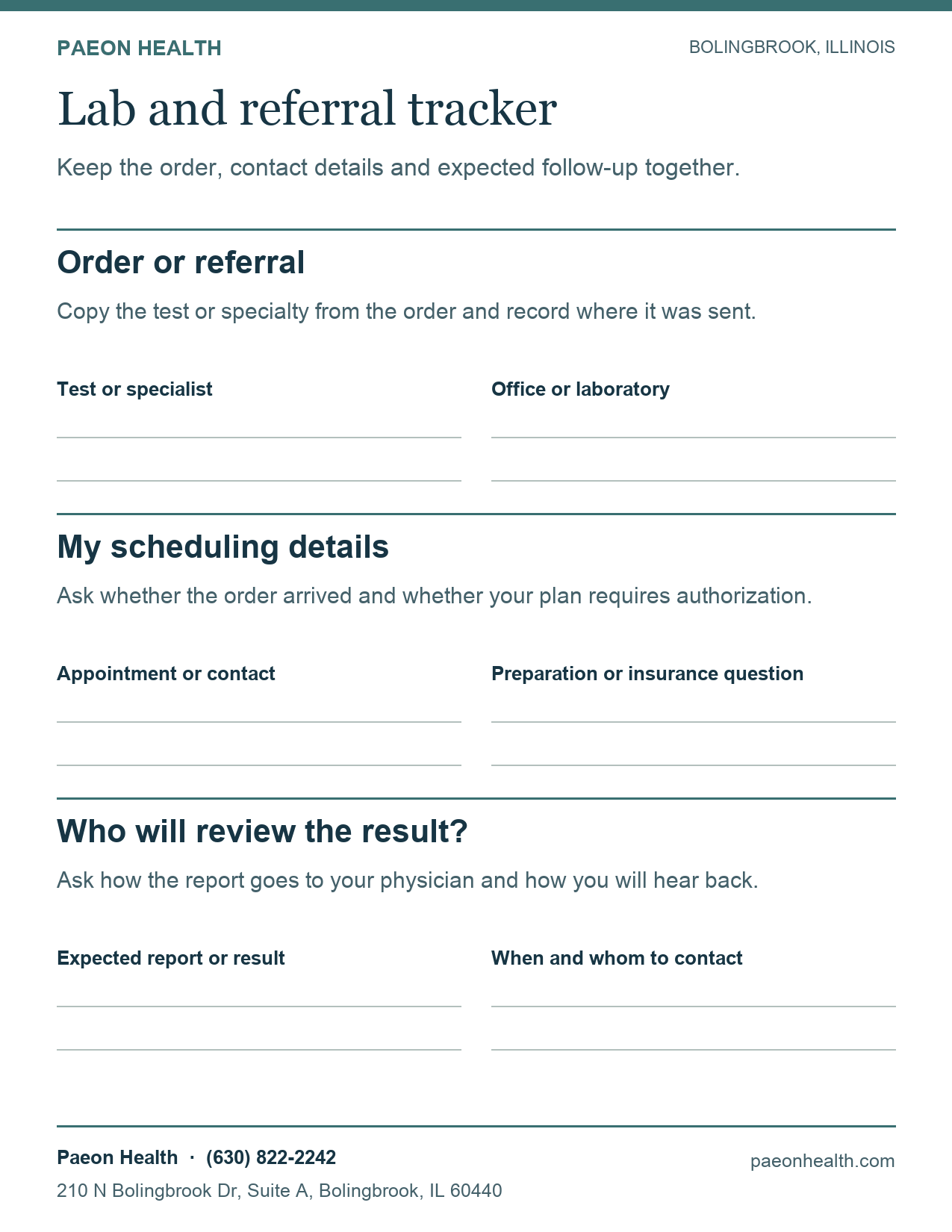 Download lab and referral tracker (PNG)
Insurance & Self-Pay
Network participation depends on your exact plan and where you receive care. Verify your exact plan and network with your insurer. For self-pay patients, a New Patient Office visit is $225 and an Established Follow-Up is $150. Labs, medications, endoscopy, and specialist referrals are extra. A Good Faith Estimate is available.
Questions about GERD testing and treatment
Is GERD serious? It is common and treatable. Untreated, it can lead to esophagitis, strictures, Barrett’s esophagus, and rarely esophageal cancer. Persistent symptoms deserve evaluation.
Can I just take antacids every day? Occasional antacids are fine for many people. If you need them frequently, see a doctor — frequent symptoms may need evaluation and a targeted plan. Long-term PPI use should be reviewed periodically.
Will I need an endoscopy? Not everyone. Endoscopy is considered for persistent symptoms, alarm features, long-standing GERD, or to evaluate complications.
Does diet really matter? Yes. Trigger foods vary, but weight, meal timing, and lying down after eating affect nearly everyone with reflux.
What if medication doesn’t help? If symptoms persist despite medication, Dr. Sayyed may re-evaluate the diagnosis, order testing, or refer to gastroenterology. Surgery (fundoplication) is rarely needed and considered only for carefully selected patients.
Does Paeon Health treat children with reflux? Yes. Children’s appointments are booked by calling the office (630-822-2242).
Schedule an Acid Reflux Visit
View appointment options · Explore primary care services
Patient resource: MedlinePlus guide to acid reflux and GERD.
If heartburn or reflux is frequent, waking you at night, or not responding to over-the-counter measures, a primary care visit can identify the cause and start treatment. Book an appointment with Walid Sayyed, MD, at Paeon Health in Bolingbrook, IL, via the Elation Patient Passport portal, or call 630-822-2242.
This content is for educational purposes only and is not medical advice. For medical emergencies, call 911. To discuss your specific health needs, book an appointment with Walid Sayyed, MD, at Paeon Health or call 630-822-2242.