
An insomnia treatment visit starts with a review of your sleep patterns and concerns.
You know the cycle: you lie in bed, mind racing, watching the clock, knowing you will be exhausted tomorrow. Or you fall asleep but wake at 3 AM and cannot get back to sleep. Chronic insomnia — difficulty falling or staying asleep at least three nights a week for three months or more — affects roughly one in three adults, and it takes a toll on energy, mood, concentration, immune function, and long-term health.
At Paeon Health in Bolingbrook, Illinois, Dr. Walid Sayyed — a board-certified family medicine physician — evaluates and treats insomnia and sleep disorders for adults across the Naperville, Romeoville, and Plainfield area. Sleep is not a luxury — it is a pillar of health, as important as diet and exercise. Getting it right can transform how you feel.
Not all sleep problems are insomnia. Sleep apnea, restless legs syndrome, circadian rhythm disorders, anxiety, depression, medication side effects, and medical conditions can all disrupt sleep. An accurate diagnosis is the first step to restful nights.
What Is Insomnia?
Insomnia is a sleep disorder characterized by persistent difficulty falling asleep, staying asleep, or waking too early and being unable to return to sleep — despite having the opportunity to sleep — resulting in daytime impairment. It is considered acute when it lasts days to weeks (often triggered by stress or illness) and chronic when it occurs at least three nights a week for three months or longer.
Common causes and contributors include: – Stress, anxiety, and depression – Irregular sleep schedule (shift work, jet lag) – Caffeine, nicotine, alcohol, and certain medications – Screen time and blue light before bed – Poor sleep environment (too hot, bright, or noisy) – Medical conditions — chronic pain, GERD, thyroid problems, urinary frequency – Sleep disorders — sleep apnea, restless legs syndrome – Aging — sleep architecture changes with age
Sleep apnea deserves special mention: it causes repeated pauses in breathing during sleep, leading to fragmented sleep, loud snoring, gasping, and daytime exhaustion. It is a serious condition linked to high blood pressure, heart disease, stroke, and diabetes. If you snore loudly, wake gasping, or feel exhausted despite 7–8 hours in bed, you should be evaluated.
Insomnia symptoms at night and during the day
- Difficulty falling asleep despite being tired
- Waking up during the night and struggling to return to sleep
- Waking too early in the morning
- Daytime fatigue, sleepiness, or irritability
- Difficulty concentrating, remembering, or focusing at work
- Mood changes — anxiety, irritability, depression
- Tension headaches or gastrointestinal distress from worry about sleep
- Relying on sleeping pills or alcohol to fall asleep
- Loud snoring, gasping, or choking during sleep (possible sleep apnea)
- Uncomfortable leg sensations at night that are relieved by movement (possible restless legs)
- Falling asleep unintentionally during the day — while driving, in meetings, or watching TV
Seek care sooner if: you fall asleep while driving or in dangerous situations, wake gasping for breath, or have a bed partner who reports you stop breathing during sleep. These can indicate sleep apnea, which requires treatment.
Insomnia Treatment at Paeon Health
Dr. Sayyed’s approach to sleep problems is thorough and individualized:
Comprehensive evaluation
- Detailed sleep history — bedtime routine, sleep environment, caffeine/alcohol use, medications, stress, mood.
- Sleep diary — tracking sleep patterns for 1–2 weeks provides valuable data.
- Screening for depression, anxiety, and chronic stress — common contributors.
- Physical exam — checking for signs of sleep apnea (large neck circumference, crowded airway), thyroid issues, and other medical causes.
- Labs when indicated — thyroid function, iron levels (low iron can cause restless legs), and others.
- Sleep study referral — if sleep apnea is suspected, referral for a home sleep apnea test or in-lab polysomnography.
Cognitive Behavioral Therapy for Insomnia (CBT-I)
CBT-I is the first-line, most effective treatment for chronic insomnia — more effective long-term than sleeping pills. It involves: – Sleep restriction — limiting time in bed to increase sleep drive. – Stimulus control — using the bed only for sleep and intimacy, getting up if not asleep. – Cognitive therapy — addressing anxiety and catastrophic thinking about sleep. – Sleep hygiene — consistent schedule, wind-down routine, optimized sleep environment. We refer to therapists trained in CBT-I and provide guidance on self-directed programs.
Medication, when appropriate
- Short-term use of sleep medication may be considered for acute insomnia or during CBT-I initiation. Long-term use is generally avoided due to dependence, tolerance, and side effects (including falls and cognitive impairment in older adults).
- If sleep apnea is diagnosed, treatment (CPAP, oral appliance, or weight loss) is essential — sleeping pills can be dangerous with untreated sleep apnea.
- Treating underlying conditions — depression, anxiety, thyroid disease, chronic pain, GERD — often improves sleep.
Lifestyle and sleep hygiene
- Consistent sleep and wake times — even on weekends.
- Wind-down routine — no screens 30–60 minutes before bed, reading, gentle stretching, meditation.
- Cool, dark, quiet bedroom.
- Limit caffeine after noon and avoid alcohol near bedtime (alcohol fragments sleep).
- Regular exercise — but not too close to bedtime.
- If you cannot sleep after 20 minutes, get out of bed and do something relaxing until sleepy.
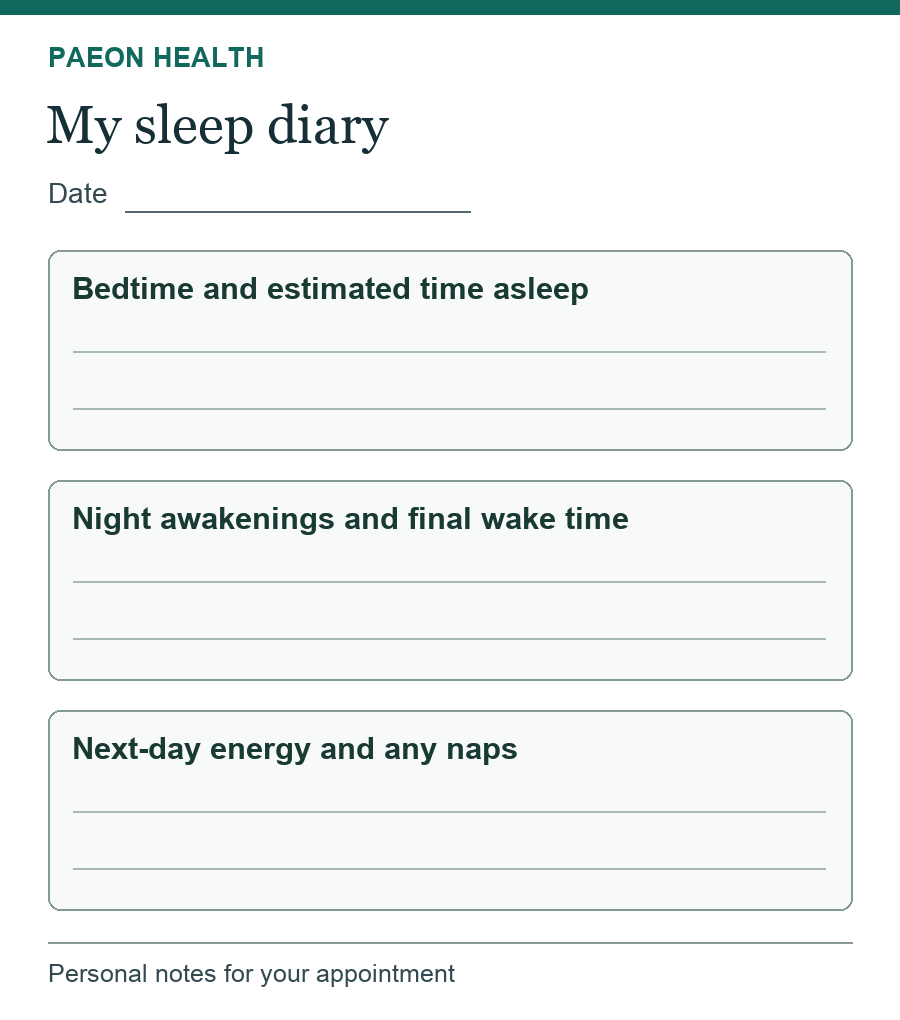
3 details a sleep diary can reveal about insomnia
Trying to remember last Tuesday’s sleep can be frustrating. If it suits your routine, jot down a rough account the next morning. Estimates are useful and you can bring whatever notes you have.
- Evening timing Write when you went to bed and roughly when you think you fell asleep. Include anything unusual about that evening.
- Overnight and morning Note whether you remember waking during the night and when you got up for the day. You can estimate without checking the clock overnight.
- The following day Record how you felt while doing a familiar task and whether you napped. Ask which pattern your doctor would like you to track at follow-up.
What to Expect at Your Visit
First visit
- Discussion of your sleep pattern, habits, and daytime functioning.
- Physical exam and review of medications.
- Sleep diary provided.
- If sleep apnea suspected — referral for sleep study.
- Initial plan — sleep hygiene, CBT-I referral, and medication discussion if appropriate.
Follow-up
- Review sleep diary and progress.
- Adjust treatment plan.
- Review sleep study results if obtained; initiate CPAP or other treatment if sleep apnea diagnosed.
- Gradual reduction of sleep medication as sleep improves.
Most patients see significant improvement with CBT-I and lifestyle changes within 6–8 weeks. Sleep apnea treatment often results in dramatic improvement in energy and daytime functioning.
Telehealth follow-up is available across Illinois when clinically appropriate, and the patient must be physically in Illinois. For the initial evaluation and physical exam, an office visit is recommended.
How to use a sleep diary if you work shifts
Write down the times you actually try to sleep and get up, even if your sleep period is during the day. Mark workdays and days off so your clinician can see which schedule each entry describes. If you sleep in two stretches, record both rather than trying to combine them.
If someone close to you notices loud snoring or pauses in breathing, share what was observed. Ask whether the pattern suggests a different sleep problem that needs evaluation. Bring a list of medicines, supplements, caffeine and other products you use, including when you take them relative to the hours you are trying to sleep.
Related worksheets for your visit
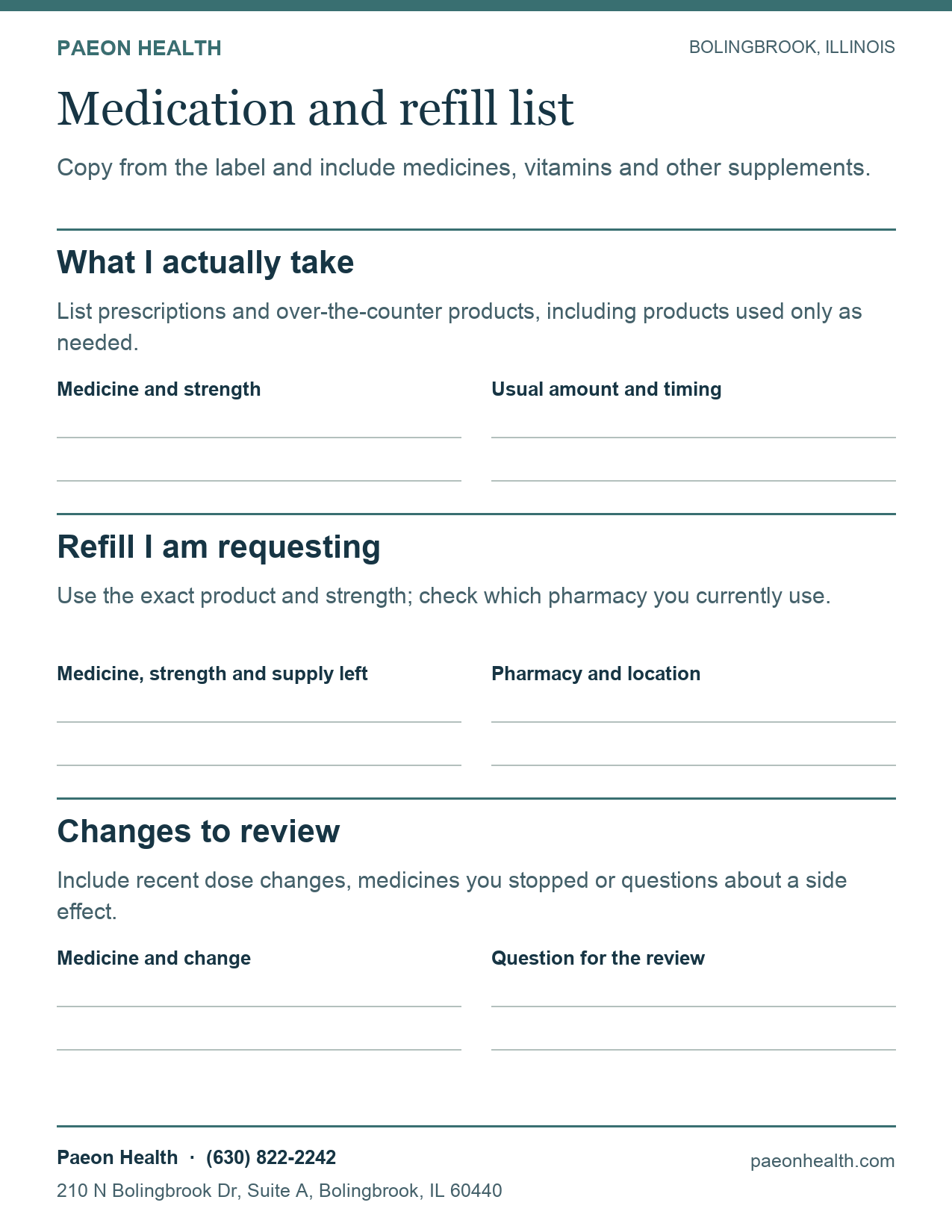 Download medication and refill list (PNG)
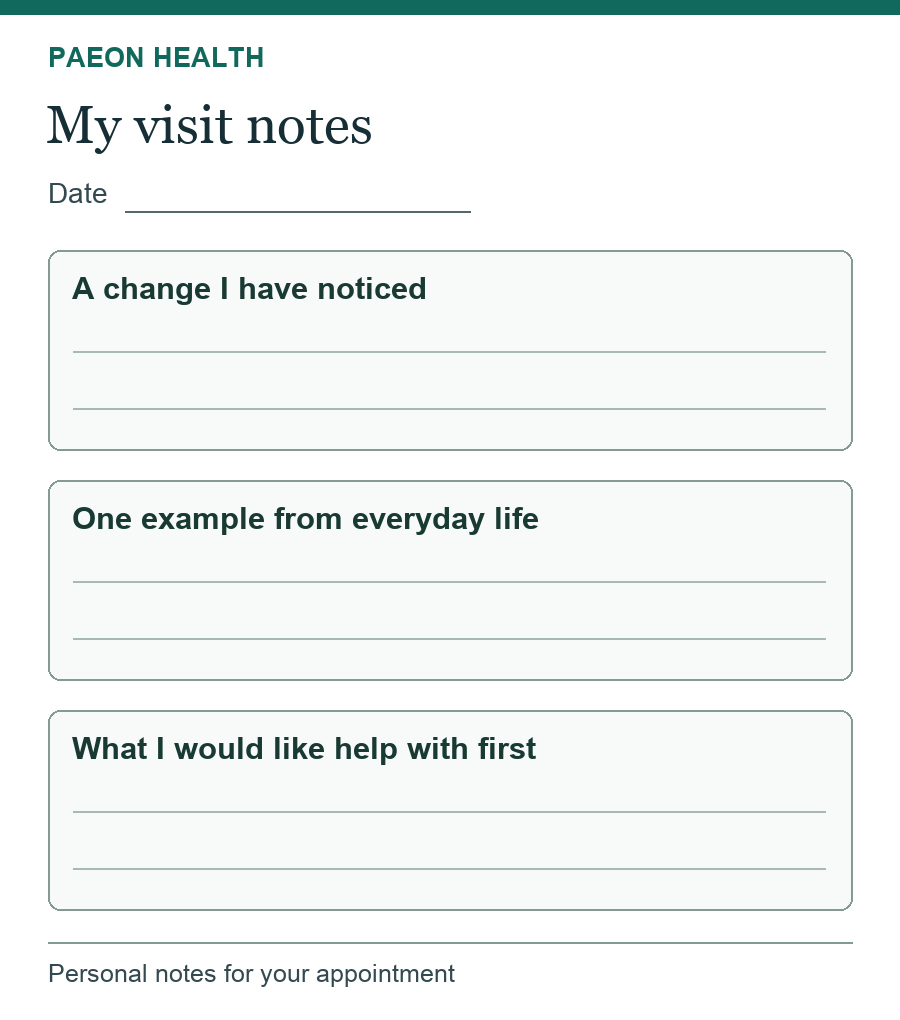 Download mood and daily activity notes (PNG)
Insurance & Self-Pay
Network participation depends on your exact plan and where you receive care. Coverage for sleep studies, CBT-I, and sleep medications varies by plan. Always verify your exact plan and network with your insurer.
Self-pay pricing: New Patient Office visit $225, Established Follow-Up $150, Established Patient Video $125. Sleep studies, labs, and medications are extra. A Good Faith Estimate is available on request.
Questions about insomnia and sleep aids
Q: How much sleep do I really need? A: Most adults need 7–9 hours per night. Individual needs vary, but consistently getting less than 7 hours is linked to health problems. Quality matters as much as quantity.
Q: Are over-the-counter sleep aids safe? A: Many OTC sleep aids contain antihistamines (diphenhydramine) which can cause next-day drowsiness, dry mouth, constipation, and — with long-term use — cognitive concerns. They are best used occasionally, not nightly.
Q: Can insomnia be a sign of something serious? A: Insomnia can be a symptom of depression, anxiety, thyroid disease, sleep apnea, or other medical conditions. That is why a medical evaluation is important — especially if insomnia is new or worsening.
Q: What if I think I have sleep apnea? A: Tell your doctor. Loud snoring, gasping during sleep, morning headaches, and daytime exhaustion despite adequate time in bed are classic signs. A sleep study can confirm, and treatment (CPAP or oral appliance) is highly effective.
Q: Will I need to take sleeping pills forever? A: No. The goal is to improve sleep through CBT-I and lifestyle changes so medication is no longer needed. Sleeping pills are a short-term tool, not a long-term solution.
Q: Where is Paeon Health located? A: 210 N Bolingbrook Dr, Suite A, Bolingbrook, IL 60440. Phone: 630-822-2242.
Schedule a visit for insomnia
Restful sleep is within reach. Schedule a sleep evaluation with Dr. Walid Sayyed at Paeon Health. New adult office visits can be booked through the Elation Patient Passport portal; established patients can book via the portal; or call 630-822-2242.
View appointment options · Explore primary care services
Patient resource: MedlinePlus guide to insomnia.
This content is for educational purposes only and is not medical advice. For medical emergencies, call 911. To discuss your specific health needs, book an appointment with Walid Sayyed, MD, at Paeon Health or call 630-822-2242.