
Managing medications and prescription refills
If you have questions about medications or need a refill, send the name and strength from the bottle through Paeon Health’s secure patient portal or call the Bolingbrook office. Dr. Walid Sayyed can review your list, recent changes and the next step.
Check the label and your pharmacy first
Look at your most recent bottle or package. Some drugs come in several strengths or in regular and extended-release forms. Copy the complete name and strength as shown. If you use an inhaler, patch, eye drop or injection, include the product name and strength from the box. A photo of the label can also help when you speak with your pharmacist.
Ask your pharmacy whether a refill remains on the current prescription and whether it is ready for pickup. If the pharmacy needs a new prescription, tell the office which pharmacy and location to use. Distinguish a change of pharmacy from a change in dose. If the refill is urgent, call the office and explain how many doses you have left.
What if the label and your instructions differ?
Tell the office exactly what the label says and how you currently take the medicine. Mention who last changed the instructions and approximately when it happened. If the change took place in a hospital or at a specialist visit, have the discharge list or visit summary nearby. Contact your clinician or pharmacist for guidance before making a change on your own.
If you are requesting medications because a tablet looks different, use the name, strength and prescription number on the package when contacting the pharmacy. The pharmacist can check the product that was dispensed. The National Library of Medicine lists questions to ask about a medicine, including how to take it and what effects to watch for.
Which medications belong on your list?
Start with the medications you actually use on a normal day. Include as-needed medicines, creams, inhalers, vitamins and over-the-counter products. Write down when you use each item and why, if you know. Keeping stopped products in a separate column can make it easier to discuss what changed. Bring the bottles if the names are difficult to copy.
If you see more than one clinician, mark who prescribes your medications and which pharmacy fills it. Tell Dr. Sayyed if a cost, side effect, complicated schedule or difficulty swallowing is getting in the way of taking it. Knowing what happens at home makes it easier to discuss options that fit your routine.
After a hospital stay or a change in treatment
Bring the list of medications from your discharge paperwork, any new bottles and the list you used before admission. Highlight an item if the dose differs between lists or if you are unsure whether you should still take it. Write down which medications you have already started. For ongoing monitoring and follow-up, see chronic condition care at Paeon Health.
Before the review ends, ask which list to use going forward, who will handle future refills and when any recommended lab or follow-up visit is due. Keep the updated list where you can find it when you book an appointment, talk to your pharmacy or receive care at another office.
Three details to send about medications
When requesting a refill, copy the label exactly and check which pharmacy you want to use. Include the following in your secure portal message or have them ready when calling the office.
- The medication name, strength and the directions you actually follow.
- How much medication you have left, and whether your pharmacy has any refills on file.
- The pharmacy name and location, and any difference between the label and your current instructions.
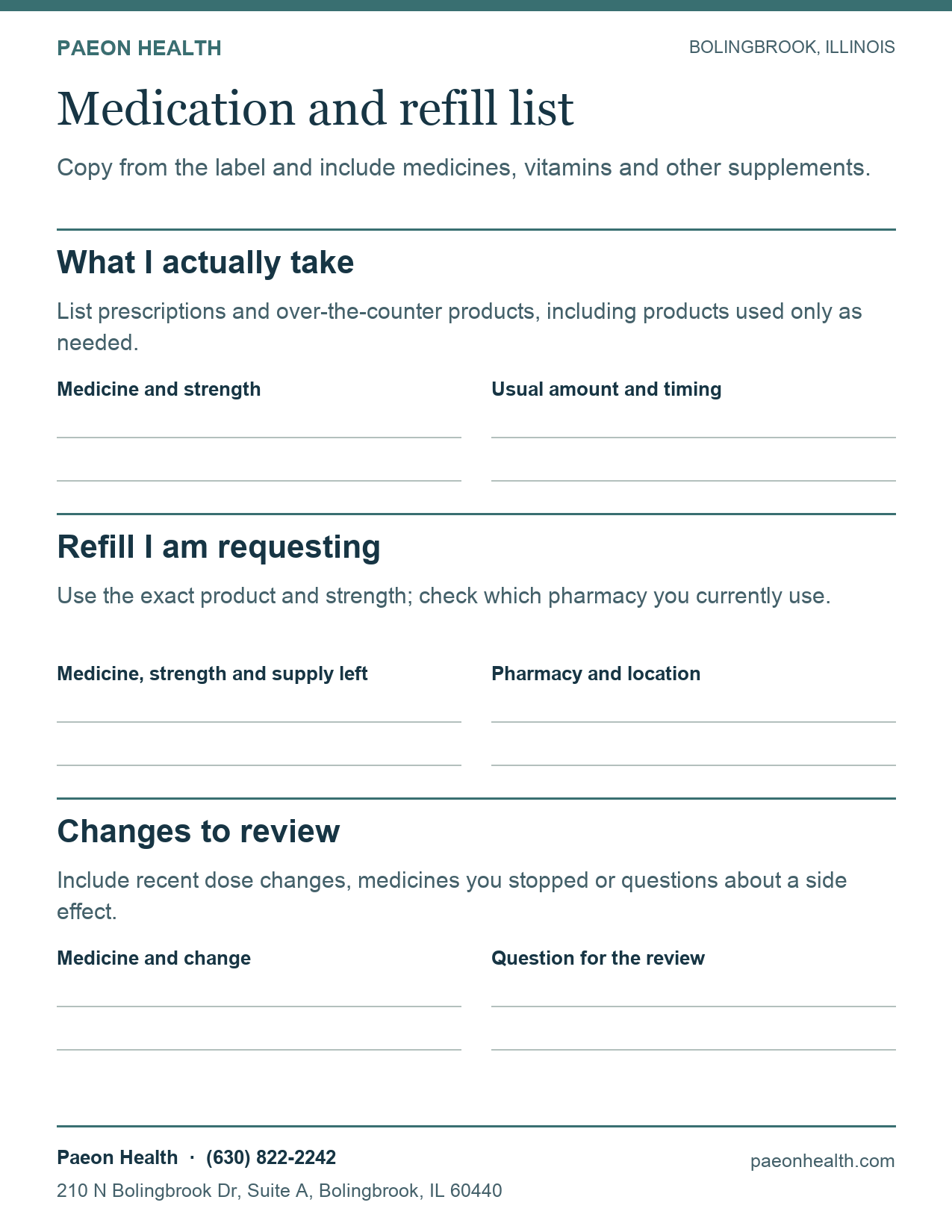
Preview the medication and refill list
When a pharmacy cannot fill a prescription
Ask the pharmacist what is preventing the fill. The pharmacy may need a new prescription, clarification of the directions, authorization from your plan, or a product that is currently unavailable at that location. Those situations lead to different next steps. Ask which part needs action by you, by the pharmacy, by your prescriber or by your insurer.
For example, if the pharmacy says it has no prescription on file, confirm its exact street address and whether an older location is still listed in your chart. If the pharmacy has the prescription but cannot dispense it, ask for the reason in its own words. Include that explanation when contacting the office so the physician knows what question to address.
If you were offered a different strength, formulation or package, record the details and discuss them with the pharmacist and prescribing clinician. Products described by the same familiar name are not always taken the same way. Ask for instructions specific to the product you receive.
How to discuss a medication cost or insurance issue
Ask the pharmacy for the exact name, dose, quantity and price it used. If your insurer declined coverage, ask the plan whether it needs additional information and whether it lists a covered alternative. A plan’s preferred product may still need review for your particular clinical situation. Bring any written notice or reference number to the conversation.
If cost is why you are skipping doses, using less than prescribed or planning to stop, tell the clinician directly. Asking about lower-cost options is appropriate. The names of medications you have already tried and what happened with each can help guide that discussion. Keep this information in the secure portal or discuss it by phone.
A message you can use for a refill problem
“I am requesting a refill of [name, strength and form]. The label says [directions], and I currently take [actual schedule]. I have [number] doses left. My pharmacy is [name and exact location]. It told me [specific issue]. My last change was [date or approximate date] with [prescriber]. Please let me know the next step.”
If you need advice about symptoms or a possible side effect, identify that concern at the beginning of your message or call. A request to renew medications can otherwise look like a routine administrative request. For a medical emergency, call 911.
Records that connect a prescription to its follow-up
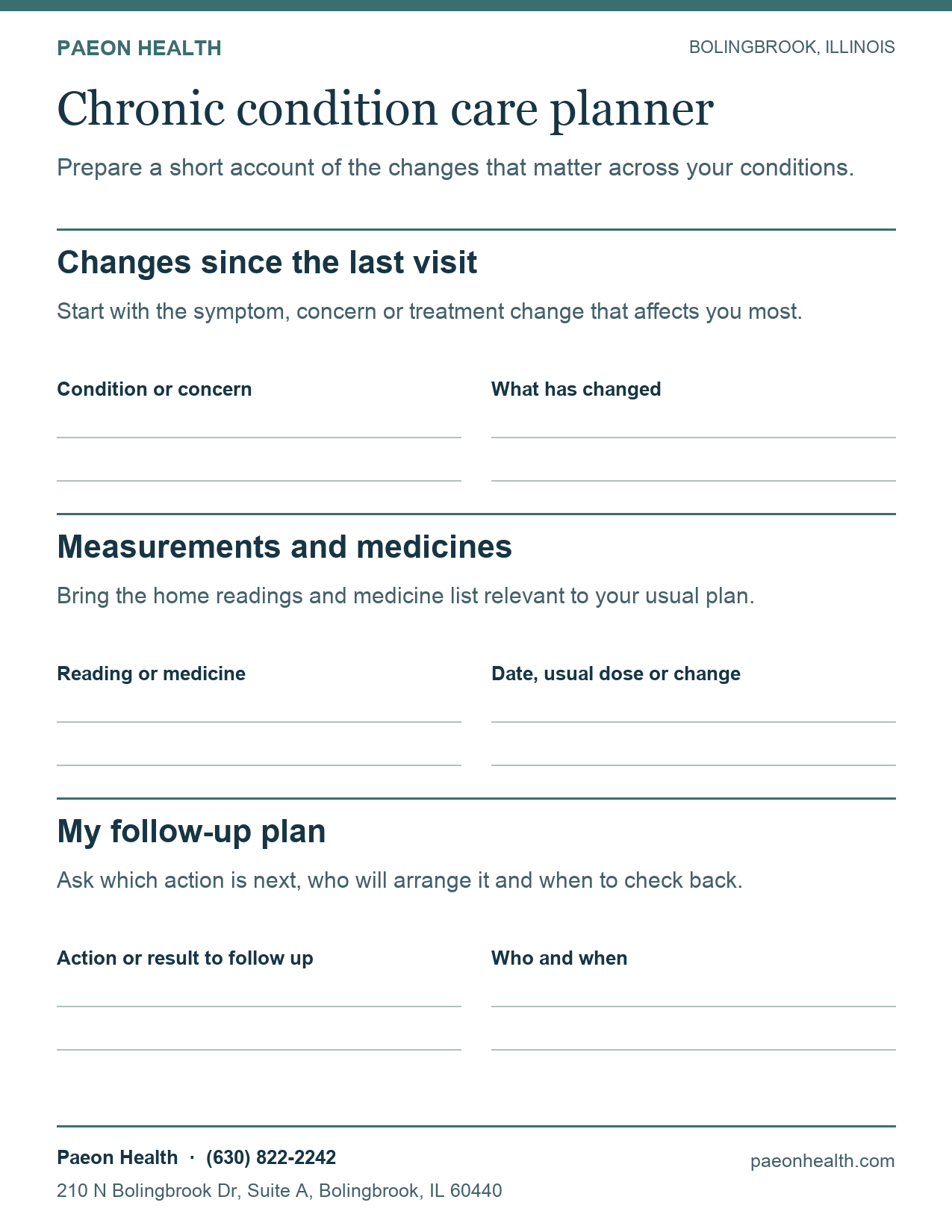
When several long-term conditions affect the medication list
Use the chronic condition planner to note which clinician changed a medicine and what you were asked to monitor. Bring the prescription bottle itself when the record differs.
Download the chronic condition care planner (PNG)
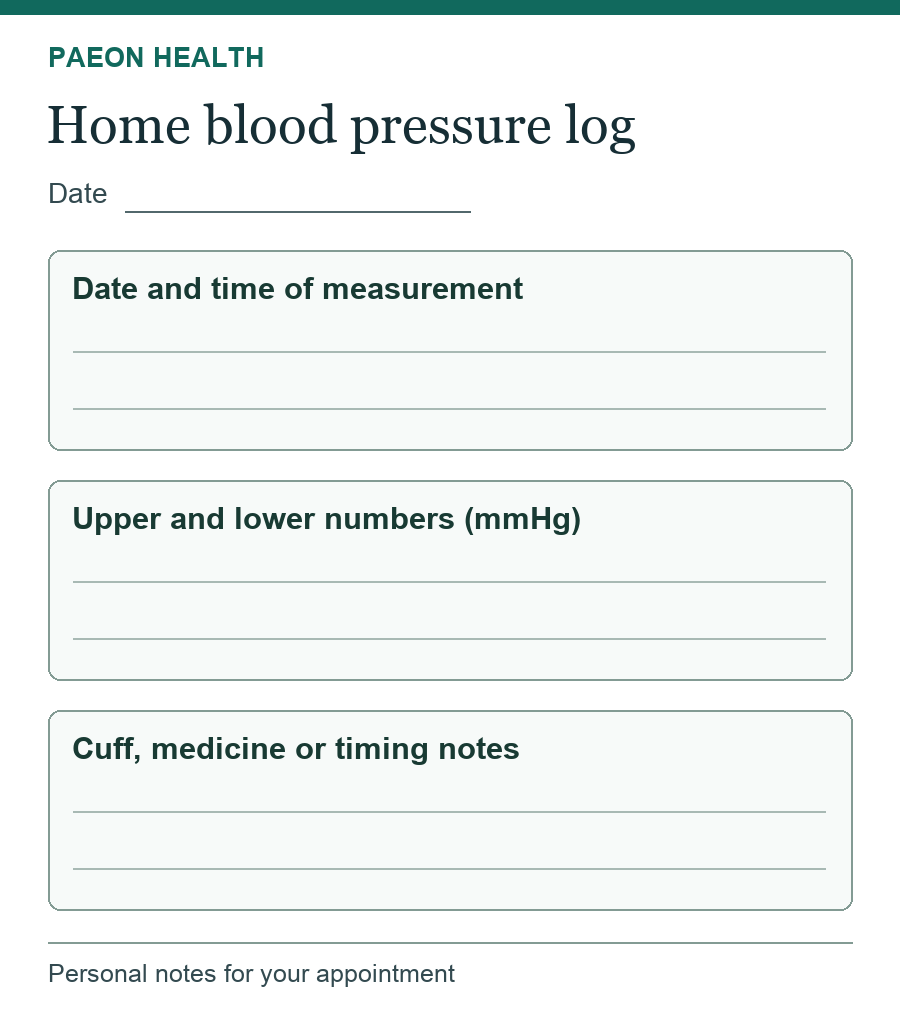
If you already check blood pressure as part of your plan
Pair dated readings with doses you actually took. This can help your clinician understand a concern about a refill or change in the treatment plan.
Download the hypertension blood pressure log (PNG)
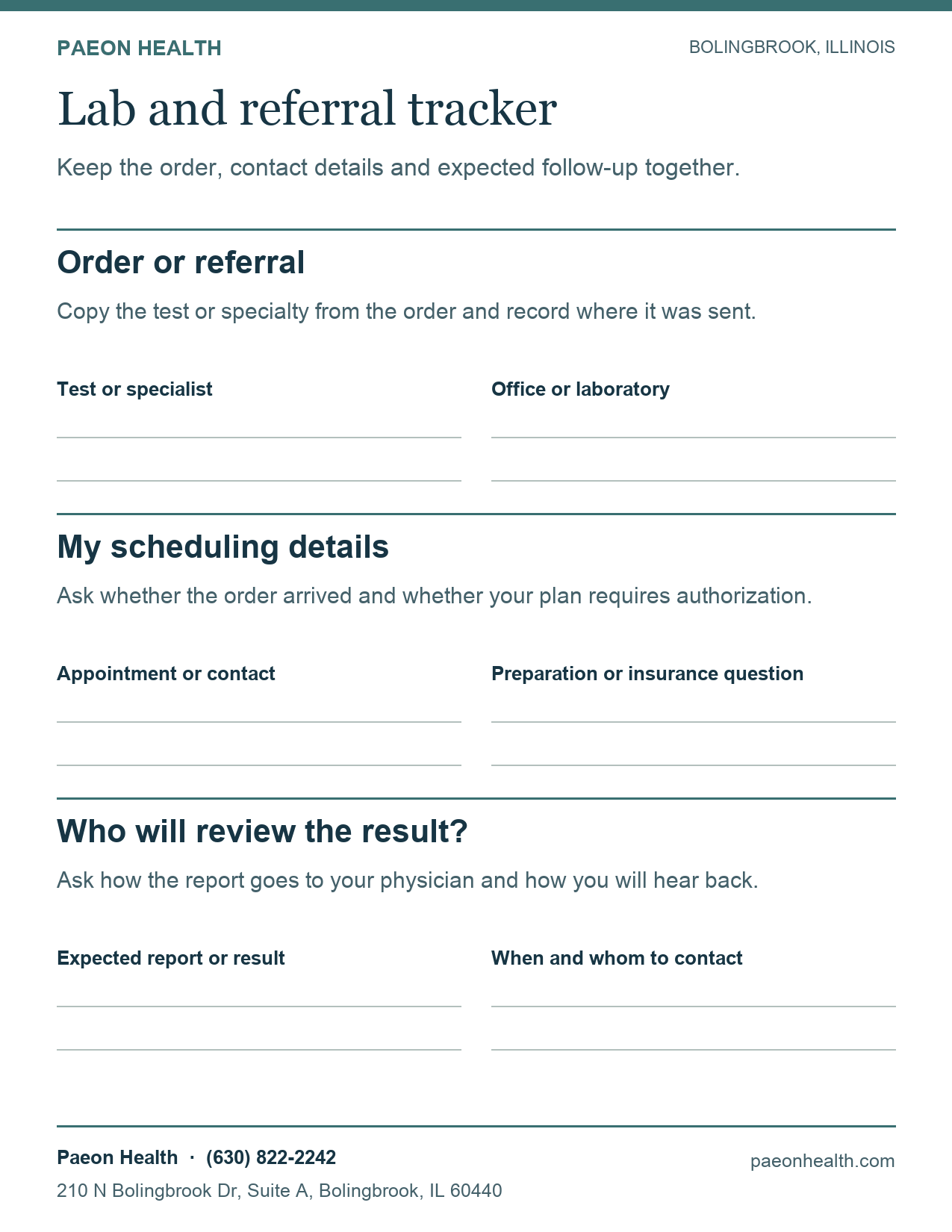
If a refill depends on follow-up testing
Use the orders tracker for the laboratory name, collection date and follow-up contact. Tell the office where the test was performed if the report is coming from another facility.
Download the lab and referral tracker (PNG)
Common questions about medications and refills
How do I request a prescription refill?
You can request a prescription refill by calling our office during business hours, using our patient portal, or by asking your pharmacy to send us a refill request. Please allow 24-48 business hours for refill processing. For controlled substances, additional requirements may apply, so plan ahead to ensure you don’t run out of medication.
Do you send prescriptions electronically to my pharmacy?
Paeon Health uses electronic prescribing. Confirm the pharmacy name and exact location, especially if you have moved or recently changed plans. Your pharmacy can check whether the prescription arrived and whether it is ready.
Can you help me manage multiple medications?
Yes. Bring one list of prescriptions, nonprescription products and supplements, plus your recent discharge list if you have one. Dr. Sayyed can review the doses you actually take and discuss possible duplications or interactions.
What should I bring to my appointment regarding medications?
Please bring all current prescription medications in their original bottles, or a complete list including medication names, dosages, and frequencies. Also bring any over-the-counter medications, supplements, and vitamins you take regularly. This helps Dr. Sayyed conduct a thorough medication review and identify any potential issues.
Do you prescribe controlled substances?
Dr. Sayyed may prescribe controlled substances when medically appropriate and in compliance with state and federal regulations. These medications require careful monitoring, regular follow-up appointments, and adherence to our practice policies. We evaluate each patient individually to determine the safest and most effective treatment plan.
How often should I review my medications with my doctor?
We recommend reviewing your medications at least once a year during your annual wellness visit, or more frequently if you have chronic conditions, take multiple medications, or experience side effects. Any time you start a new medication or experience changes in your health, it’s also a good opportunity to review your regimen with Dr. Sayyed.
Can you help me switch to generic medications to save money?
Yes, Dr. Sayyed can help you explore generic medication options when they’re medically appropriate. Generic medications contain the same active ingredients as brand-name versions and are FDA-approved for safety and effectiveness, often at significantly lower cost. We’ll review your current prescriptions and discuss whether generic alternatives could work for you.