
Osteoporosis means “porous bone.” It is a condition in which bones lose density and strength, becoming fragile and more likely to fracture — often with little or no trauma. It is often called a “silent disease” because bone loss occurs without symptoms until a fracture happens. The good news: osteoporosis is detectable with a simple bone density test, and treatment can significantly reduce fracture risk.
At Paeon Health in Bolingbrook, IL, Walid Sayyed, MD — board-certified family medicine physician — screens for and manages osteoporosis as part of primary care, including ordering bone density tests (DEXA scans) and coordinating with specialists when needed.
What Is Osteoporosis?
Bone is living tissue that is constantly being broken down and replaced. Osteoporosis occurs when the creation of new bone does not keep up with the loss of old bone. Peak bone mass is reached by about age 30; after that, bone density gradually declines. If bone loss is rapid or peak mass was low, osteoporosis can develop.
Risk factors include:
- Age (risk increases after 50, especially postmenopausal women)
- Female sex (women are at higher risk, but men get osteoporosis too)
- Small, thin body frame
- Family history of osteoporosis or hip fracture
- Low calcium and vitamin D intake
- Sedentary lifestyle
- Smoking and excessive alcohol use
- Long-term use of corticosteroid medications (e.g., prednisone)
- Conditions such as rheumatoid arthritis, thyroid disease, celiac disease, and eating disorders
- Early menopause (before age 45)
Signs & Symptoms
Osteoporosis often has no symptoms until a fracture occurs. Warning signs include:
- A fracture after minor trauma (a fall from standing height or less) — especially wrist, hip, or spine
- Gradual loss of height (more than an inch or two)
- A stooped posture or curved upper back (dowager’s hump)
- Back pain that may be sudden and severe (possible vertebral compression fracture)
Seek care promptly if you have sudden, severe back pain — especially after a fall or lifting — as it may signal a vertebral fracture. A hip fracture after a fall is a medical emergency.
How Primary Care Approaches Osteoporosis at Paeon Health
Dr. Sayyed’s approach includes:
- Risk assessment — reviewing age, sex, medications, family history, and prior fractures.
- Bone density screening (DEXA scan) — recommended for women 65 and older, men 70 and older, and younger adults with risk factors. The scan is quick, painless, and done at an imaging center; Dr. Sayyed orders and follows up on results.
- Lab work — calcium, vitamin D, thyroid function, kidney function, and other tests as indicated to identify reversible causes of bone loss.
- Fracture risk calculation — using tools like FRAX to estimate 10-year fracture probability and guide treatment decisions.
- Lifestyle counseling — calcium and vitamin D intake, weight-bearing and muscle-strengthening exercise, fall prevention, smoking cessation, and limiting alcohol.
- Medication discussion — when bone density is low or fracture risk is high, several medication options (bisphosphonates and others) can reduce fracture risk. Specific medication and duration are decided in person with Dr. Sayyed, weighing benefits and side effects.
- Referral — to endocrinology, rheumatology, or a bone health clinic for complex or refractory cases.
What to Expect at Your Visit
- First visit — risk assessment, review of prior fractures and medications, order for DEXA scan and labs if due.
- Follow-up after results — discussion of bone density, fracture risk, and a personalized plan (lifestyle, supplements, medication if indicated).
- Monitoring — repeat DEXA scan typically every 1–2 years while on treatment, or per guidelines.
- Fall prevention — review of home safety, balance, vision, and medications that increase fall risk.
Telehealth follow-up across Illinois is available when clinically appropriate, with the patient physically in Illinois. Bone density scans and physical exams are done in person.
Bone-Healthy Habits: Prevention at Every Age
Building and maintaining bone density is a lifelong process. These habits support bone health at any age:
- Calcium — the recommended intake for most adults is 1,000–1,200 mg daily, ideally from food (dairy, fortified plant milks, leafy greens, tofu, sardines with bones). If diet is insufficient, a supplement may be recommended — but more is not better; excess calcium can increase kidney stone and cardiovascular risk. Dr. Sayyed can advise on appropriate intake.
- Vitamin D — essential for calcium absorption. Many people in northern climates (including Illinois) are deficient, especially in winter. A simple blood test checks your level; supplementation is tailored to the result.
- Weight-bearing exercise — walking, hiking, dancing, stair climbing, and jogging stimulate bone formation. Aim for at least 30 minutes most days.
- Muscle-strengthening and balance exercise — resistance training (weights, bands) and balance work (tai chi, yoga) improve strength and reduce fall risk. If you have severe osteoporosis or vertebral fractures, avoid high-impact, bending, and twisting movements until cleared.
- Fall prevention — most fractures in people with osteoporosis result from falls. Remove throw rugs, improve lighting, install grab bars, have vision checked, and review medications that cause dizziness. (See our falls prevention article.)
- Limit alcohol — more than moderate intake reduces bone formation and increases fall risk.
- Quit smoking — smoking accelerates bone loss. Dr. Sayyed offers cessation support.
- Review medications — long-term corticosteroids, some seizure medications, proton pump inhibitors, and certain cancer treatments reduce bone density. Dr. Sayyed reviews all medications and may recommend earlier screening or protective treatment.
Three questions for your osteoporosis visit
If another office performed a bone density scan, bring the report if you have it. Note the date and circumstances of any fracture, including one you experienced years ago.
- What does my previous bone density report mean in light of my fracture history?
- Which parts of my medical history or medication list matter for treatment decisions?
- How can I address falls or balance concerns, and when should we review my plan again?
Preview the bone health visit planner
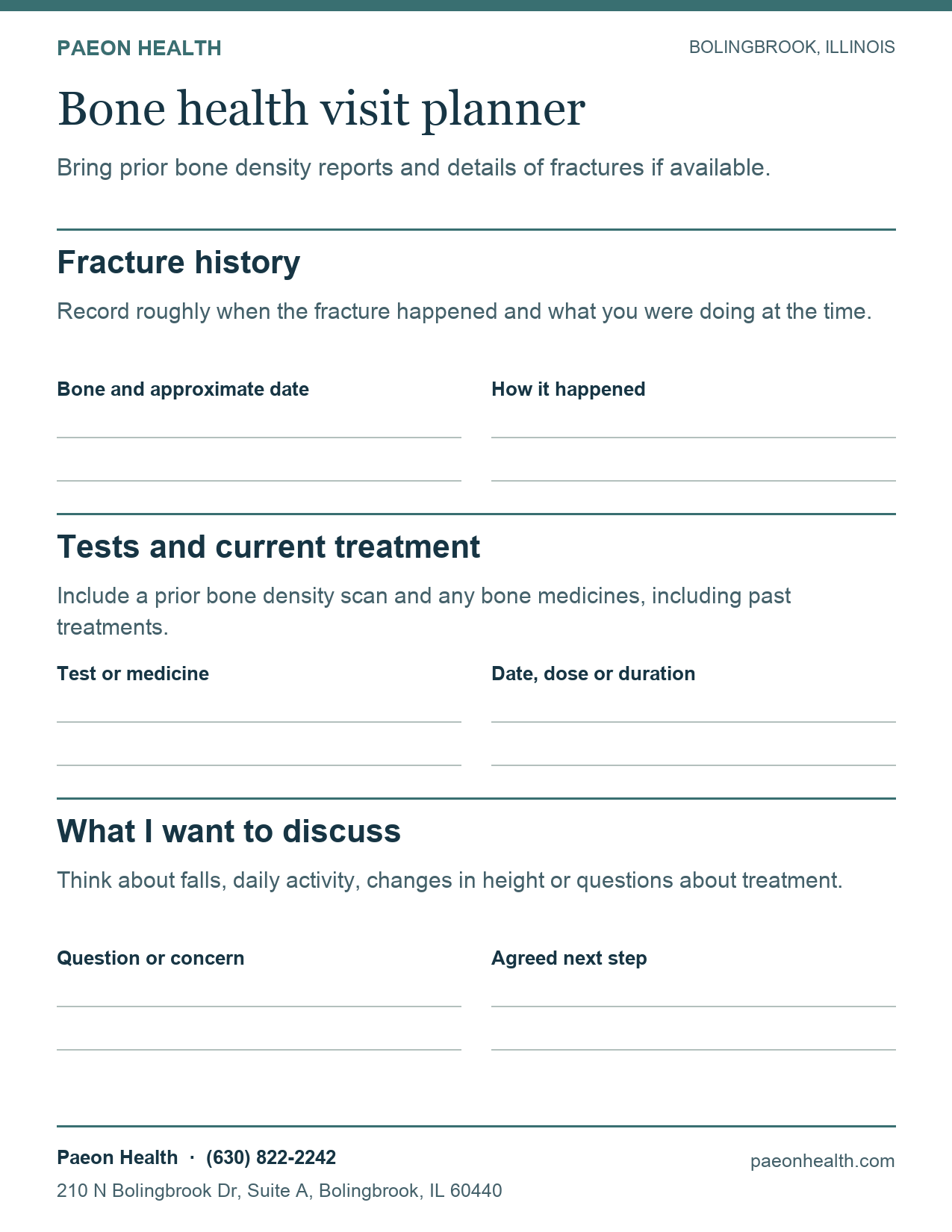
When your earlier bone density scan was done somewhere else
Ask the facility that performed the scan for its full report. A brief message saying the test was normal or showed bone loss can omit the measured areas, values and comparison with an earlier scan. Bring the name of the facility, the test date and the ordering clinician if you cannot obtain the report before your visit.
If you had a fracture that was treated at another hospital, mention which bone was affected and what happened at the time. A fall from standing height and an injury during a high-speed collision provide different context. Write down your recollection and tell the physician which details you are uncertain about.
Records that can clarify bone health decisions
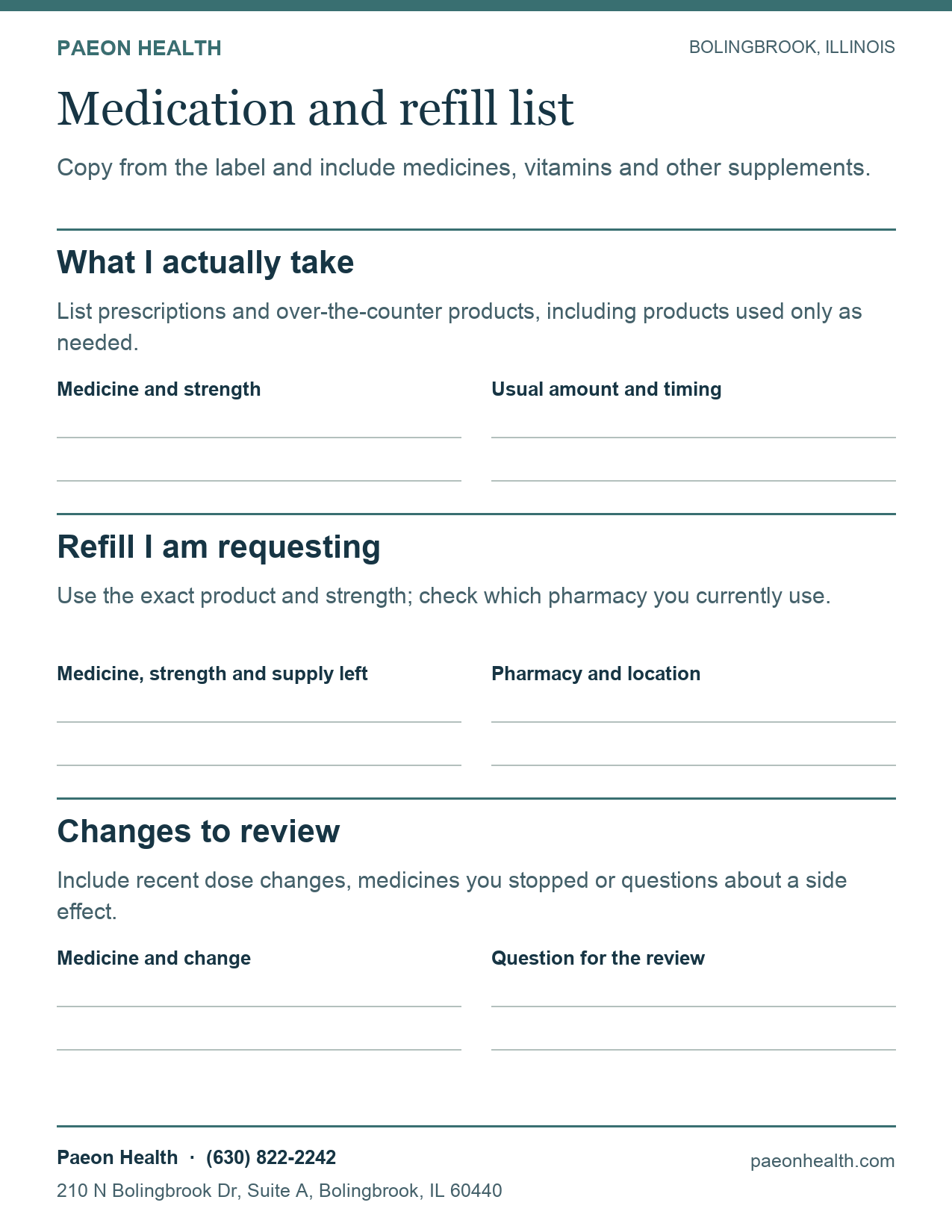
If you have used several medications for bone health
The medication list can help separate current treatment from something stopped years ago. Bring dates, previous prescriber information and the label if you have it.
Download the medication and refill list (PNG)
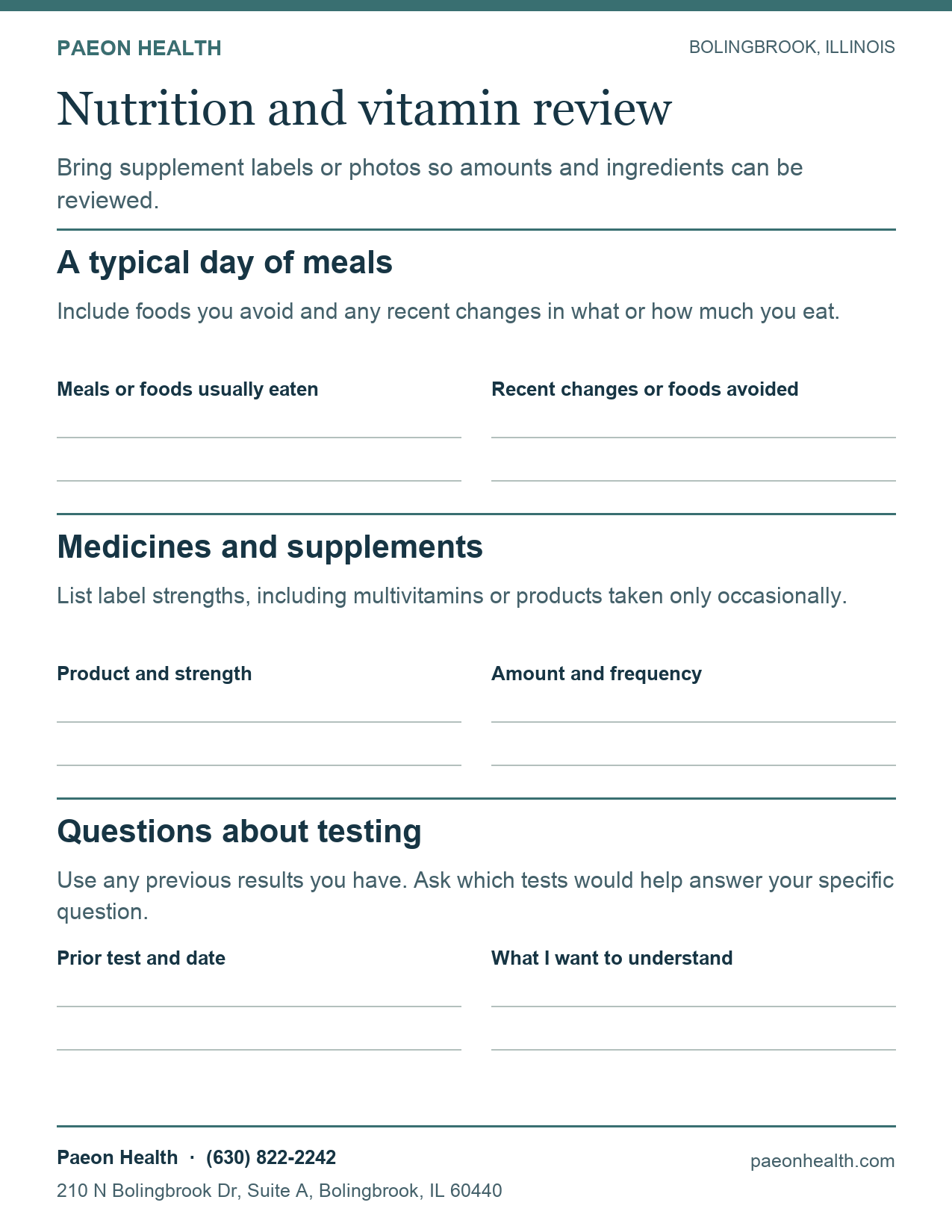
If you want to discuss calcium or vitamin supplements
Bring the product labels and typical food choices on the nutrition worksheet. The amounts written on different bottles can be easier to review together.
Download the nutrition and vitamin review (PNG)
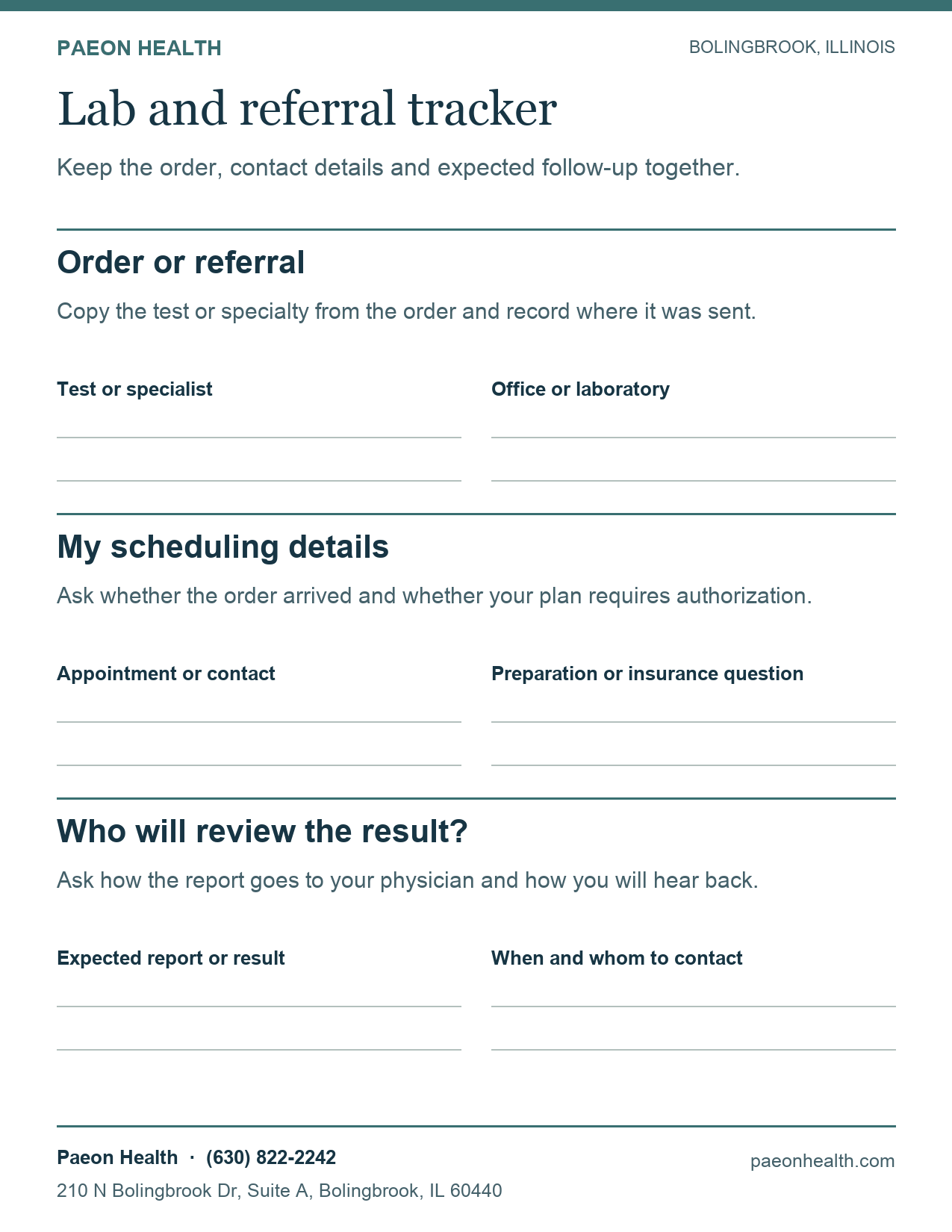
If you are arranging a bone density test
Track the imaging center, appointment date and where the report will be sent. If an earlier scan came from a different center, note that location as well.
Download the lab and referral tracker (PNG)
Insurance & Self-Pay
Network participation depends on your exact plan and where you receive care. Verify your exact plan and network with your insurer. For self-pay patients, a New Patient Office visit is $225 and an Established Follow-Up is $150. DEXA scans, labs, and medications are extra. A Good Faith Estimate is available.
FAQ
At what age should I get a bone density test? Women 65+ and men 70+ should be screened. Younger adults with risk factors (long-term steroid use, low-trauma fracture, rheumatoid arthritis, early menopause) should ask about earlier screening.
Can osteoporosis be reversed? Treatment can stabilize and sometimes modestly increase bone density, and significantly reduce fracture risk. The goal is preventing fractures.
Do I need calcium and vitamin D supplements? Many people do not get enough through diet. Dr. Sayyed can check your vitamin D level and recommend appropriate intake — more is not always better, and excess calcium can have risks.
What exercises are best for bone health? Weight-bearing exercise (walking, hiking, dancing, stair climbing) and muscle-strengthening exercise (weights, resistance bands) help. Balance exercises reduce fall risk. If you have severe osteoporosis, avoid high-impact or twisting movements.
What if I’ve already had a fracture? A fracture after minor trauma is itself a sign of osteoporosis and warrants evaluation and treatment — your risk of another fracture is high.
Does Medicare cover DEXA scans? Yes — Medicare covers bone density testing every 24 months for eligible beneficiaries. Verify your exact plan.
Schedule a Bone Health Visit
View appointment options · Explore primary care services
Patient resource: MedlinePlus guide to osteoporosis.
If you are due for a bone density screening, have lost height, or have had a fracture after a minor fall, a primary care visit can assess your bone health and start a prevention plan. Book an appointment with Walid Sayyed, MD, at Paeon Health in Bolingbrook, IL, via the Elation Patient Passport portal, or call 630-822-2242.
This content is for educational purposes only and is not medical advice. For medical emergencies, call 911. To discuss your specific health needs, book an appointment with Walid Sayyed, MD, at Paeon Health or call 630-822-2242.