
Use this preventive care reading guide to choose the question you want to bring to your next visit. Each guide explains one part of planning preventive care, from choosing an appointment to tracking your last screening or vaccine.
Which reading guide helps me choose a visit?
If you are new to the practice, start with first adult visit or annual physical. It explains which appointment to choose when you want to establish care and what to tell the office if you also have a symptom or a form to complete. For a prevention-focused visit, read what to expect at an annual physical.
Which reading guide covers screening by age?
Use the screening guide by age to write down questions for your next visit. Find the dates and results of any tests you have already had. If cancer runs in your family, note which relative was affected, the type of cancer, and their age at diagnosis if you know it.
Should I ask about a colon cancer screening test?
Read the colon cancer screening guide before discussing your options. Bring any prior stool-test or colonoscopy results, including the recommended follow-up date. If you have new bleeding or other bowel symptoms, tell the office when you call so those symptoms can be evaluated.
A reading guide for missing vaccine records
Start with the adult vaccination guide. Bring a record from your pharmacy, previous clinician, or patient portal if you have one. Mark doses you are unsure about so you can ask which records to look for and which vaccines are due.
A reading guide for bone density testing
Read the guide to bone density testing. Bring any previous bone density report and mention a broken bone after a minor fall or a history of long-term steroid use. Ask how the result could change your care.
Use this preventive care reading guide to make a visit list
Start with the records you already have
For each screening or vaccine you remember, jot down the name, approximate date and place where you received it. If you have a copy of a report, keep the last page with any follow-up instructions. Mark an uncertain date as an estimate so you can discuss where the office might find the original record.
A personal list is especially helpful if you changed practices or use more than one pharmacy. You can bring records along even if another office performed the test. If you want to send personal details before the visit, use the practice’s secure forms and records instructions.
Write the question you want answered
Try a question that names the decision you face. For example, “My last screening was done somewhere else. What part of that report do you need to decide when the next test is due?” If a previous test was done because of symptoms, tell your clinician why it was ordered.
For coverage questions, the federal HealthCare.gov adult preventive services list is a starting point. Call the number on your insurance card to check the specific service, clinician and facility under your plan. Medical recommendations and the details of your benefits are separate questions.
Leave with one next step for each item
At the end of the visit, ask what to schedule now, what can wait and where to find the instructions. Keep the order or referral with the name of the office you will call. If you will get a result afterward, ask which office will communicate it and where to look for it.
Return to this preventive care reading guide when you gather a new record or prepare for another visit. The reason to return is your own question, whether that is a prior test you found, a change in your family history or a vaccine you want to discuss.
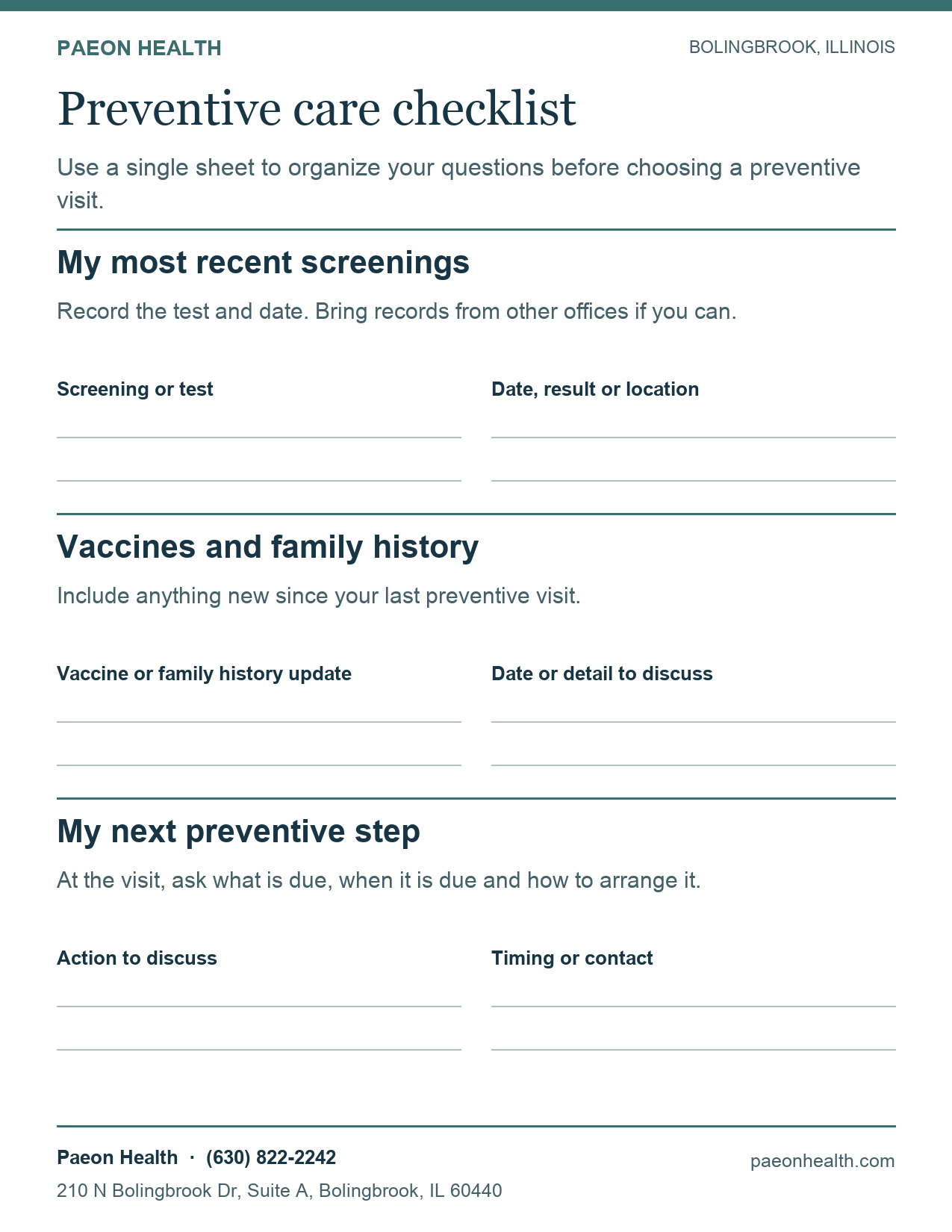
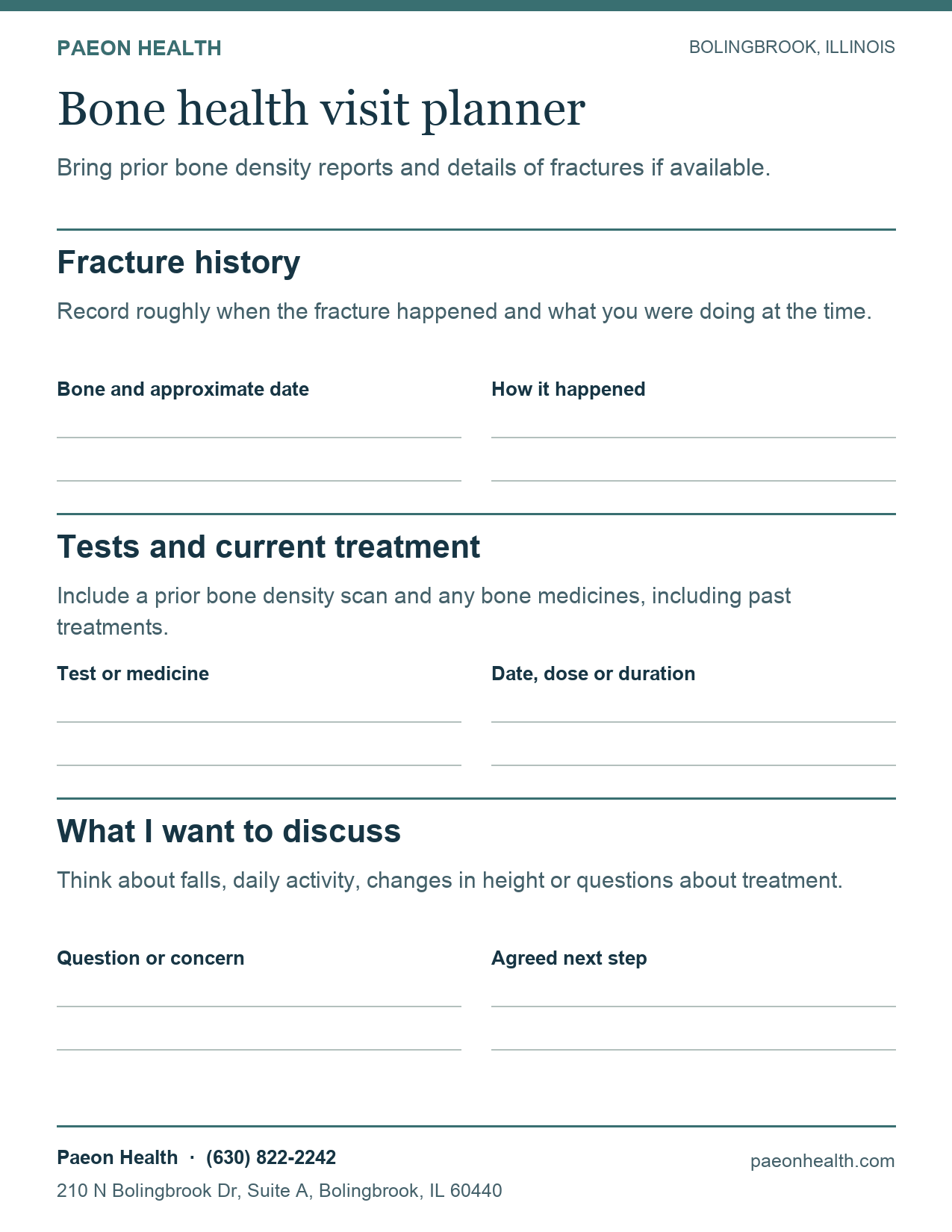
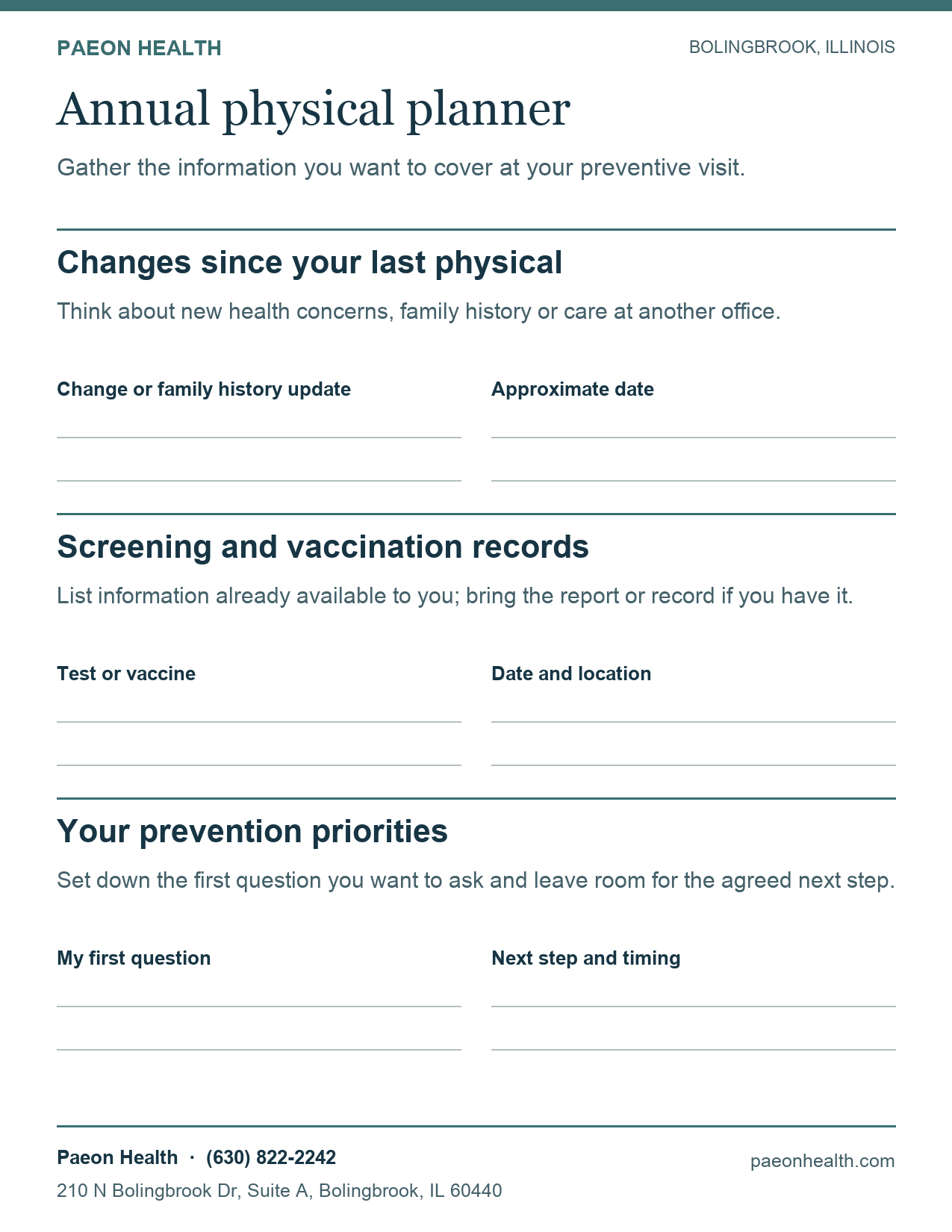
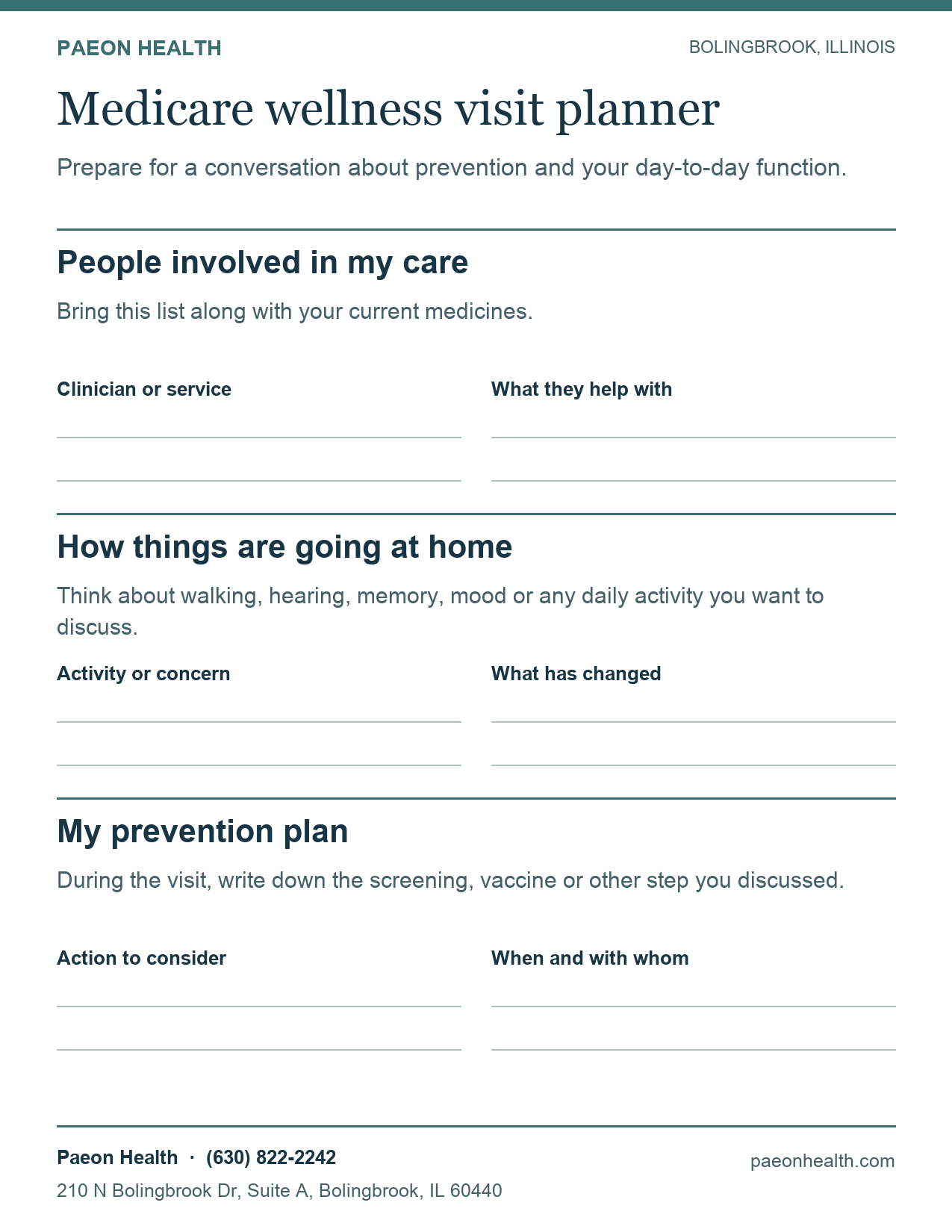
Print a worksheet from the preventive care reading guide
Choose one sheet to help you keep dates, results and questions together. If a screening was done elsewhere, bring the report if you have it.
Choosing the right reading guide for your situation
I have one report, but I do not know what it means for my next visit
Start by finding the date, the reason for the test and the signed recommendation, if there is one. A result letter may say that a test was completed, while the full report explains what the clinician saw and when they suggested follow-up. If the report mentions an earlier comparison study, write down that date and facility as well. The clinician can help you decide which records matter.
For a prior colonoscopy, for example, the procedure report and the report on any tissue samples may be filed separately. If you have only one, bring it and mention which facility performed the procedure. The colon screening reading guide can help you prepare a question about your next step. Your own reports and the reason the test was ordered are what your clinician needs to make a recommendation for you.
A relative was diagnosed with a condition. Where do I begin?
Start with the reading guide for the condition or body system involved. Write down the relative’s relationship to you, the diagnosis and the approximate age when it occurred. If someone in the family recalls “a women's cancer” but does not know which organ was affected, record that uncertainty. You can ask which additional detail, if available, would actually change the discussion.
When you meet with the clinician, describe why this information has become relevant now. A sibling may have shared a recent diagnosis, or a parent may have found an older medical record. If a relative has chosen to share a report, bring it through the practice’s secure process. You can discuss your own concerns even if you have no access to the relative’s records.
I am changing insurance or starting Medicare
Use the appointment reading guide to separate the purpose of the visit from the name your plan uses for the benefit. Someone establishing care may want to talk about a symptom as well as routine prevention. Someone already receiving primary care may specifically want to review eligibility for a Medicare wellness visit. Tell the office which of those descriptions best fits your situation.
For the Medicare yearly wellness benefit, your coverage start date and any previous welcome or wellness visit help determine eligibility. The wellness visit focuses on risks and a prevention plan. If you also want to discuss a health problem or receive an additional service, ask how it may be covered. Consult the official Medicare description and your own plan before relying on an expected cost.
Which reading guide should I open if reminders conflict?
A pharmacy notice, an insurer’s reminder and a note from a previous office may arrive in the same month. Keep the date and source with each notice. Make a separate list of services that you know took place, with the date and location. A reminder may not reflect a test done at another facility. Bring the original result or vaccination record when possible.
If a reminder points to a test you have never heard of, use the screening reading guide to work out what to ask. Common questions are what the test looks for, why it applies to you, what the preparation involves and how the result might change the plan. If you have symptoms, describe those separately. Screening recommendations generally address people without symptoms of the condition being screened for.
How can a reading guide help me compare two screening options?
When more than one option is appropriate, consider the practical details alongside the medical recommendation. Ask whether the test is done at home or in a facility, how you receive the instructions and who handles the result. If you care for another person, work shifts or rely on someone for transportation, say so. Those details can affect which option you will be able to complete.
Use the reading guide to write one question about what follows an unclear or unexpected result. For instance, ask which clinician would discuss it with you and whether another procedure could be recommended. To look up the meaning of a screening term, the National Library of Medicine has a patient overview of health screening. For a decision about your own care, take the specific report and question to your clinician.
I have the order. What should I confirm before the test?
Check that you know the test name, the ordering clinician and the facility where you intend to go. Call that facility for its preparation instructions and ask your insurer about benefits at that location. If a previous exam was done elsewhere, ask the new facility whether it needs the old report or the images themselves. Keeping those two requests distinct can prevent an unnecessary trip.
After the test, keep the completion date with the contact details for the ordering office. If the result appears in your portal before you have spoken with the clinician, write down what you do not understand and ask how to arrange a review. Once you have the clinician’s recommendation, add it to your own list with a date. You can return to the relevant reading guide when a new question comes up.
Browse all preventive care articles or return to the Paeon Health blog. For appointment details in Bolingbrook, see preventive care at Paeon Health.