
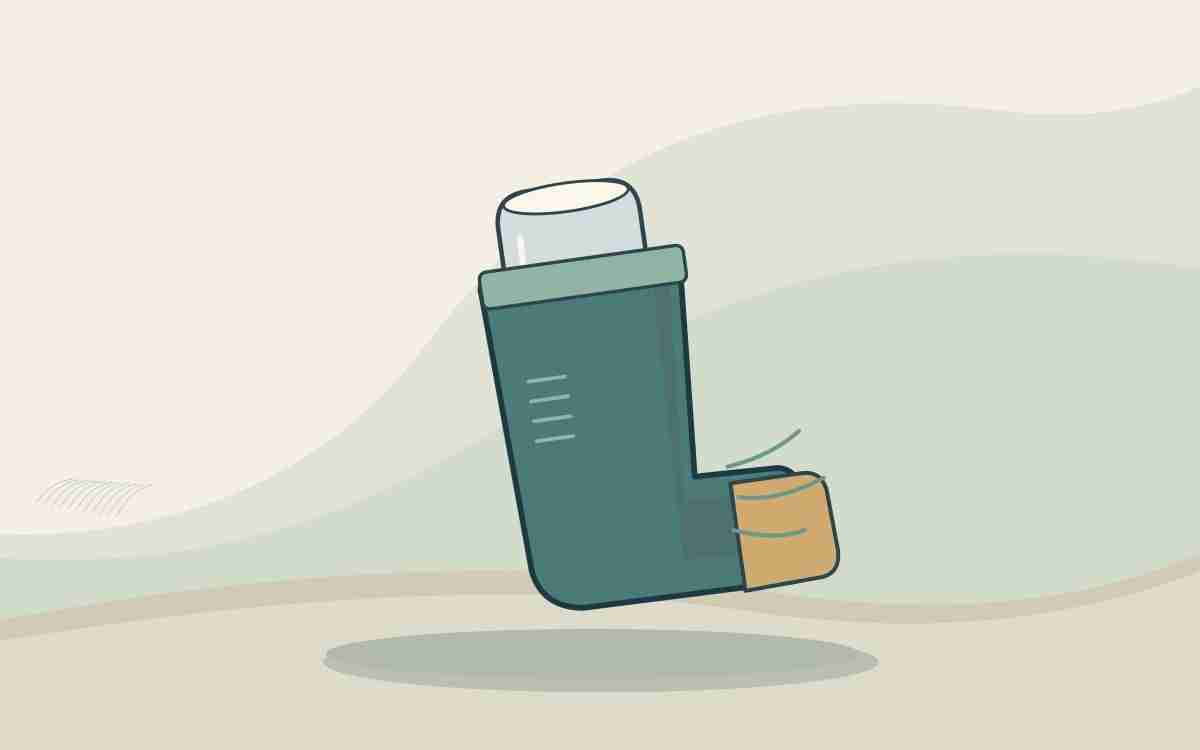
If you use an inhaler for asthma or COPD, how you use it matters as much as what is in it. Studies consistently show that a large proportion of patients make at least one error in inhaler technique — meaning less medication reaches the lungs and more is deposited in the mouth and throat. The good news: technique is learnable, and a few minutes of review can make a real difference. At Paeon Health in Bolingbrook, IL, Dr. Walid Sayyed, MD, checks inhaler technique at every asthma and COPD visit. This article covers the basics — always confirm with your provider or pharmacist for your specific device.
Why Technique Matters
Inhalers deliver medication directly to the airways. If the timing, breath hold, or coordination is off, the medication may hit the back of the throat instead of reaching the small airways where it works. Consequences can include poorer symptom control, more rescue inhaler use, and increased side effects like oral thrush from inhaled steroids.
Types of Inhalers
There are two main categories, plus soft-mist inhalers:
- Metered-dose inhalers (MDI) — pressurized canister; requires coordination between pressing and breathing. Often used with a spacer.
- Dry-powder inhalers (DPI) — breath-activated; requires a fast, deep inhalation. No spacer needed.
- Soft-mist inhalers — slower-moving mist; slower inhalation.
Each type has different steps. If you switch devices, ask for a demonstration — do not assume it is the same.
Using a Metered-Dose Inhaler (MDI) with a Spacer
A spacer (holding chamber) is strongly recommended for MDIs, especially for children, older adults, or anyone who struggles with coordination. General steps:
- Remove caps and shake the inhaler well.
- Insert the inhaler into the spacer.
- Breathe out fully away from the spacer.
- Seal lips around the spacer mouthpiece.
- Press the inhaler once to release one puff into the spacer.
- Breathe in slowly and deeply over 3–5 seconds.
- Hold your breath for about 10 seconds (or as long as comfortable), then breathe out gently.
- Wait about 30–60 seconds between puffs if more than one is prescribed.
- If using an inhaled corticosteroid, rinse your mouth, gargle, and spit after use.
Spacers with a whistle can alert you if you are inhaling too fast. Keep your spacer clean per instructions.
Using an MDI Without a Spacer (Open-Mouth or Closed-Mouth)
If no spacer is available, coordination is key:
- Shake well and remove cap.
- Breathe out fully.
- Place mouthpiece in mouth (closed-mouth) or hold it about two finger-widths in front of open mouth (open-mouth technique).
- Start breathing in slowly through your mouth and press the canister down once at the beginning of the inhalation.
- Continue slow deep breath for 3–5 seconds.
- Hold breath about 10 seconds, then breathe out gently.
- Wait between puffs; rinse mouth after steroid inhalers.
A spacer is preferred whenever possible.
Using a Dry-Powder Inhaler (DPI)
DPIs vary by brand — always follow the specific device instructions. General principles:
- Load the dose per device instructions (some twist, some slide, some press a button). Do not load more than one dose.
- Breathe out fully away from the mouthpiece (do not blow into the device — moisture can clump the powder).
- Seal lips tightly around the mouthpiece.
- Breathe in quickly and deeply through your mouth — the force of your breath pulls the powder into your lungs.
- Hold your breath for about 10 seconds, then breathe out gently through your nose.
- Rinse mouth if it contains a steroid.
Common Mistakes to Avoid
- Not shaking the MDI before use.
- Breathing in too fast with an MDI (causes medication to hit the throat) or too slow with a DPI (powder doesn’t disperse).
- Forgetting to breathe out fully before inhaling.
- Skipping the breath hold — holding allows medication to deposit in small airways.
- Not waiting between puffs — reduces deposition of the second puff.
- Not rinsing after inhaled corticosteroids (raises thrush risk).
- Using an expired or empty inhaler — track doses; many inhalers have dose counters.
- Storing in extreme heat or cold — check package instructions.
- Using someone else’s inhaler — medications and doses are individualized.
When to Get a Technique Check
- At every asthma/COPD follow-up.
- Whenever you get a new device or brand.
- If symptoms are not well controlled despite medication.
- If you notice you are using rescue inhaler more often.
- If a caregiver or child uses the inhaler — both should be checked.
Bring your inhalers to every appointment so your provider or pharmacist can watch your technique.
FAQ
Q: Do I need a prescription for a spacer? A: Spacers are often available with a prescription and may be covered by insurance. Ask your pharmacist.
Q: Can I drink water right after using my inhaler? A: After a steroid inhaler, rinse and spit first. After a bronchodilator, drinking water is fine.
Q: How do I know when my inhaler is empty? A: Many have dose counters. If not, track the number of puffs used; floating in water is not reliable.
Q: Can I use two different inhalers at the same time? A: If prescribed both a bronchodilator and a steroid inhaler, use the bronchodilator first (opens airways), wait a few minutes, then the steroid. Confirm order with your provider.
Q: My inhaler tastes like nothing — is it working? A: Many DPIs have little or no taste. That does not mean the dose was not delivered. Technique matters more than taste.
Next steps
Bring your inhalers to your next visit at Paeon Health in Bolingbrook, IL, and ask Walid Sayyed, MD, to check your technique. Book via the Elation Patient Passport, call 630-822-2242, or email care@paeonhealth.com. We serve Bolingbrook, Naperville, Romeoville, and Plainfield. Telehealth across Illinois is available when clinically appropriate for follow-up questions.
About this article

Article last updated
References
- American Lung Association — How to use inhalers and medication devices
- MedlinePlus — Using a metered-dose inhaler without a spacer
This article is for general education and does not replace medical advice from your clinician. For a medical emergency, call 911. For personal medical questions, use the secure patient portal.
To discuss your health with Dr. Sayyed, choose an appointment or call 630-822-2242.