
For a diabetes or thyroid lab result, start with the name of the test. If you’re already managing diabetes, choose the question that fits your day-to-day life.
I have a new lab result
Look for the test name, result, and date on your report. A previous result, if you have one, can help you and your doctor talk about what has changed.
- What your A1c number means. How A1c differs from a single glucose reading.
- What a prediabetes result means. Questions to ask about follow-up and everyday changes.
- Understanding TSH and thyroid tests. Where to start when the result is a thyroid test.
I’m managing diabetes between visits
Pick the part of daily care you want help with. At your next appointment, describe a specific example, such as a meal that was hard to plan or a reading that surprised you.
- Continuous glucose monitors. What to ask if you are considering a sensor.
- Practical eating guidance. Meal-planning ideas to discuss in the context of your routine.
- Eye and kidney screening. Which screening questions to add to your next visit.
What to bring to your visit
Bring your dated lab report, medication list, and any glucose readings you already keep. An opening question could be, “What does this result mean for me, and when should we check it again?”
3 questions for your next diabetes visit
1. What time period does my result describe?
A home glucose meter records your blood sugar at the time you test. An A1c is a different measurement. It reflects your average blood sugar over about three months, so the number on a meter and the number on an A1c report are expressed differently. If you bring both, label which is which and include the dates.
If you just received two results, copy the full name of each test onto your question list. Include the number, units and reference range shown by the laboratory. Ask, “Is it useful to compare these results, and which should I track before I come back?” Read the MedlinePlus explanation of the A1c test.

2. What would you like me to record at home?
Show the clinician how you currently keep your numbers, whether that is a paper log, a device or an app. If a certain reading stood out, write down what you remember about that part of your day. Ask which details would be useful to record next time and how to share them with the office.
If you are looking for help with food choices, describe one meal you frequently eat and what makes a change hard. For example, you might eat lunch on the road or share meals with someone who has different needs. That gives you and your clinician a specific problem to work on.
3. Which follow-up belongs on my calendar?
Before leaving a diabetes visit, write down the next planned test, visit or screening and who will arrange it. If you are waiting on more than one item, keep a separate line for each. Ask how results will reach you and whom to contact if an expected report does not arrive.
Thyroid testing is another topic in this collection. If your report is labeled TSH, use the thyroid guide above and bring that report separately. It addresses a different question from home glucose monitoring or an A1c.
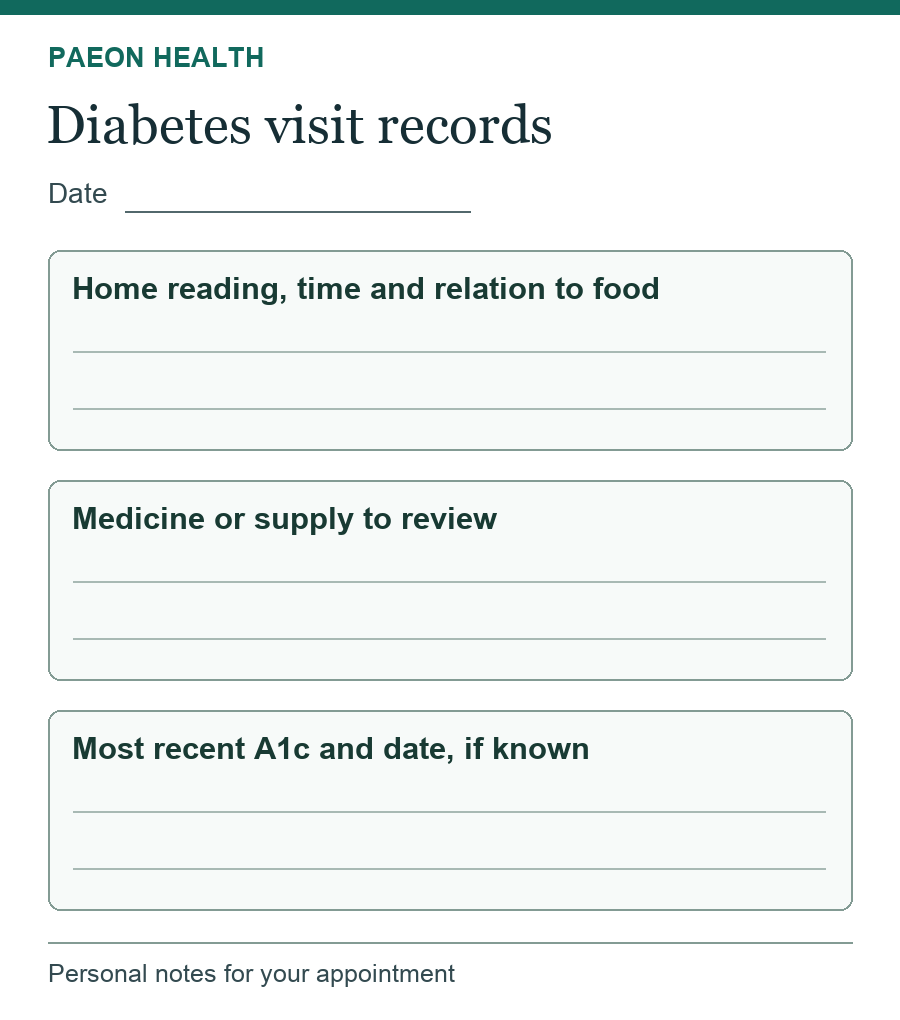
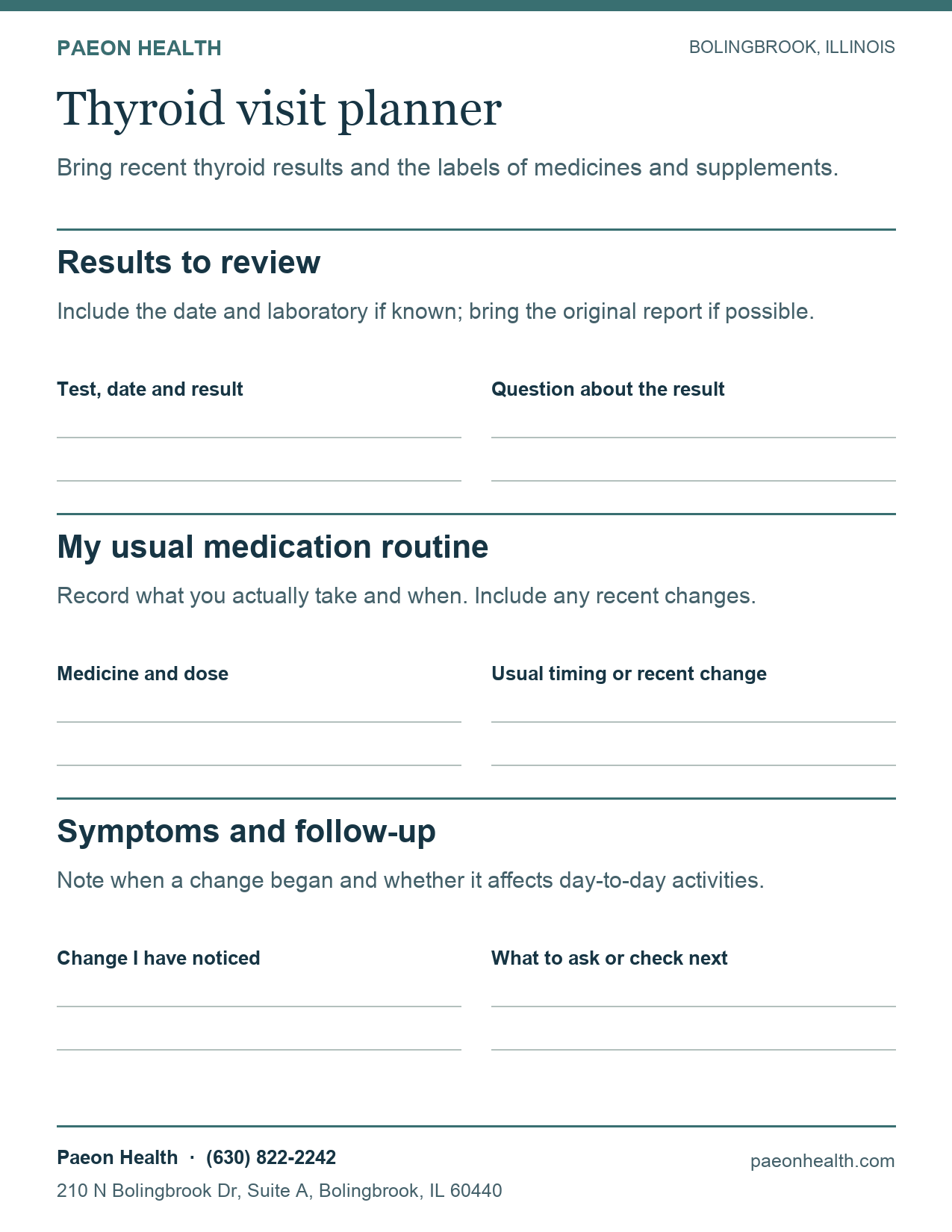
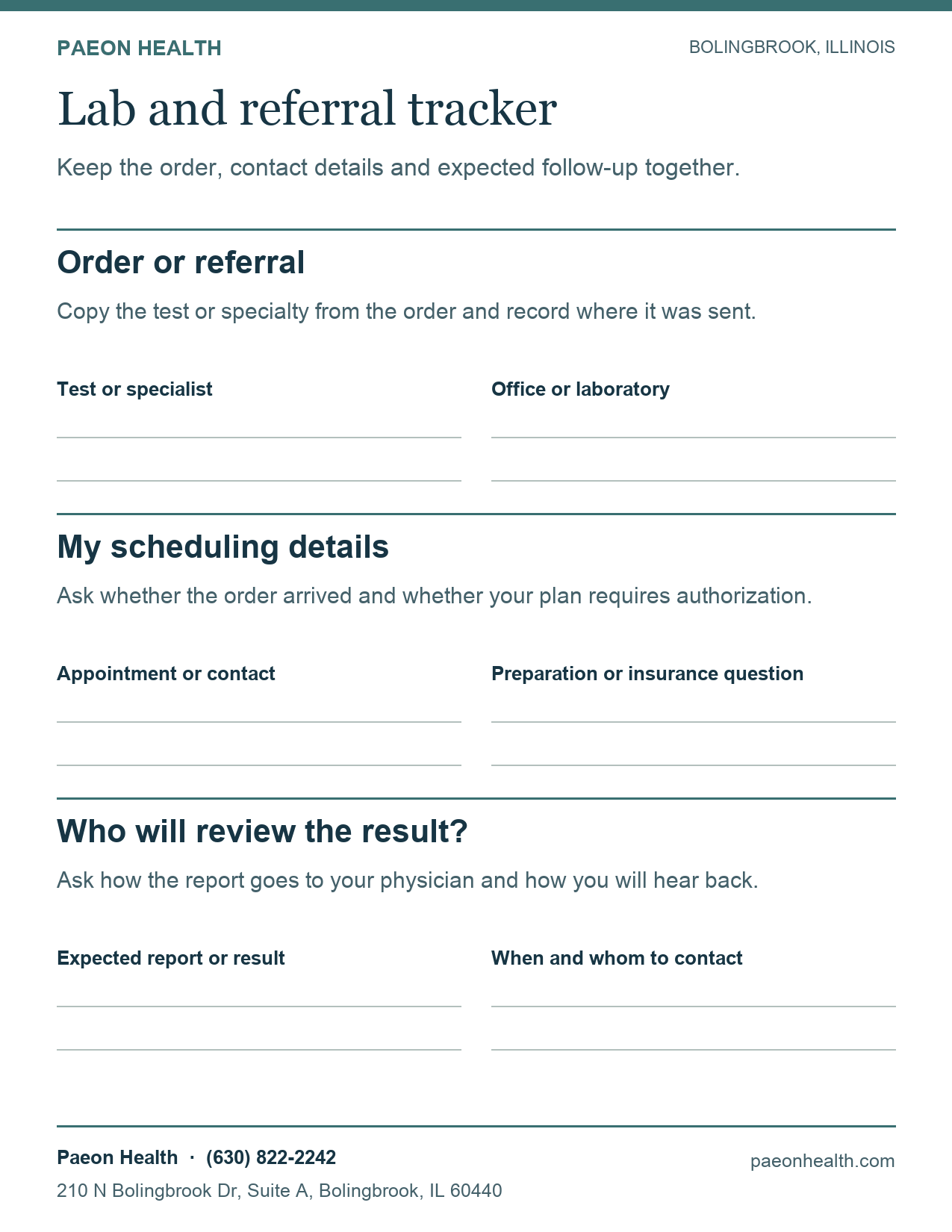
Print a sheet for the diabetes or thyroid question you want to discuss
Choose the sheet that fits the reason for your next visit. Bring the original lab report or medication list along with your notes.
How to read the test names on my diabetes lab report
A1c, HbA1c and estimated average glucose
A report may call the same test A1c, hemoglobin A1c or HbA1c. In the United States the A1c value is commonly displayed as a percentage. If the report also lists estimated average glucose, that is an estimate calculated from the A1c. Keep the label and unit with each number when you copy it into a message or log.
A home meter checks glucose at one moment. Comparing it with an estimate over several months can raise a useful question, but you should not expect the numbers to match. If you have a pattern you want to discuss, bring dated home readings together with the full lab report.
Do I need to fast for the test?
An A1c test by itself does not require fasting. Other blood tests ordered at the same visit may have different instructions. If the lab order lists several tests, ask the ordering office or laboratory which preparation applies to your appointment.
Keep the order handy when you call. You can say, “I see more than one test on my order. Do I need to prepare in a particular way, and which instructions should I follow?” If the lab gave you a written answer, keep it with the appointment date and location.
Why might my clinician ask about anemia or a transfusion?
Some conditions and events that affect red blood cells can change how well A1c reflects usual glucose levels. Tell your clinician if you have had a recent transfusion or if you have been told you have anemia or a hemoglobin condition. Bring a copy of prior testing if the clinician who is reviewing your diabetes result does not already have it.
A difference between A1c and home readings can have several explanations. Your clinician can decide whether a repeat measurement, a different test, or more information about your recent readings would help. The National Institute of Diabetes and Digestive and Kidney Diseases explains how A1c is interpreted.
What should I take away from the conversation?
Before closing the portal message or leaving the appointment, make sure you can identify which result you discussed, any action you and your clinician agreed on, and when follow-up is expected. If your result was ordered by another practice, ask who will communicate any change in the plan.
Which eye and kidney records should I bring to a diabetes visit?
Start with the report from your eye visit
If you saw an eye clinician, bring the date, the office name and any written recommendation about follow-up. A visit for new glasses and an examination of the retina can cover different things. If you are unsure which examination you had, ask the eye office for the summary rather than guessing from the type of appointment you booked.
The retina is the light-sensitive tissue at the back of the eye. Diabetes can damage its blood vessels, and early retinopathy may not cause symptoms. Ask your eye clinician what they found and when they recommend another examination. The National Eye Institute explains diabetic retinopathy and dilated eye examinations.
Look for separate blood and urine kidney tests
Kidney monitoring can involve two different kinds of information. A blood test can help estimate how well the kidneys filter blood. A urine test can check for albumin, a protein that can appear in urine when the kidneys are damaged. If you only have a blood report, ask whether a urine result was collected separately. Bring the whole report rather than writing down a single number without a label.
A summary might say eGFR for the filtration estimate or UACR for a urine albumin-to-creatinine ratio. Ask which result you and your clinician will follow, how it compares with earlier results and when to recheck it. NIDDK explains the tests used to check kidney health in people with diabetes.
Keep screening questions next to your day-to-day care questions
If you are asking about an eye exam, a kidney test and a glucose reading at the same appointment, put them on separate lines. For the eye visit, write the name of the office and what it recommended. For the kidney test, write the date and report name. For the glucose reading, note whether it came from a sensor, fingerstick meter or laboratory.
You might start the conversation this way: “I have my eye report and my blood work, but I cannot find the urine result. Which diabetes screening is already complete, and what do I need to schedule?” That makes it easier to identify a missing document or an outstanding order without assuming that a test was repeated.
After you leave the office
Keep the next step with the person or office who is arranging it. For instance, a blood test order, an appointment at an eye office and a message about a home device can have different contact information. If someone helps you book care, you can share the appointment details you want them to handle while keeping your own private health account secure.
If a new issue comes up before the planned follow-up, use the instructions your clinician gave you for that situation. Ask the practice how to send an outside report securely when it is ready. That way the clinician reviewing your diabetes care can see the dated finding and the follow-up recommended by the office that performed the examination.
Browse all diabetes and metabolism articles · Browse the full Paeon Health blog